
US Arms Left in Afghanistan Raise Security Concerns for Pakistan
During my reporting assignments covering the Wana Cadet College attack in 2025 and the Qila Abdullah attack in Balochistan in January 2025, I personally witnessed recovered US-made weapons and ammunition.

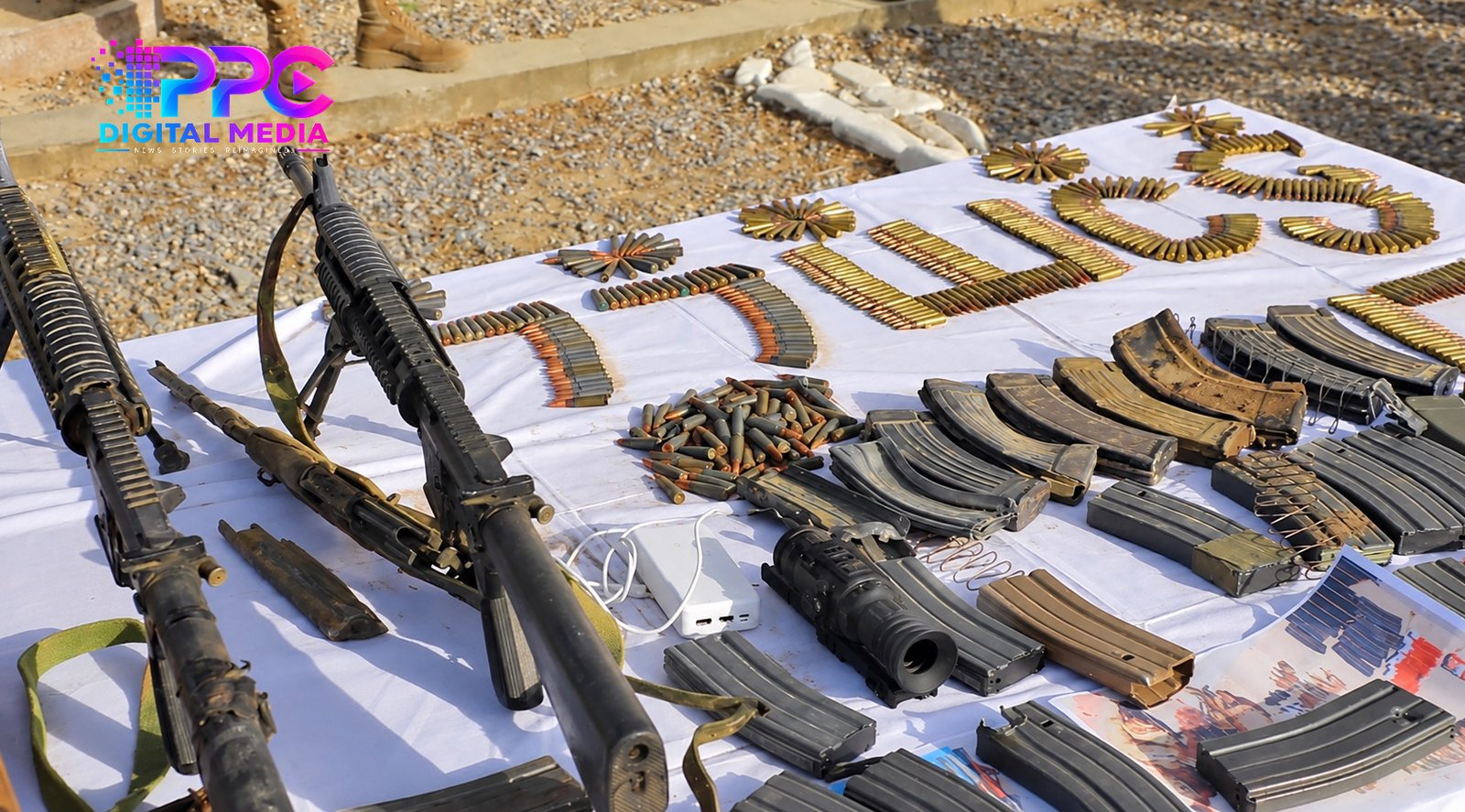
US-made weapons and advanced military equipment left behind in Afghanistan following the withdrawal of American and NATO forces in 2021 are now being used by terrorist organisations, including the Tehreek-e-Taliban Pakistan (TTP) and Baloch Liberation Army (BLA), against Pakistani security forces.
The growing availability of these weapons has become a serious security concern for Pakistan, particularly amid deteriorating relations with Afghanistan and a surge in terrorist attacks across Khyber Pakhtunkhwa and Balochistan.
During my reporting assignments covering the Wana Cadet College attack in 2025 and the Qila Abdullah attack in Balochistan in January 2025, I personally witnessed recovered US-made weapons and ammunition. Some of the weapons carried American manufacturing markings, providing firsthand evidence of the presence of US-origin military equipment recovered following terrorist attacks in Pakistan.
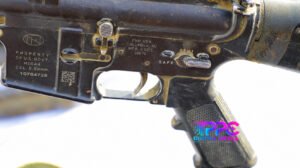
These were not merely ordinary rifles. Among the recovered weapons were advanced military firearms of the types supplied by the United States to Afghan security forces before the Taliban returned to power in August 2021.
The weapons and equipment left behind during the US withdrawal subsequently came under the control of the Afghan Taliban. Their availability in Afghanistan has become a serious concern for Pakistan, particularly as the TTP and BLA continue to use sophisticated weapons in terrorist attacks.
According to a July 2023 report by the US Special Inspector General for Afghanistan Reconstruction (SIGAR), American and NATO forces left behind approximately 167,550 rifles, 41,500 machine guns and 265 mortars during the 2021 withdrawal. More than 40,000 military vehicles, including approximately 12,000 Humvees, were also left behind. The total value of the weapons and military equipment was estimated at $7.1 billion.
By 2025, Pakistani security forces had recovered 293 US-made weapons and sights from killed terrorists, including 208 M16 rifles, 53 M4 rifles, seven machine guns, four sniper rifles and 21 miscellaneous sights.
A 2025 investigation by The Washington Post also traced the serial numbers of at least 63 weapons seized from terrorists in Pakistan to arms previously supplied by the United States to Afghan security forces before 2021.
Videos circulated by terrorist organisations have also shown fighters carrying M16 and M4A1 rifles, under-barrel grenade launchers, bulletproof jackets, PVS-14 night-vision devices and laser sights. US-made machine guns, including the M249 Squad Automatic Weapon, M240B and M2 Browning, have also appeared among their weapons.
The availability of sophisticated night-vision equipment and sniper rifles has created additional challenges for Pakistani counterterrorism operations. Terrorists equipped with these systems can detect troop movements in darkness, conduct coordinated nighttime attacks and evade security operations more effectively.
The increasing use of advanced sniper rifles has also strengthened terrorists’ ability to carry out attacks from concealed positions, particularly at night, making counterterrorism operations more challenging for Pakistani security forces.
Relations between Pakistan and Afghanistan have remained strained since border skirmishes erupted in February 2026, with tensions continuing amid a surge in terrorist attacks across Khyber Pakhtunkhwa and Balochistan.
According to Pakistani intelligence agencies, evidence collected from terrorist incidents points towards handlers and networks operating from Afghan territory. Islamabad has repeatedly raised these concerns with the Afghan Taliban authorities, urging them to take concrete action against the TTP, BLA and other terrorist elements using Afghan soil to plan, facilitate and launch attacks against Pakistan.
Pakistan has consistently maintained that Afghan territory must not be used for terrorism against its citizens and security forces. However, the continued presence of terrorist networks operating from Afghanistan, along with their access to sophisticated weapons, remains a major source of tension between the two neighbouring countries.
The issue has become particularly significant as Pakistan continues to confront terrorist threats along its western border. The availability of advanced US-made weapons, night-vision systems and military communication equipment has further complicated the security situation.
My firsthand observations during the coverage of the Wana Cadet College and Qila Abdullah attacks reinforced the seriousness of this issue. The recovered American-made weapons demonstrated how military equipment originally supplied for Afghanistan’s security forces is now appearing in the hands of terrorist organisations operating against Pakistan.
The central concern is the continued availability of these weapons in Afghanistan, where the Afghan Taliban control military stockpiles left behind after the US withdrawal. The TTP and BLA’s access to such equipment has increased the threat faced by Pakistan’s security forces and complicated counterterrorism operations.
According to the security analysts, the presence of US-made weapons recovered from terrorists in Pakistan, supported by documented serial-number investigations and firsthand reporting from attack sites, raises serious questions about the movement of military equipment from Afghanistan into the hands of terrorist organisations.
