
Pakistan Cautiously Optimistic on Iran-US Mediation: DG ISPR
The Director General of Inter-Services Public Relations (ISPR) said Field Marshal Asim Munir’s repeated visits to Tehran reflected positive momentum in Pakistan’s mediation efforts.

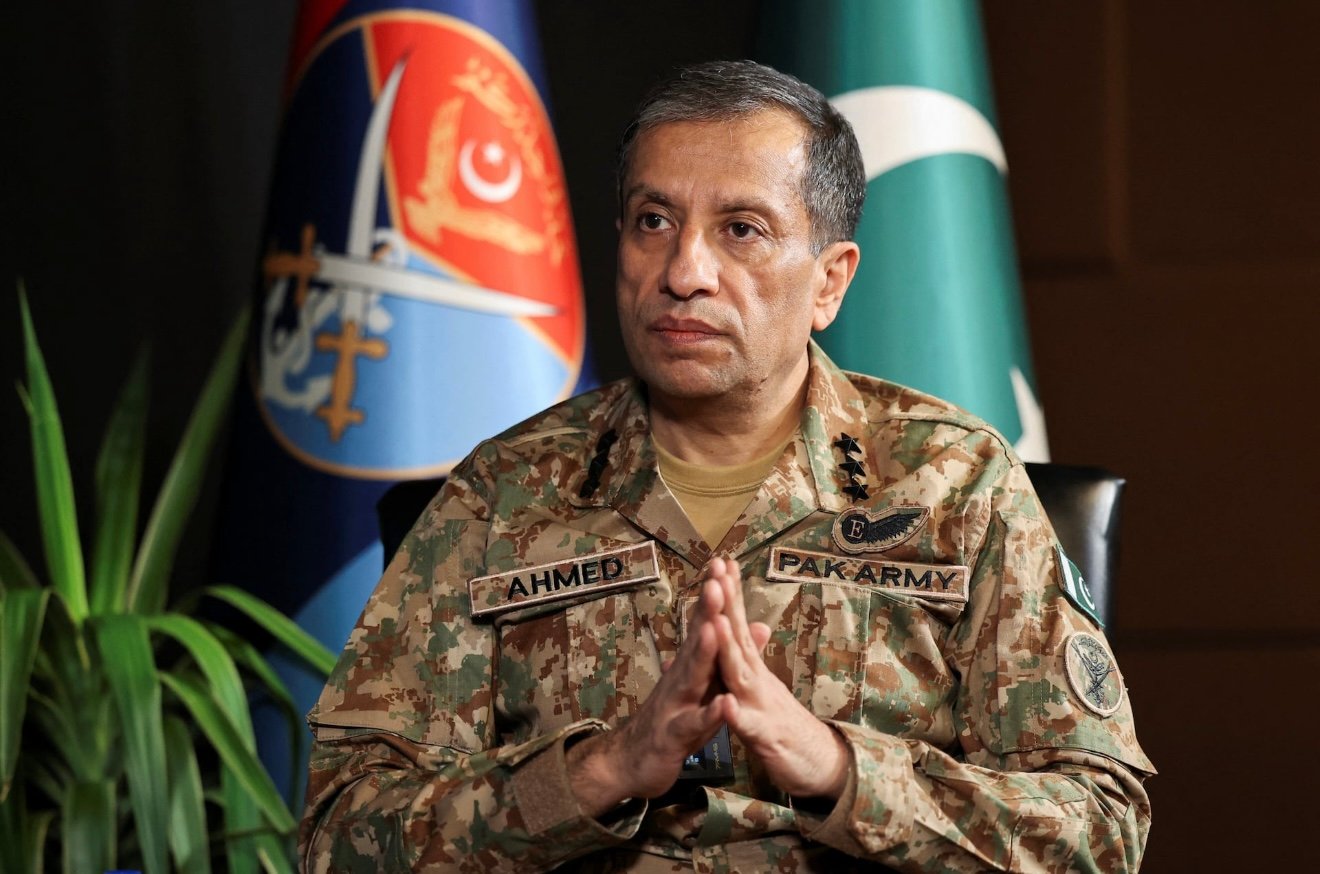
Pakistan’s military is cautiously optimistic about ongoing diplomatic efforts to de-escalate the conflict between Iran and the United States, military spokesman Lieutenant General Ahmed Sharif Chaudhry said in an interview with Reuters on Friday.
The Director General of Inter-Services Public Relations (ISPR) said Field Marshal Asim Munir’s repeated visits to Tehran reflected positive momentum in Pakistan’s mediation efforts.
“Why would the Field Marshal be going twice if it is not for some positivity? So yes, of course,” Chaudhry told Reuters when asked whether the visits indicated progress.
“The word that we would use is always cautiously optimistic,” he added.
Field Marshal Munir, who has emerged as a central figure in Pakistan’s diplomatic efforts to reduce tensions between Iran and the United States, visited Tehran twice in October.
His latest visit on Monday was part of a high-level diplomatic engagement involving Saudi Defence Minister Prince Khalid bin Salman and Turkish intelligence chief Ibrahim Kalın.
The talks came amid efforts by regional powers to prevent further escalation of the eight-month-old Iran conflict.
However, the military spokesman warned that “powerful spoilers and detractors” remained active, referring to elements that believed continued conflict served their interests. He did not identify them.
Chaudhry declined to disclose details of the Tehran discussions or whether Washington had supported the latest diplomatic initiative.
Makkah Joint Defence Agreement Open to New Members
In a significant statement regarding the future of regional security cooperation, the DG ISPR said the Makkah Joint Defence Agreement (MJDA), signed by Pakistan, Saudi Arabia and Türkiye on August 7, did not prevent additional countries from joining.
Asked by Reuters whether Iran could become a member, Chaudhry said:
“Anyone who has a shared vision of collective deterrence and regional peace, why not? Everyone is most welcome.”
He clarified that any decision on expanding the agreement would rest with the political leadership of the three founding countries.
The agreement establishes a collective defence framework under which an attack on one signatory is treated as an attack on all.
The pact has gained increasing strategic importance as the Iran-US conflict reshapes regional security arrangements and raises concerns about a wider confrontation in the Middle East.
Following Monday’s talks in Tehran, Mohsen Rezaei, secretary of Iran’s Supreme National Security Council, emphasised that regional security should be ensured by regional countries without foreign intervention.
Pakistan Reaffirms Commitment to Saudi Arabia’s Defence
Addressing questions about Pakistan’s military commitments under the MJDA, Chaudhry said any additional deployment of Pakistani troops to Saudi Arabia would depend on the security situation and decisions taken by the political leadership of both countries.
He reaffirmed Pakistan’s commitment to defending Saudi Arabia, including the holy cities of Makkah and Madinah.
However, he drew a clear distinction between Pakistan’s defence commitments and the conflict in Yemen.
“We are not part of the Yemeni conflict, which is an intra-Yemen conflict,” he told Reuters.
His remarks came as renewed fighting between Saudi Arabia and Yemen’s Iran-aligned Houthi group heightened concerns about the regional consequences of the Iran war.
Intelligence-Based Operations to Intensify in Khyber Pakhtunkhwa
Turning to domestic security, the military spokesman said Pakistan’s counterterrorism strategy in Khyber Pakhtunkhwa would continue to rely on intelligence-based operations rather than conventional large-scale military campaigns.
His comments followed the federal government’s October 11 decision to suspend the PTI-led provincial government in Khyber Pakhtunkhwa and detain Chief Minister Sohail Afridi.
The federal government accused the provincial administration of failing to effectively address terrorism, while PTI rejected the allegations and described the intervention as politically motivated.
Asked whether the developments would lead to larger military-led operations, Chaudhry said the army’s counterterrorism approach remained focused on intelligence-led action.
“Our counter-terrorism operations are based on what we call IBOs, intelligence-based operations,” he said.
“The tempo of the freedom of action of (those) IBOs will further increase.”
The military spokesman’s remarks indicate that security forces intend to intensify intelligence-based counterterrorism operations in the province.
Khyber Pakhtunkhwa had been the only province governed by PTI, whose independent-backed candidates won the largest number of directly elected National Assembly seats in the February 2024 general election but fell short of securing an overall majority.
The Reuters interview comes at a significant moment for Pakistan’s regional diplomacy, with Islamabad simultaneously pursuing mediation between Iran and the United States, strengthening collective defence cooperation with Saudi Arabia and Türkiye, and addressing security challenges at home.