
Makkah Defence Agreement Members to Meet Iranian Leadership in Tehran Today
The meeting will mark the first high-level engagement involving Iran, Saudi Arabia, Pakistan and Türkiye since the recent escalation of Houthi attacks on Saudi territory.

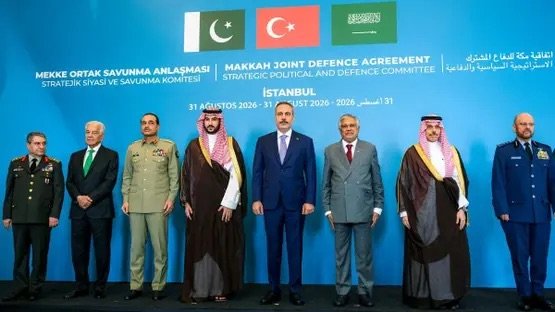
Senior officials from Pakistan, Saudi Arabia and Türkiye, the three member countries of the Makkah Joint Defence Agreement (MJDA), are expected to meet Iranian leaders in Tehran today, in a significant diplomatic engagement following recent Houthi attacks on Saudi Arabia.
According to Reuters, citing informed sources, senior representatives of the three countries will hold talks with Iranian officials in Tehran amid heightened regional tensions and growing security concerns across the Middle East.
Pakistan will reportedly be represented by Chief of Army Staff Field Marshal Asim Munir, while Saudi Arabia’s delegation will include Defence Minister Prince Khalid bin Salman. Türkiye will be represented by the head of Turkish intelligence.
The meeting will mark the first high-level engagement involving Iran, Saudi Arabia, Pakistan and Türkiye since the recent escalation of Houthi attacks on Saudi territory.
The talks come at a sensitive time for regional security, with repeated attacks on Saudi civilian and strategic infrastructure raising concerns over the potential for a wider confrontation.
Iran has recently rejected allegations of involvement in Houthi attacks against Saudi Arabia. Iranian Foreign Ministry spokesperson Esmaeil Baghaei maintained that Tehran had played no role in the operations and expressed willingness to facilitate a peaceful resolution to the Yemen conflict if requested by the parties involved.
Saudi Arabia, meanwhile, has accused Iran of encouraging the Houthis to intensify their attacks against the Kingdom.
Previous MJDA Meeting and Regional Defence Coordination
The latest diplomatic engagement follows a series of meetings between Pakistan, Saudi Arabia and Türkiye under the Makkah Joint Defence Agreement, signed on August 7, 2026.
The trilateral agreement established a framework for closer defence cooperation, intelligence sharing and coordination among the three countries, with its secretariat based in Riyadh.
On September 25, senior military leadership from the three member countries met in Riyadh to review regional security developments and strengthen coordination under the agreement.
According to an ISPR statement issued on September 26, the meeting condemned attacks targeting Makkah and Saudi Arabia’s civilian and economic infrastructure.
The participating military leadership agreed to enhance intelligence sharing, operational coordination and integration of defence capabilities to address emerging security threats.
The meeting also discussed rapid deployment arrangements to strengthen Saudi Arabia’s defensive capabilities under the trilateral framework.
Pakistan subsequently appointed Lieutenant General (Retired) Nauman Mahmood as the first Secretary General of the Makkah Joint Defence Agreement, reflecting progress towards institutionalising the defence cooperation mechanism.
Türkiye has also reiterated the defensive nature of the agreement, with Turkish Foreign Minister Hakan Fidan stating earlier this month that Ankara’s involvement would focus on defensive cooperation, including air defence and technical support, rather than offensive military deployments.
Diplomatic Engagement Amid Regional Tensions
The planned Tehran meeting comes as Pakistan, Saudi Arabia and Türkiye continue to coordinate their positions on regional security challenges.
For Pakistan, the engagement represents another important diplomatic development, placing Islamabad among the countries participating directly in high-level discussions concerning Middle Eastern security.
The meeting also brings together three countries linked through a formal defence cooperation framework and Iran, a major regional power whose relations with Saudi Arabia have come under renewed pressure following the Houthi attacks.
The outcome of the talks could provide further indications of whether regional powers intend to pursue diplomatic de-escalation amid the continuing conflict in Yemen and threats to Saudi security.