
UK Deploys Three Nuclear Submarines at Sea for First Time in Five Years
The three submarines reportedly at sea are HMS Vanguard, HMS Vigilant and HMS Vengeance, while the fourth, HMS Victorious, is currently undergoing maintenance.

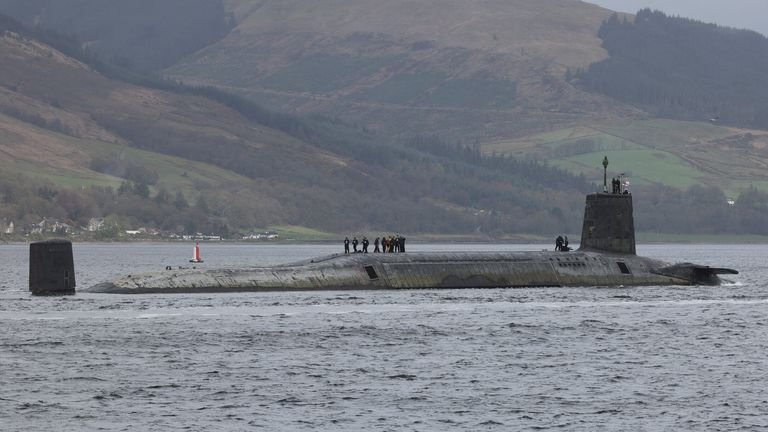
Britain has reportedly deployed three of its four nuclear deterrent submarines at sea simultaneously for the first time in five years, raising questions about a possible shift in the country’s defence posture amid growing security concerns in Europe.
According to British media reports, at least one of the submarines is equipped with ballistic missiles capable of carrying nuclear warheads.
The three submarines reportedly at sea are HMS Vanguard, HMS Vigilant and HMS Vengeance, while the fourth, HMS Victorious, is currently undergoing maintenance.
Britain’s Nuclear Deterrent Strategy
The United Kingdom maintains a continuous at-sea nuclear deterrent, ensuring that at least one of its four Vanguard-class submarines remains deployed at all times.
According to Navy Lookout, an independent publication covering the Royal Navy, Britain has maintained an uninterrupted submarine-based nuclear deterrent since 1969.
However, the reported simultaneous deployment of three submarines is unusual and has prompted speculation about whether Britain is adjusting its military readiness amid increasing international tensions.
The deployment alone does not establish that the UK has changed its nuclear alert status.
UK Defence Ministry Reaffirms Nuclear Commitment
According to Sky News, a spokesperson for Britain’s Ministry of Defence described the country’s nuclear deterrent as the foundation of its national security.
“Our nuclear deterrent is the bedrock of our national security, protecting the UK and our NATO allies every minute of every day,” the spokesperson said.
The ministry also emphasised Britain’s unique role within NATO, stating that the UK remains the only European ally to have formally assigned its nuclear deterrent to the alliance’s defence.
This arrangement, the spokesperson said, means all NATO members already benefit from the protection provided by Britain’s nuclear capabilities.
British and French Fighter Jets Conduct Joint Nuclear Exercise
The reported submarine deployment follows a joint military exercise involving British and French fighter jets, during which the two countries practised operations linked to France’s airborne nuclear deterrent.
According to the French Armed Forces, British Royal Air Force Typhoon fighter jets provided protective cover for French aircraft during a simulated nuclear strike mission.
The exercise marked the first joint drill of its kind between the two countries, highlighting closer defence cooperation between Europe’s two nuclear-armed powers.
Britain Warned to Prepare for War Within 1,000 Days
The developments come amid warnings reported in the British media that the country must strengthen its military preparedness against emerging threats.
In an article attributed to Defence Secretary Wes Streeting and published in The Telegraph, the warning stated that Britain had just over 1,000 days to prepare for the possibility of war alongside its allies.
“Our adversaries’ intent to harm us is not new. What has changed is their capability,” the article stated.
It warned that by 2030, adversaries could possess sufficient military strength and wartime economic capacity to launch attacks.
The warning called for urgent preparations to ensure British forces could fight and win alongside allied nations.
UK Urges Households to Prepare for Emergencies
The reported warning also follows the launch of a public preparedness campaign encouraging British households to maintain emergency supplies.
Under the “Be Ready” initiative described in the reports, residents have been advised to keep enough food, bottled water, cash and a battery-powered radio to manage at least three days of disruption.
The guidance is intended to help households respond to emergencies such as cyberattacks, extreme weather and disruptions to essential infrastructure.
The reported submarine deployments, joint nuclear exercises and public preparedness measures have drawn renewed attention to Britain’s defence readiness and its role in NATO’s security strategy.