
Pakistan Regulator Bans Unverified Live Coverage of Blasts and Attacks
According to a notification issued on October 13, 2026, the media regulator instructed television broadcasters to avoid transmitting unverified information or sensitive footage during terrorist attacks and other security-related incidents.

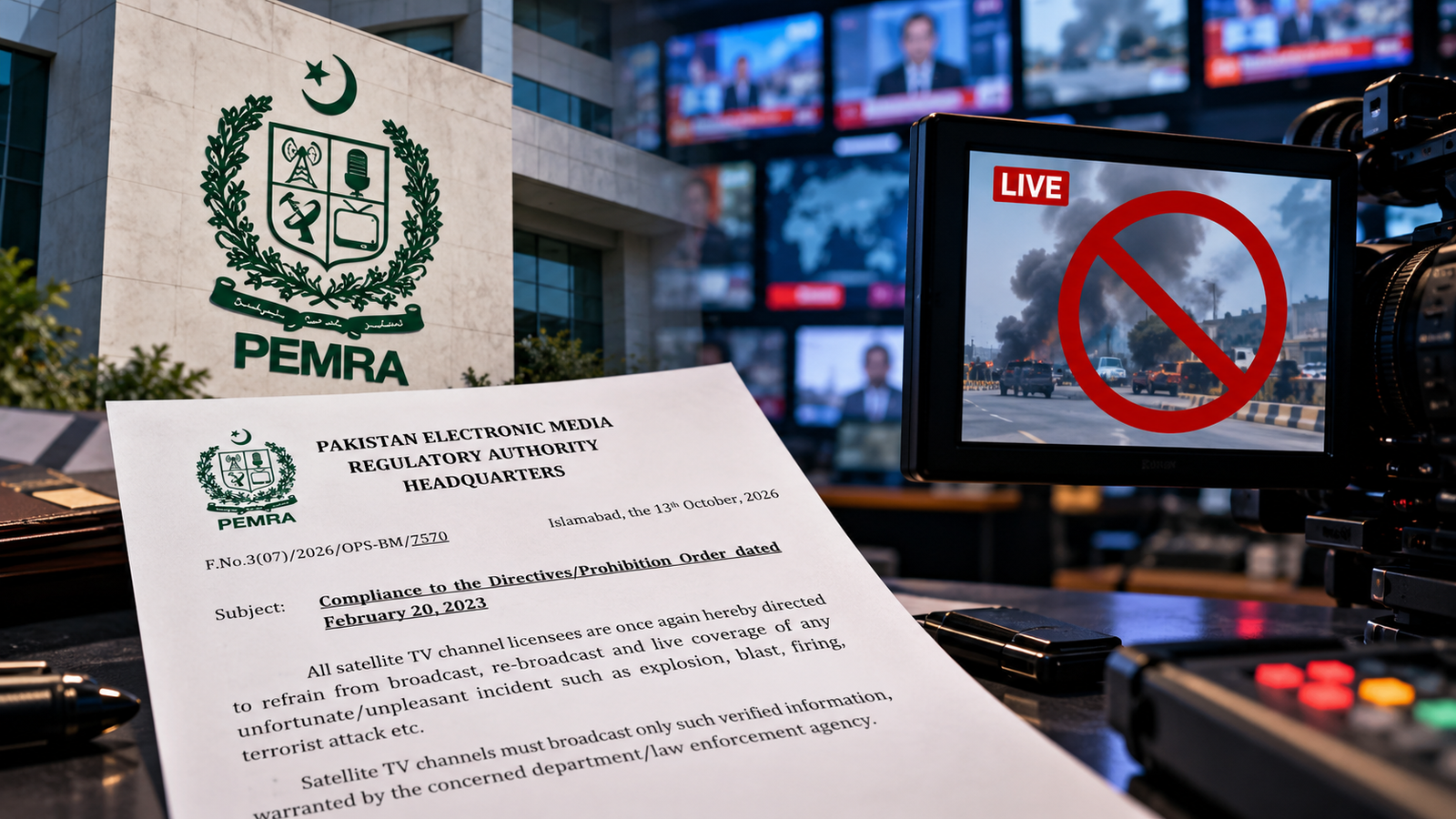
The Pakistan Electronic Media Regulatory Authority (PEMRA) has once again directed all satellite television channels to refrain from broadcasting, rebroadcasting or providing live coverage of explosions, firing incidents, terrorist attacks and other unfortunate incidents, reiterating restrictions first imposed in February 2023.
According to an official notification issued on October 13, 2026, PEMRA instructed all satellite television licensees, including news, current affairs and regional language channels, to strictly comply with the prohibition order dated February 20, 2023.
The notification states that television channels must broadcast only verified information warranted by the concerned department or law enforcement agency.
“All satellite TV channel licensees are once again hereby directed to refrain from broadcast, re-broadcast and live coverage of any unfortunate/unpleasant incident such as explosion, blast, firing, terrorist attack etc.,” the notification reads.
PEMRA has also instructed television broadcasters to effectively use time-delay mechanisms and ensure the constitution of independent editorial boards in accordance with the relevant legal requirements.
The regulator referred to the Supreme Court of Pakistan’s judgment in Suo Motu Case No. 28 of 2018 and the Islamabad High Court’s order dated September 5, 2022, in CMA No. 102 of 2022, concerning the proper implementation of prescribed broadcast delay procedures.
The notification warned that any violation would result in legal action under Sections 29A, 30 and 33 of the PEMRA Ordinance 2002, as amended.
The directive was issued with the approval of the PEMRA Chairperson and signed by Umair Azim, Director (Operations–Broadcast Media).
The latest instructions reinforce the regulator’s existing restrictions on broadcasting sensitive incidents and require television channels to follow official verification procedures when reporting explosions, firing incidents and terrorist attacks.
Such absurd restrictions by PEMRA are the worst example of imposing censorship on the media. It’s an attempt to strangle and cage Pakistani media, already caught in the web of censorship.
I believe the PFUJ @Afzalbutt01 @asifbashirch @MazharAbbasGEO &the media fraternity will condemn this soon & demand that the authorities refrain from imposing such restrictions.— Owais Tohid (@OwaisTohid) October 14, 2026
The restrictions have renewed debate over the balance between national security requirements and media freedom.
PEMRA prohibits live coverage of “unfortunate/unpleasant incidents such as explosion, blast, firing, terrorist attacks” and directs TV channels to air information “verified” by govt departments or law enforcement agencies.
But what about verification by own reporters? And what happens when official accounts are inaccurate?
— Benazir Shah (@Benazir_Shah) October 14, 2026
While goverment officials argue that live broadcasting during terrorist incidents can unintentionally reveal sensitive operational information, spread unverified reports and potentially assist terrorists by exposing the movements or positions of security personnel.
However, restrictions requiring broadcasters to rely on official sources have also raised questions about independent journalism, editorial autonomy and the public’s right to receive timely information during major security incidents.
The directive places responsibility on television broadcasters to ensure that reporting on explosions, terrorist attacks and other sensitive security incidents complies with PEMRA’s instructions while maintaining editorial oversight.