
National Assembly Approves KP Emergency Amid Protests
The resolution concerning the presidential proclamation of emergency was presented during a National Assembly session chaired by Speaker Sardar Ayaz Sadiq.

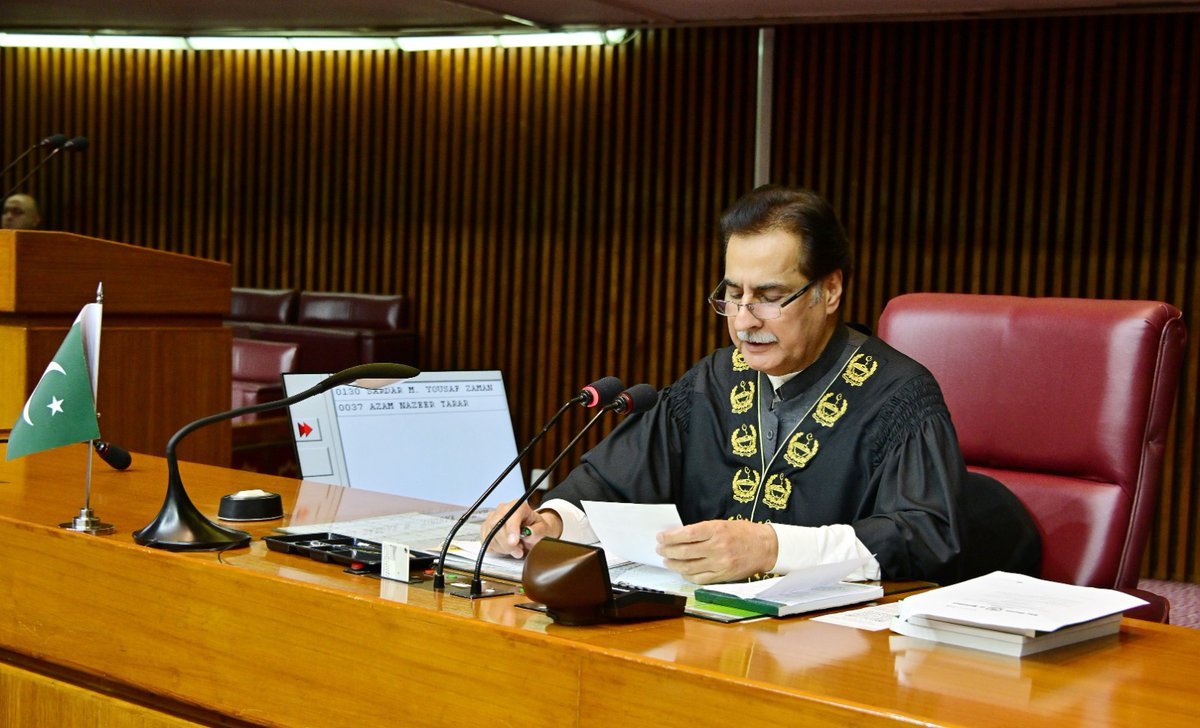
Pakistan’s National Assembly has approved the imposition of a state of emergency in Khyber Pakhtunkhwa (KP) through a majority vote, following more than four hours of debate and strong opposition protests against the federal government’s decision.
The resolution concerning the presidential proclamation of emergency was presented during a National Assembly session chaired by Speaker Sardar Ayaz Sadiq.
Federal Minister for Parliamentary Affairs Tariq Fazal Chaudhry initially moved a resolution to suspend Question Hour, which was approved by the House. The resolution concerning the emergency proclamation in Khyber Pakhtunkhwa was subsequently presented for debate.
Speaking during the session, Federal Law Minister Azam Nazeer Tarar defended the emergency, citing internal unrest, external infiltration and what he described as the provincial government’s non-serious approach towards counterterrorism.
Tarar accused the former KP administration of failing to adequately address the growing terrorist threat and alleged that former Chief Minister Suhail Afridi had prioritised his political agenda over the province’s security challenges.
He further alleged that the provincial leadership had disregarded the sacrifices of security personnel and civilians, while the political ideology of a particular party had contributed to the rise in terrorism.
The law minister told lawmakers that parliamentary approval of the emergency proclamation was mandatory within 10 days of its announcement.
Referring to the security situation, Tarar said the Pakistan Army had previously restored peace in the province through significant sacrifices and counterterrorism operations.
He stated that 2,911 terrorist incidents had occurred by 2024, while 3,787 incidents had been recorded since October 15, 2025, highlighting what he described as the severity of the security challenges.
“Extraordinary circumstances required extraordinary measures,” the law minister said while defending the federal government’s decision.
Opposition lawmakers strongly opposed the emergency proclamation and raised slogans during the parliamentary proceedings.
Meanwhile, National Assembly Speaker Sardar Ayaz Sadiq addressed the breakdown of negotiations between the government and opposition, maintaining that the government remained willing to engage in dialogue.
“We are still ready for negotiations. Everyone knows who sabotaged the talks. The less said about this matter, the better,” Sadiq remarked.
The speaker revealed that during the negotiations, the government’s delegation was present in his chamber while the opposition delegation was seated in a committee room.
He said both sides had appeared optimistic about reaching an agreement before Allama Raja Nasir Abbas unexpectedly informed them that the proposed agreement could not proceed.
According to Sadiq, opposition members had initially celebrated the apparent breakthrough before the negotiations collapsed.
The emergency in Khyber Pakhtunkhwa was imposed on October 11, 2026, with the federal government citing deteriorating security conditions and the provincial administration’s alleged failure to cooperate in counterterrorism efforts.
Following more than four hours of debate involving government and opposition lawmakers, the National Assembly approved the emergency resolution by a majority vote.
The session was subsequently adjourned until Friday at 11 a.m.