
Houthi Attacks on Riyadh Airport Kill 17, Injure 333: Saudi Coalition
Addressing a press conference, Al-Malki warned that repeated attacks by the Houthi militia on Saudi Arabia's airports and critical infrastructure pose a serious threat to regional security, civilian lives and aviation safety.

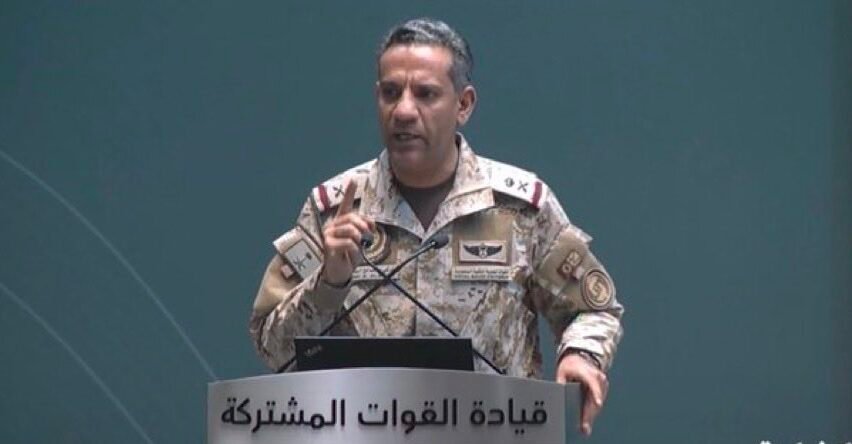
At least 17 people were killed and 333 others injured in Houthi terrorist attacks targeting King Khalid International Airport in Riyadh between October 7 and 11, according to Major General Turki Al-Malki, spokesperson for the Saudi-led Coalition to Restore Legitimacy in Yemen.
Addressing a press conference, Al-Malki warned that repeated attacks by the Houthi militia on Saudi Arabia’s airports and critical infrastructure pose a serious threat to regional security, civilian lives and aviation safety.
According to figures presented during the briefing, the attacks on King Khalid International Airport resulted in 17 fatalities and 333 injuries over the five-day period, highlighting the scale of the threat facing civilian aviation infrastructure in the Kingdom.
Al-Malki revealed that the Houthi militia had attempted to target dozens of airports, oil facilities and ports across Saudi Arabia as part of its continuing attacks on civilian and economic infrastructure.
Providing details of the assault on Riyadh’s main international airport, the coalition spokesperson said one of the terrorist attacks involved 10 drones, missiles and other projectiles.
He further disclosed that King Khalid International Airport had been targeted in 20 separate attacks since October 1, underscoring the frequency of Houthi operations against the Kingdom’s aviation sector.
The coalition spokesperson also outlined the military response to the continuing threats, stating that coalition forces had successfully destroyed 127 Houthi weapons depots located in mountainous areas.
The operations form part of the coalition’s efforts to neutralise Houthi military capabilities and prevent further attacks against Saudi territory and civilian infrastructure.
The latest casualty figures come amid a broader escalation in Houthi attacks against Saudi Arabia, including repeated attempts to strike airports, energy installations and other strategic facilities.
On September 29, a Houthi drone attack targeted the Taibah power station in Madinah at approximately 5:11 a.m., damaging a transformer and temporarily affecting part of the facility. Saudi authorities said the electricity network remained stable despite the attack.
Earlier in September, Houthi forces had also attempted a drone attack towards Makkah, raising concerns over threats to the Kingdom’s holy cities and civilian infrastructure.
The Saudi government has repeatedly condemned the attacks, warning that the Houthi militia would bear responsibility for targeting airports, Makkah, Madinah, visitors to the Two Holy Mosques and civilian and economic installations.
During a Cabinet meeting chaired by Crown Prince and Prime Minister Mohammed bin Salman on October 13, Saudi Arabia praised the armed forces for defending the Kingdom’s sovereignty and protecting its citizens and residents.
The Cabinet also commended military operations conducted by the Coalition to Restore Legitimacy in Yemen to neutralise Houthi threats against the Yemeni people, international peace and security, global trade and maritime supply chains.
On October 5, Yemeni government forces announced that they had regained control of the strategically important Bab el-Mandeb and Dhubab areas during an operation named Dawn of Yemen.
According to coalition figures released at the time, approximately 100 fighter jets participated in the operations, with 324 targets destroyed and round-the-clock air cover provided to advancing forces.
The fighting around Bab el-Mandeb, one of the world’s most important maritime chokepoints, has heightened concerns about the security of international shipping routes connecting the Red Sea with the Gulf of Aden.
The latest statements from the coalition indicate that Saudi Arabia continues to face significant security challenges from Houthi drone and missile attacks, even as military operations intensify against the militia’s positions in Yemen.
Repeated attacks on Riyadh’s international airport, in particular, have raised concerns over civilian safety, international air travel and the wider implications of the conflict for regional stability.