
From SCO to IMF–World Bank: Pakistan’s Rising Diplomatic Profile

For years, India and other critics of Pakistan have sought to portray Islamabad as diplomatically isolated, with limited influence in international affairs. However, Pakistan’s continued participation in major international institutions and multilateral forums presents a different picture.
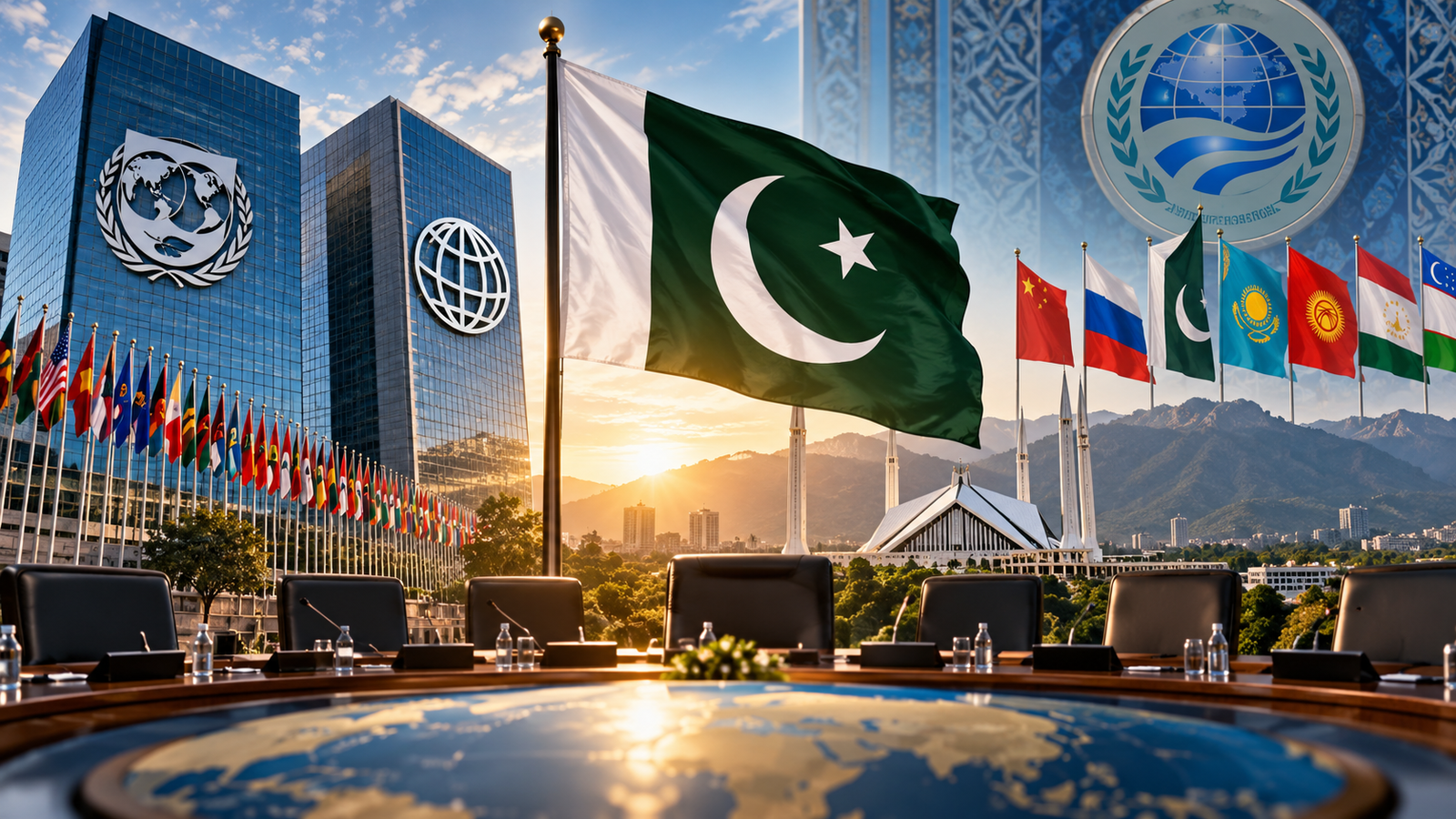
Pakistan has been named the incoming chair of the IMF and World Bank Boards of Governors for 2027, marking the country’s first time holding the role in 74 years since 1953. The development represents an important opportunity for Islamabad to strengthen its engagement with international financial institutions and participate more prominently in discussions on global economic governance.
The appointment comes at a time when Pakistan is also preparing to host the Shanghai Cooperation Organisation (SCO) summit next year, further highlighting its role in regional diplomacy and multilateral cooperation.
Together, these developments reinforce Pakistan’s diplomatic relevance at a time of shifting regional alliances, economic uncertainty and growing geopolitical competition.
For Islamabad, the significance extends beyond ceremonial recognition. Its involvement in international economic and regional platforms provides opportunities to engage major powers, strengthen partnerships and contribute to discussions on financial stability, regional connectivity and economic cooperation.
The broader message is that Pakistan remains a country that cannot easily be excluded from major regional and international conversations. Its strategic location, regional security role and diplomatic relationships continue to make it an important participant in discussions affecting South Asia and beyond.
While diplomatic influence is ultimately measured by concrete outcomes rather than appointments alone, these developments offer Pakistan an opportunity to translate international recognition into stronger economic and strategic partnerships.
For those who have promoted the narrative of Pakistan’s diplomatic isolation, the country’s growing visibility in multilateral forums presents a challenge to that assessment.