
Pakistan ready to use all means to defend Saudi Arabia, army spokesman says
In an interview with Independent Arabia, DG ISPR said Saudi Arabia’s sovereignty, territorial integrity and the security of Islam’s two holiest sites were non-negotiable.

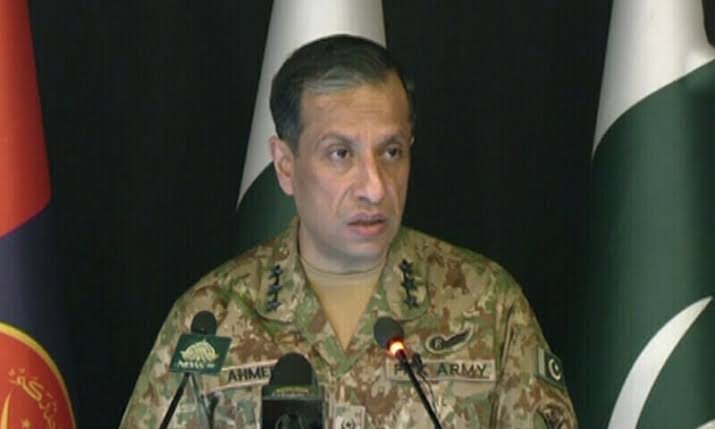
Pakistan is providing necessary military support to Saudi Arabia and is prepared to use all available means to deter attacks against the kingdom, the military’s spokesperson, Lieutenant General Ahmed Sharif Chaudhry, has said, warning that any attack on a member of the “Mecca Alliance” would trigger a collective response.
In an interview with Independent Arabia published on Sunday, DG ISPR said Saudi Arabia’s sovereignty, territorial integrity and the security of Islam’s two holiest sites were non-negotiable.
“Saudi Arabia’s sovereignty, territorial integrity and the security of the Two Holy Mosques are matters that are not open to negotiation or compromise,” he said, adding that all necessary support was already being provided and would continue.
He declined to disclose operational details, citing the need for operational secrecy.
Asked whether Pakistan would provide direct military support to Yemen’s internationally recognised government, Chaudhry said he did not know whether Islamabad had received a formal request but would consider any such request and make an appropriate decision.
‘Mecca Alliance’ and collective defence
The remarks come as the “Mecca Alliance”, comprising Saudi Arabia, Pakistan and Turkiye, faces its first practical test since its establishment in August, following Houthi attacks on Saudi Arabia.
Chaudhry described the alliance’s progress as “exceptional” and said its critics would continue to criticise it while the member states moved ahead with their commitments.
He cited the rapid establishment of the alliance’s secretariat and the formation of a political, strategic and defence committee comprising the foreign and defence ministers and military chiefs of the three countries.
“The establishment of the alliance did not come out of nowhere, but is based on longstanding historical relations between Saudi Arabia, Pakistan and Turkiye, founded on mutual trust and respect, as well as a shared vision of security, stability and collective deterrence,” he said.
Chaudhry said military cooperation between Pakistan and Saudi Arabia had existed for decades and covered multiple areas, adding that the coordination predated the alliance and would continue.
He described the alliance as “purely defensive” and said it had no offensive intentions.
The alliance is based on Article 51 of the United Nations Charter, which recognises the right of states to self-defence, he said.
“If any party wages war, directly or indirectly, against any of the three countries, the response will be collective,” Chaudhry said.
He added that if deterrence failed to achieve its objectives, it would be necessary to re-establish it using all means available to the three countries.
Pakistan’s anger over attacks on holy sites
Speaking about Houthi attacks targeting Makkah and Madinah, Chaudhry said the incidents had provoked anger across Pakistan, from ordinary citizens and young people to the country’s political and military leadership.
“The feeling that prevailed in our country after the attacks, from ordinary people in the streets, children and young people to our political and military leadership, was anger,” he said.
He questioned how anyone could attack Saudi Arabia, threaten Islamic holy sites or give the impression of intending to do so.
Chaudhry said Pakistan’s military position stemmed from its commitment to protecting Islam’s holy sites, adding that the country’s leadership had expressed its position clearly by combining calls for Muslim unity with readiness to defend the security of alliance members.
“Escalating military conflicts or expanding their scope does not serve the interests of Islamic countries or their peoples,” he said.
“If a negotiated settlement cannot be reached and the situation turns into a military confrontation, the collective deterrence mechanism provided by the Mecca Alliance will inevitably come into effect, as is already happening,” he added.
Warning to Houthi attackers and their supporters
Chaudhry said Pakistan was sending strong messages about the seriousness of its defence commitments through its forces, public statements and operational deployments.
His remarks came days after Saudi Deputy Foreign Minister Raed Qarmali said in a media briefing that Iran had encouraged the Houthis to escalate attacks against Saudi Arabia.
“We will take all necessary measures to support Saudi Arabia’s security, territorial integrity, the security of the Two Holy Mosques and the holy sites,” Chaudhry said.
“This message is directed at everyone, whether those carrying out the attacks directly or those standing behind them,” he added.
Asked whether the Houthis would heed the warnings, Chaudhry referred to Pakistan’s experience in dealing with non-state armed groups, including the Tehreek-i-Taliban Pakistan (TTP).
He said such groups did not behave like states and often operated as proxies for other parties, making their actions difficult to predict.
“Non-state groups respond only to clear and decisive messages that reflect an unequivocal and unwavering resolve,” he said, adding that Pakistan and the other alliance members had shown no hesitation in their messaging.
Pakistan’s contacts with Iran
Asked whether Islamabad had used its channels with Tehran to deliver a direct warning over the Houthi escalation, Chaudhry neither confirmed nor denied that such a warning had been issued.
He said Pakistan’s political and military leadership had been in contact with Iran for months to encourage restraint.
“All our contacts and discussions with the parties concerned are focused on de-escalation, and this is what we are doing now and will continue to do,” he said.
DG ISPR described a recurring pattern of escalation and de-escalation in the region, arguing that parties seeking to create instability exploited periods of reduced tension to reignite confrontations.
He said the expansion of the conflict by the Houthis would serve no positive purpose and would benefit those seeking to spread chaos across the region.
Alliance open to new members
Army spokesman said the Mecca Alliance was not limited to Saudi Arabia, Pakistan and Turkiye, adding that its doors remained open to other countries that shared its commitment to collective deterrence, regional security and stability.
His remarks came weeks after retired Pakistani general Nauman Mahmood was appointed the alliance’s first secretary-general and the political, strategic and defence committee was formed to discuss major policy directions and decisions.
Asked about reports that Egypt and Syria were interested in joining, Chaudhry neither confirmed nor denied the claims. He said decisions on membership rested with the political, strategic and military leaderships of the three founding countries.
He added that the alliance would not replace existing military agreements or relations between its members and other partners.
Responding to reports that the alliance had been established to deter Iran and Israel, Chaudhry said it was not directed against any particular country.
“The Mecca Alliance is not directed against any particular country. It has no offensive intentions; rather, it is based on achieving peace, stability and security, and that is its objective,” he said.
“Consequently, any party that threatens this peace, stability and security will automatically find itself facing the collective deterrence mechanism established under the alliance,” he added.
Pakistan urges restraint amid fears of renewed Iran war
DG ISPR acknowledged concerns about a possible resumption of hostilities between the United States and Iran following the US midterm elections scheduled for November 3, but did not directly link the possibility of renewed conflict to the election results.
He said Pakistan and its regional partners were continuing to engage with the parties concerned in an effort to break the cycle of escalation and de-escalation.
“We continuously emphasise to them that this cycle is not good, does not serve the interests of the region, and does not serve the interests of the parties involved in the conflict itself,” he said.
Chaudhry warned that concerns would persist because of the many overlapping factors and parties seeking to obstruct diplomatic efforts and prevent a settlement.
Maritime security
On threats to international shipping in the Bab el-Mandeb and Strait of Hormuz, Chaudhry said Saudi Arabia had already taken practical steps to strengthen maritime security by establishing a multinational defensive maritime alliance, of which Pakistan was also a member.
He said a Pakistani naval officer served as the alliance’s deputy commander.
Recent developments, including the formation of the Mecca Alliance, reflected growing regional cooperation on military and security matters, he said.
“Countries in the region are increasingly coming together to achieve regional security, collective security, peace and stability,” he said, adding that they were working to support one another in promoting peace and prosperity for their peoples.
