
Türkiye Clarifies Makkah Defence Pact Is Strictly Defensive
Speaking in Ankara on Thursday, Fidan explained that the agreement, signed in August, is based on the principle that an attack against one member would be considered an attack against all three countries.

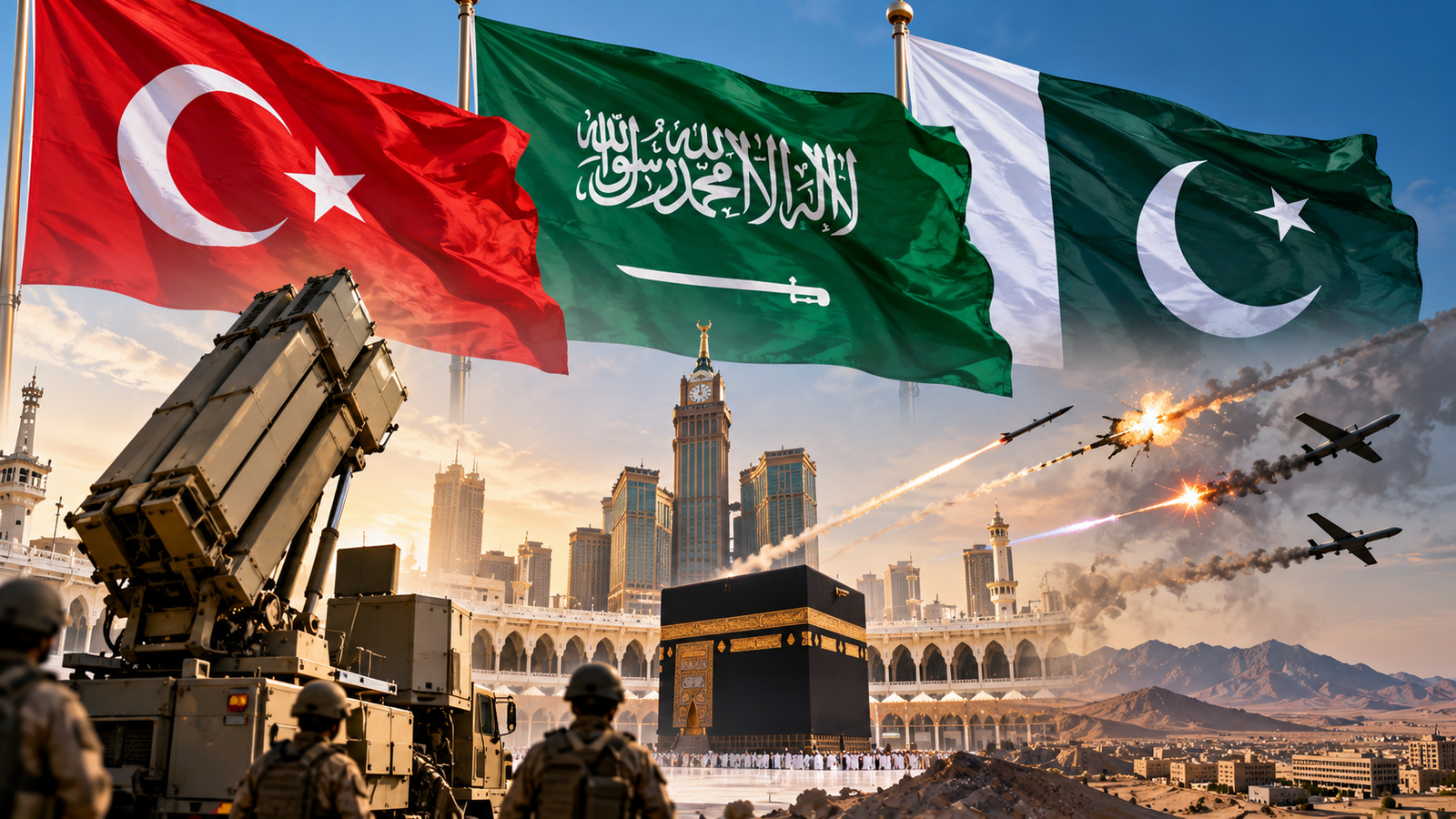
Turkish Foreign Minister Hakan Fidan has clarified that the trilateral Makkah Joint Defence Agreement between Pakistan, Saudi Arabia and Türkiye is strictly defensive in nature, ruling out the deployment of Turkish troops for offensive military operations on foreign soil.
Speaking in Ankara on Thursday, Fidan explained that the agreement, signed in August, is based on the principle that an attack against one member would be considered an attack against all three countries.
However, he stressed that the collective defence commitment applies exclusively to defensive operations and does not authorise offensive military action against other countries.
Under the agreement, Türkiye intends to support Saudi Arabia in countering threats from Yemen’s Houthi forces, particularly through air defence capabilities and technical assistance.
The Turkish government does not plan to deploy combat troops to conduct attacks beyond Saudi territory under the provisions of the pact.
The agreement is currently awaiting ratification by the Turkish parliament before completing the country’s domestic approval process.
Türkiye’s Military Support to Saudi Arabia
Fidan’s clarification comes amid growing security concerns in Saudi Arabia following repeated Houthi attacks targeting civilian infrastructure and areas near the Kingdom’s holy cities.
Reports indicate that Türkiye has already provided bilateral military assistance to Saudi Arabia, including electronic warfare systems and missiles designed to strengthen the Kingdom’s defensive capabilities against aerial threats.
Such assistance is separate from the trilateral agreement and reflects existing defence cooperation between Ankara and Riyadh.
Türkiye’s position indicates that its participation in the Makkah Joint Defence Agreement will focus on strengthening deterrence, air defence coordination and technical cooperation rather than involvement in offensive military campaigns.
Background: Makkah Joint Defence Agreement
Pakistan, Saudi Arabia and Türkiye signed the Makkah Joint Defence Agreement on August 7, 2026, establishing a trilateral collective defence framework aimed at enhancing military cooperation and regional security.
The agreement provides that an armed attack against one member will be treated as an attack against all three, reinforcing the principle of collective defence.
Riyadh serves as the headquarters of the agreement’s secretariat, with retired Pakistani Lieutenant General Nauman Mahmood appointed as its first Secretary-General.
The agreement has gained greater strategic importance amid escalating Houthi attacks against Saudi Arabia, including threats to holy cities and critical civilian and economic infrastructure.
On September 25, the military chiefs of Pakistan, Saudi Arabia and Türkiye held an emergency meeting in Riyadh to review regional security developments and discuss coordinated measures against emerging threats.
The meeting emphasised intelligence sharing, operational coordination and the integration of defence capabilities among the three countries.
The discussions also focused on implementing the agreement’s collective defence provisions and strengthening military preparedness.
Strategic Committee Meeting in Riyadh
The trilateral agreement entered another important phase on October 5, when the Strategic Political and Defence Committee convened in Riyadh.
The meeting brought together the foreign ministers, defence ministers and senior military leadership of Pakistan, Saudi Arabia and Türkiye to discuss the implementation of the agreement and the evolving regional security situation.
The committee reviewed mechanisms for collective defence, military coordination and the development of capabilities to respond to threats against member states.
The meeting followed intensified Houthi attacks on Saudi Arabia and military developments around the strategic Bab el-Mandeb Strait, a crucial maritime passage connecting the Red Sea with the Gulf of Aden.
The three countries have emphasised that their security cooperation is intended to reinforce regional stability, deter aggression and protect their sovereignty and territorial integrity.
Defence Cooperation Without Offensive Deployment
Fidan’s latest statement provides further clarity on how Türkiye intends to fulfil its obligations under the agreement.
While the pact establishes collective defence commitments, Ankara’s interpretation limits its participation to defensive assistance, including air defence systems, military technology and technical support.
The distinction is particularly significant amid regional tensions involving Yemen’s Houthi forces and concerns about the security of Saudi Arabia’s holy cities, energy infrastructure and maritime routes.
The Turkish foreign minister’s remarks underline that the Makkah Joint Defence Agreement is designed as a collective security mechanism rather than a framework for offensive military intervention.
For Pakistan, Saudi Arabia and Türkiye, the agreement represents a major step towards institutionalised trilateral defence cooperation, with its future implementation expected to focus on deterrence, intelligence sharing and coordinated defensive capabilities.