
Why India Is Concerned About Trump’s New Green Card Restrictions on US Tech Companies
US green card sponsorship restrictions on Microsoft and Adobe raise concerns for Indian technology professionals as India responds to the Trump administration.

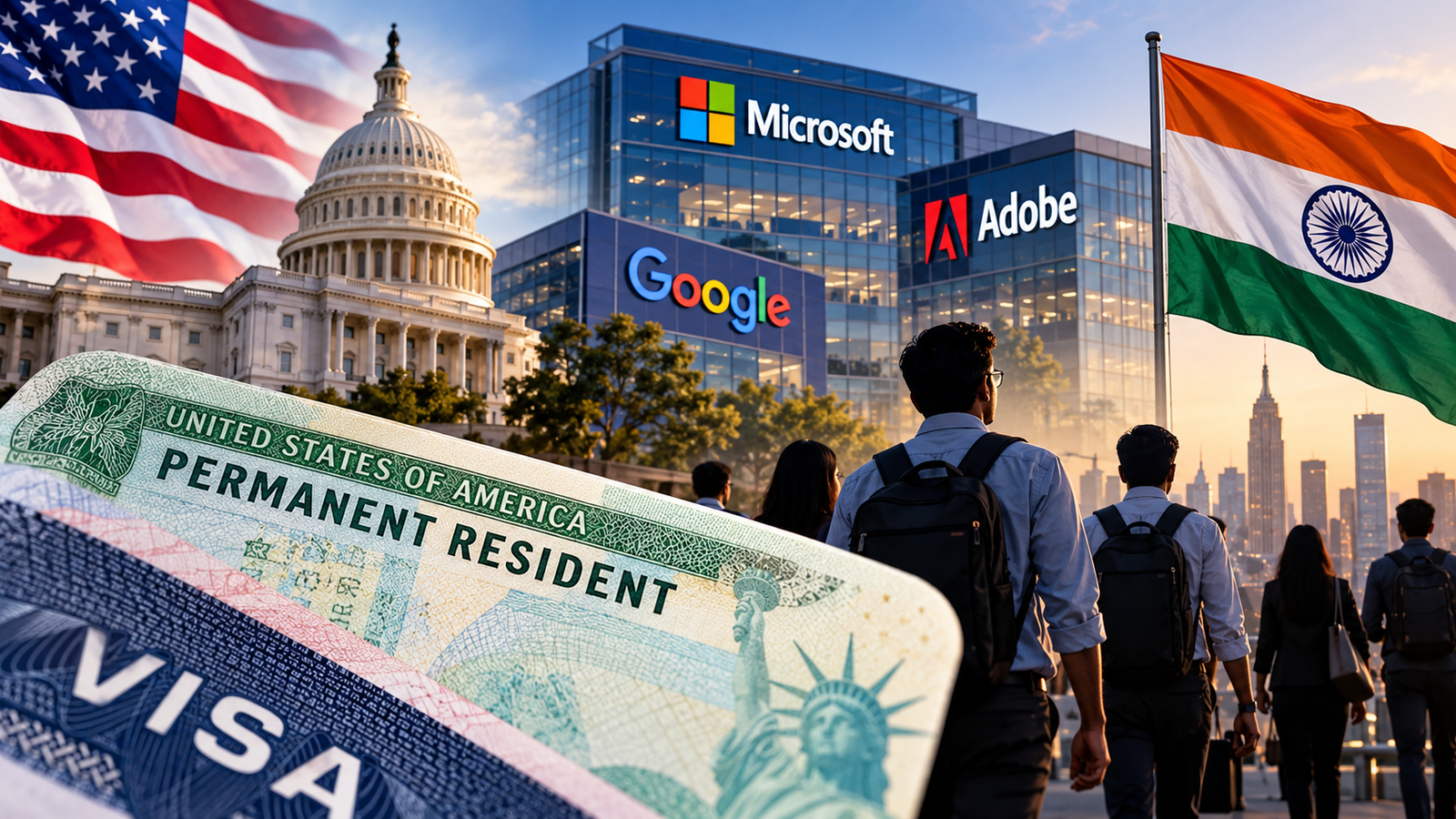
India has strongly reacted to the Trump administration’s suspension of green card sponsorship processing for Microsoft, Adobe and several other major American IT companies, a decision that could disproportionately affect Indian nationals, who dominate the US skilled-worker visa programme and constitute a significant part of America’s technology workforce.
In a statement issued on October 9, India’s Ministry of External Affairs (MEA) expressed concern over Washington’s decision, arguing that restrictions on skilled foreign professionals could undermine the economic interests of both countries.
The Indian reaction follows US Vice President JD Vance’s announcement that the Trump administration had suspended Microsoft, Adobe and several other major technology companies from the Permanent Labor Certification (PERM) programme, which allows employers to complete a key step in sponsoring foreign employees for permanent residency.
Speaking at a press conference, Vance said the administration wanted technology companies to invest in the United States while prioritising American workers for employment opportunities.
“We want people to invest in America, especially in American technology,” Vance said, emphasising that American companies should not replace domestic employees with foreign workers.
Directly addressing Microsoft, the vice president said, “You are a great American company, but you should hire great American workers.”
The decision carries particular significance for Indian nationals, who represent the largest group of beneficiaries under America’s H-1B skilled-worker visa programme.
According to US Citizenship and Immigration Services (USCIS) data for fiscal year 2024, Indian-born professionals accounted for approximately 71 percent of approved H-1B petitions, far exceeding the share of any other nationality.
Indian professionals have established a substantial presence in the American technology industry, from software engineering and artificial intelligence to senior corporate leadership.
Several of America’s leading technology companies have been headed by Indian-born executives, including Microsoft’s Satya Nadella, Google’s Sundar Pichai, Adobe’s Shantanu Narayen and IBM’s Arvind Krishna. YouTube is also led by Indian-origin executive Neal Mohan.
Indian professionals also work across other major American technology companies, including Meta, the parent company of Facebook and Instagram, Amazon and X.
However, the suspension announced by Washington concerns specified companies and does not establish that all these technology firms or their Indian employees are directly affected.
Responding to the development, India’s Ministry of External Affairs defended the contribution of Indian professionals to the American economy.
“Talent mobility adds value to both economies,” the ministry stated, highlighting the role of skilled Indian workers in supporting American innovation, research, productivity, competitiveness and job creation.
New Delhi maintained that Washington’s measures “do not advance the shared ambitions of both countries.”
The Indian government also objected to recent remarks by Vice President Vance concerning foreign professionals, describing such characterisations as unwarranted.
The MEA argued that Indian professionals working in the United States were highly educated and skilled contributors to the country’s economy and innovation ecosystem.
“Resorting to terminology that carries painful historical and colonial legacy connotations is deeply offensive,” the ministry said.
However, New Delhi clarified that the suspension of PERM applications does not automatically invalidate existing H-1B visas or affect the legal status of visa holders and their dependents.
The restrictions could nevertheless delay the employment-based green card process for eligible foreign workers employed by the affected companies.
Indian nationals already face lengthy waiting periods for permanent residency because of country-specific immigration limits and substantial backlogs in employment-based green card applications.
Further restrictions on employer-sponsored permanent residency could increase uncertainty for Indian professionals planning long-term careers and settlement in the United States.
The controversy also highlights a growing contradiction between America’s reliance on international technology talent and the Trump administration’s emphasis on protecting domestic employment.
For New Delhi, the issue extends beyond immigration policy, as Indian technology professionals have become an important component of economic and technological cooperation between the two countries.
While Washington maintains that American companies should prioritise domestic workers, India argues that skilled talent mobility strengthens innovation and economic competitiveness on both sides.
The latest disagreement adds another sensitive dimension to US-India relations, particularly as the two countries seek closer cooperation in artificial intelligence, advanced technology and strategic industries.
The actual impact on Indian nationals will depend on the number of affected companies, the volume of pending PERM applications and the duration of the suspension.