
Strait of Hormuz may become redundant within five years: HSBC chief
HSBC's CEO Georges Elhedery said: “Of course, we want to see a resolution to the conflict and hope for one, but it is possible that in five years the Strait of Hormuz will become redundant.”

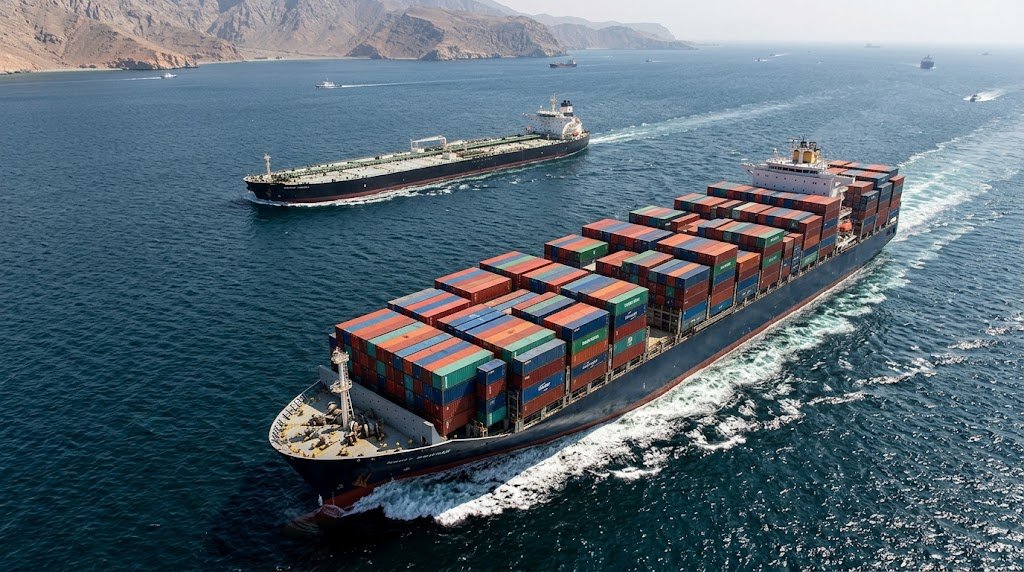
Tehran announced the closure of the Strait of Hormuz after US and Israeli strikes on Iran on February 28, 2026, and tensions between the two sides have continued since then.
The waterway is vital for global energy supplies, carrying about a fifth of the world’s oil and liquefied natural gas trade before the war. Its closure has added to global inflationary pressures and concerns over an energy crisis, prompting the International Monetary Fund (IMF) to express concern.
The conflict has pushed Gulf countries to invest resources in plans to connect energy pipelines to ports, providing alternative routes for transporting supplies.
According to Elhedery, such investment would help the region withstand the impact of the conflict.
“We are seeing that this region is capable of recovering and then continuing to grow. That will require a lot of investment,” the HSBC chief executive said at the HSBC Future Forum event in Dubai.
“Of course, we want to see a resolution to the conflict and hope for one, but it is possible that in five years the Strait of Hormuz will become redundant,” he added.
In a report released on Monday, HSBC said packages worth $872 billion were being offered for individual projects across the Middle East, North Africa and Turkey. These projects form part of a planned infrastructure pipeline worth $1.4 trillion for which contracts have yet to be awarded.
The report cited data from MEED, a Dubai-based market intelligence platform focused on the construction industry.
Meanwhile, a recent HSBC survey of more than 1,600 business leaders and around 820 institutional investors worldwide found that they continued to view the Gulf as an attractive investment destination.
However, after recording growth of 3.3 per cent in 2025, the World Bank projected last week that the economy of the Middle East, North Africa and Pakistan region would contract by 1.3 per cent this year because of the war. A stronger but uneven recovery is expected in 2027.
Elhedery was among the global financial figures expected to attend Saudi Arabia’s flagship investment conference next week.
The conference was postponed on Monday and rescheduled for 2027 following attacks on Riyadh by Yemen’s Houthi movement.
