
Millions in Pakistan Live on Less Than Rs840 a Day: World Bank
The report paints a concerning picture of Pakistan’s poverty trajectory, saying prolonged economic adjustments have reduced real household incomes, increased poverty and weakened employment opportunities.

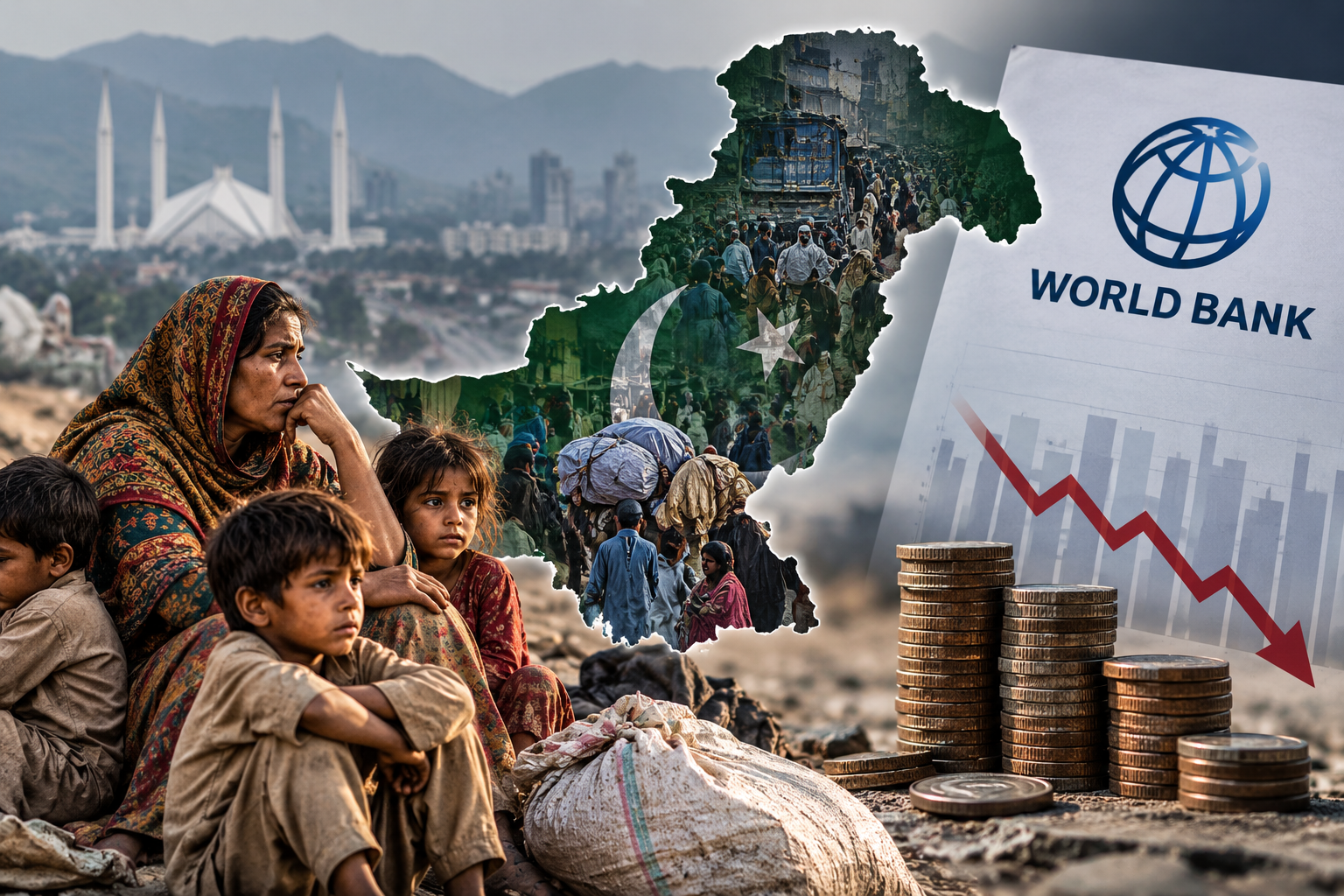
Pakistan is home to nearly 48 percent of the poor population across the Middle East, North Africa, Afghanistan and Pakistan (MENAP) region, with millions living on less than $3 — around Rs840 — a day, according to a World Bank report.
The report paints a concerning picture of Pakistan’s poverty trajectory, saying prolonged economic adjustments have reduced real household incomes, increased poverty and weakened employment opportunities.
According to the World Bank, Pakistan’s poverty rate at the $3-a-day threshold increased by 6.4 percentage points between 2018-19 and 2024-25. At the $4.20-a-day threshold, poverty rose by 3.2 percentage points over the same period.
The report indicates that the increase in poverty across the wider region has been driven primarily by worsening poverty levels in Pakistan.
Economic Shocks Hit Household Incomes
Pakistan has faced a series of major economic shocks in recent years, including the Covid-19 pandemic, devastating floods in 2022, an economic crisis, soaring inflation and a sharp depreciation of the rupee.
These pressures have eroded purchasing power and household incomes while limiting employment opportunities.
The World Bank estimates Pakistan’s GDP growth at 2.2 percent in the current fiscal year, remaining broadly around the previous year’s level.
Regional Conflict Adds to Economic Pressure
The report also highlights the economic consequences of conflict in the Middle East, particularly for countries dependent on imported energy.
Since the beginning of the conflict, petrol prices have risen by around 40 percent in Pakistan and Lebanon, while increases have also been recorded in Syria and the United Arab Emirates.
Diesel prices increased by more than 40 percent in Pakistan, compared with around 80 percent in Lebanon and 70 percent in the UAE, according to the report.
Pakistan, Morocco, Tunisia, Djibouti, Egypt and Jordan are among oil-importing economies facing mounting pressure from higher energy and essential commodity prices.
The resulting inflation is squeezing fiscal space at a time when governments are already facing broader economic constraints.
Remittances, Borrowing Costs Under Pressure
The World Bank said remittances from Gulf economies have also declined, while borrowing costs have increased and heightened risks have pushed up insurance costs.
These pressures are particularly significant for economies such as Pakistan that depend heavily on imported energy, external financing and overseas remittances.
The report also noted that Pakistan’s private sector has yet to adequately adapt to the country’s emerging economic needs, adding another challenge to employment creation and sustainable growth.
With almost half of MENAP’s poor now living in Pakistan, the World Bank’s findings underline the scale of the challenge facing the country as it seeks to stabilise the economy while protecting household incomes and generating jobs.