
El Niño’s Impact on Pakistan’s Winter Rainfall 2026–27
El Niño is a natural climate pattern characterized by the warming of the Pacific Ocean's surface temperatures, particularly in the central and eastern equatorial regions.

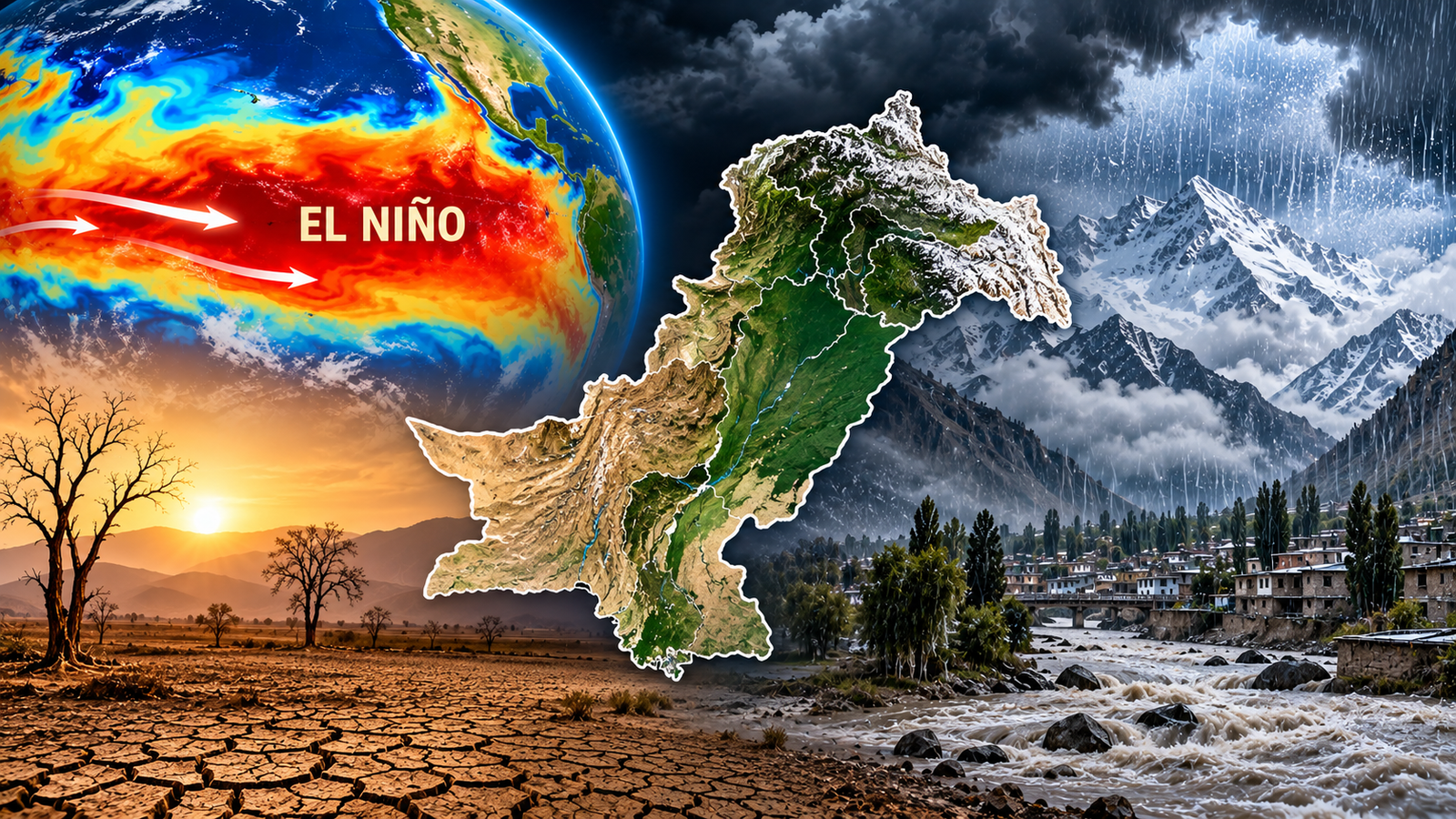
The global climate is currently under the strong influence of an El Niño event, which experts predict could be one of the most intense since 1950.
While El Niño typically leads to significant shifts in global temperature and rainfall patterns, its impact on Pakistan’s winter rainfall presents a more nuanced and, at times, confusing picture.
The anticipation of a major El Niño has raised concerns and prompted discussions among meteorologists and climate scientists about its potential far-reaching consequences. Yet, the specific local manifestations, particularly in regions like Pakistan, require a deeper, more tailored analysis.
El Niño is a natural climate pattern characterized by the warming of the Pacific Ocean’s surface temperatures, particularly in the central and eastern equatorial regions. This warming influences weather worldwide, often leading to above-average temperatures globally and altering precipitation patterns, increasing the risk of both droughts and floods in different regions.
The World Meteorological Organization (WMO) has confirmed that this El Niño is strengthening rapidly and is highly likely to persist through February 2027, potentially becoming one of the strongest on record.
The magnitude of this event suggests that its climatic fingerprints will be observed across continents, influencing agricultural yields, water resources, and disaster preparedness strategies.
Historically, El Niño events have often been associated with weaker summer monsoon rainfall in Pakistan, increasing the likelihood of drought-like conditions, especially in southern provinces such as Sindh and Balochistan.
This reduction in summer precipitation can have severe consequences for Pakistan’s agrarian economy, impacting crop yields and exacerbating water scarcity issues. However, the relationship between El Niño and Pakistan’s rainfall during the winter months is not always straightforward.
While some studies suggest a tendency for heavier winter precipitation during El Niño years, other analyses indicate that rainfall patterns in Pakistan during El Niño have not followed a completely consistent trend. This variability makes long-term forecasting particularly challenging for the region’s winter season.
The complexity arises because El Niño can cause both rainfall deficits and, paradoxically, episodic intense precipitation, leading to flash floods. For instance, a recent study found that El Niño was a primary driver of extreme rainfall in April and May, causing widespread flash flooding across Afghanistan, Iran, and Pakistan.
This demonstrates that while El Niño can generally be linked to drier conditions during the monsoon, it doesn’t preclude the possibility of severe, concentrated rainfall events at other times, including winter.
These intense, localized events can be particularly destructive, overwhelming existing infrastructure and posing significant risks to life and property, even in years characterized by overall lower precipitation.
Moreover, other regional climate phenomena, such as the Indian Ocean Dipole (IOD) and the North Atlantic Oscillation (NAO), can also play a significant role in modulating Pakistan’s climate, sometimes overshadowing or interacting with the effects of El Niño.
The positive phase of the IOD, for example, can enhance rainfall in Pakistan, potentially counteracting some of the drying effects of El Niño during certain periods. Similarly, the NAO influences the strength and trajectory of winter storms, which are crucial for Pakistan’s winter precipitation.
The intricate interplay of these multiple teleconnections creates a highly dynamic and often unpredictable climate system for Pakistan.
Therefore, while a major El Niño event is confirmed globally, its specific implications for winter rainfall in Pakistan remain subject to complex interactions among various climate drivers. This complexity necessitates continued vigilance and localized assessments to better understand and prepare for the diverse impacts on the ground, requiring adaptive strategies for water management, agriculture, and disaster risk reduction.