
Gate of Tears or Fears

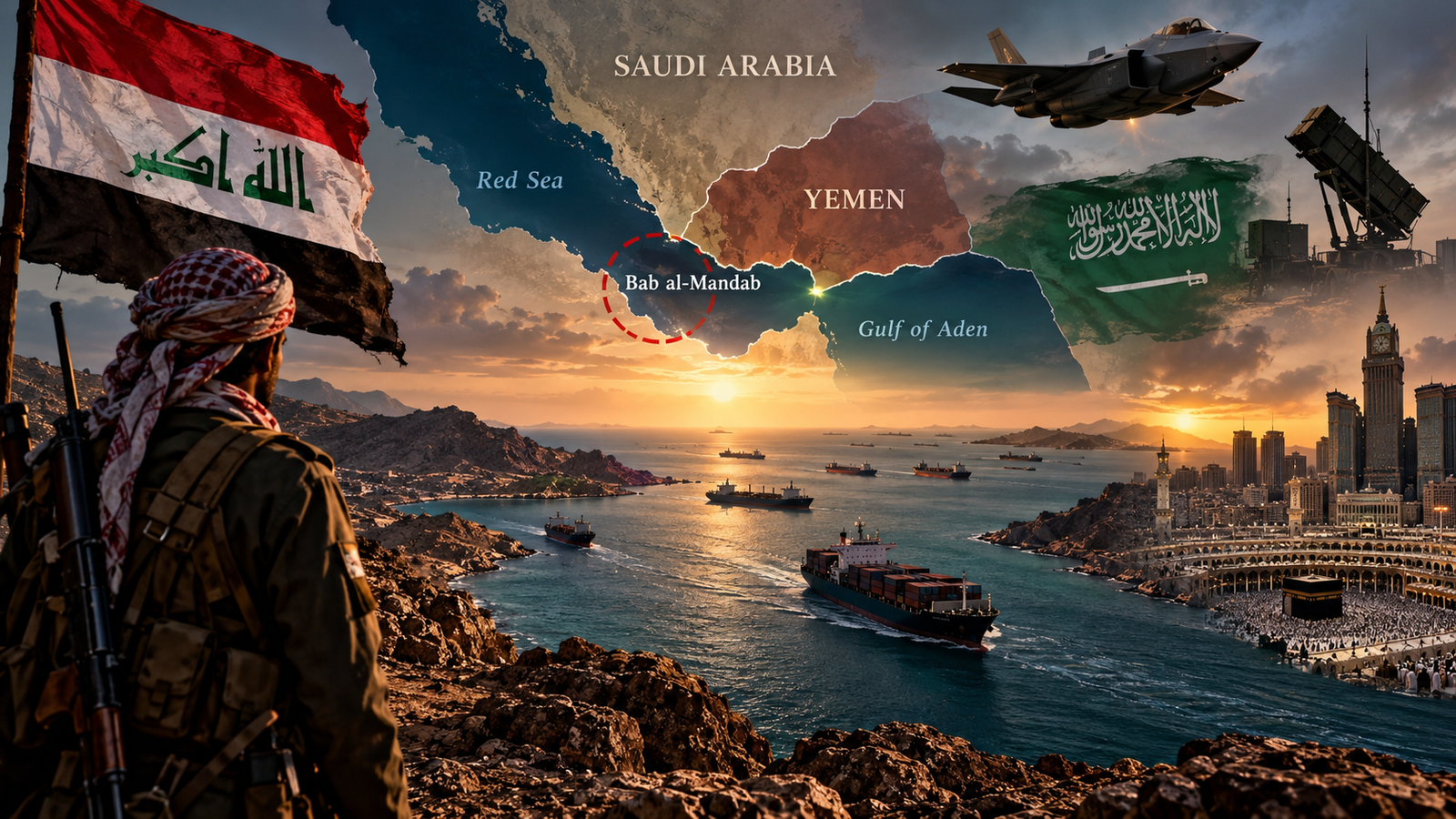
The words “Bab al-Mandab” mean “Gate of Tears,” but it is becoming the gate of fear for the world.
This strait is a waterway between the Red Sea and the Gulf of Aden and a critical maritime chokepoint. It returned to the spotlight because of the movement of the Yemeni Houthis against Saudi Arabia.
Yemen’s western coastline is under the control of the Houthis, through which Bab al-Mandab is transformed into a powerful strategic weapon. This strait is banned by the Houthis only for the Kingdom of Saudi Arabia, which exposes the vulnerability of the advanced military technology of KSA.
The Houthis have transformed from a small Zaydi movement in the mountains of Saada into a powerful military force. They fought six wars against the Yemeni government between 2004 and 2010. These wars worked as a practical “military academy.”
Their capabilities cannot be challenged because they captured Sana’a in 2014 and seized Scud missiles. The Houthis also focused on assembling their inexpensive drones and missiles, which makes their supply chain difficult to disrupt.
Due to this, they are able to challenge much more expensive defensive systems. As per the claims, a U.S.-made F-15 fighter jet of Saudi Arabia was shot down over the Marib region in west-central Yemen by the Houthis. This shows that the Houthis are not a temporary threat.
The Houthis are strategically positioned at the economic lifeline of Saudi Arabia. They can disrupt Saudi Arabia’s oil exports without even being in direct war. The Houthis’ presence over Mocha and Mayun Island provides control of the shipping chokepoint from the Yemeni side.
Territory containing over 80% of Yemen’s population is under Houthi control. Those areas include Western Taiz, Southern Hudaydah and various islands such as Hanish, Zukar, Kamaran and Mayun.
On 15–16 September 2026, Saudi air defenses intercepted a drone that was heading towards Makkah, and Saudi officials blamed the Houthis for it. However, the Houthis denied it and claimed that their attacks are limited to Saudi oil installations and military bases.
Saudi Arabia has not presented any evidence yet. It seems like a diversion of public attention from the loss of the Saudi fighter jet, whose debris footage was released by the Houthis.
This situation explains that the Houthis operate rationally despite their aggressive position. But attacks on holy sites, whether genuine or false flags, can trigger serious global tensions.
Actual security cannot be achieved through expensive foreign weapons deals. Saudi Arabia and the United States agreed on a $24 billion deal for 48 F-35 fighter jets.
Israel initially opposed this deal to maintain its military edge, but the United States agreed to provide F-35 fighter jets to the Kingdom of Saudi Arabia.
Saudi Arabia also depends on collaborative frameworks with the United States and Israel to hide its own military limitations. The United States is also hesitant to directly intervene, as it is seeking guarantees on shipping safety while meeting with Houthi representatives in Oman.
This situation demonstrates that global powers are negotiating rather than engaging in direct confrontation with the Houthis.
Pakistan has a very delicate position in this conflict. Pakistan’s forces are already deployed for the protection of the Kingdom and holy sites, as Lieutenant General Ahmed Sharif Chaudhary explained in his latest interview with Al Arabiya.
Pakistan has offered its diplomatic and defensive support for Saudi Arabia but is refraining from the language of direct confrontation with the Houthis. Pakistani and Turkish forces are not intending to fight directly with the Houthis in Yemen, but diplomatic and defensive support is always there.
The Houthis have achieved strategic leverage from the Bab al-Mandab Strait. They have challenged Saudi Arabian dominance over the region.
A country cannot be secured just with expensive military weapons, and security cannot be borrowed. Muslim states need to realize who will benefit when they directly confront each other.
The question of whether Bab al-Mandab is the Gate of Tears or Fears will be answered by future events, and the answer will impact not only the outlook of Yemen but the entire regional order.