
Pakistan’s Credibility: Tested, Demonstrated, and Proven
Pakistan’s record increasingly speaks through these moments of actual performance. Systems were tested. Strategies were tested. Resolve was tested. And each time, credibility was not merely claimed; it was demonstrated.

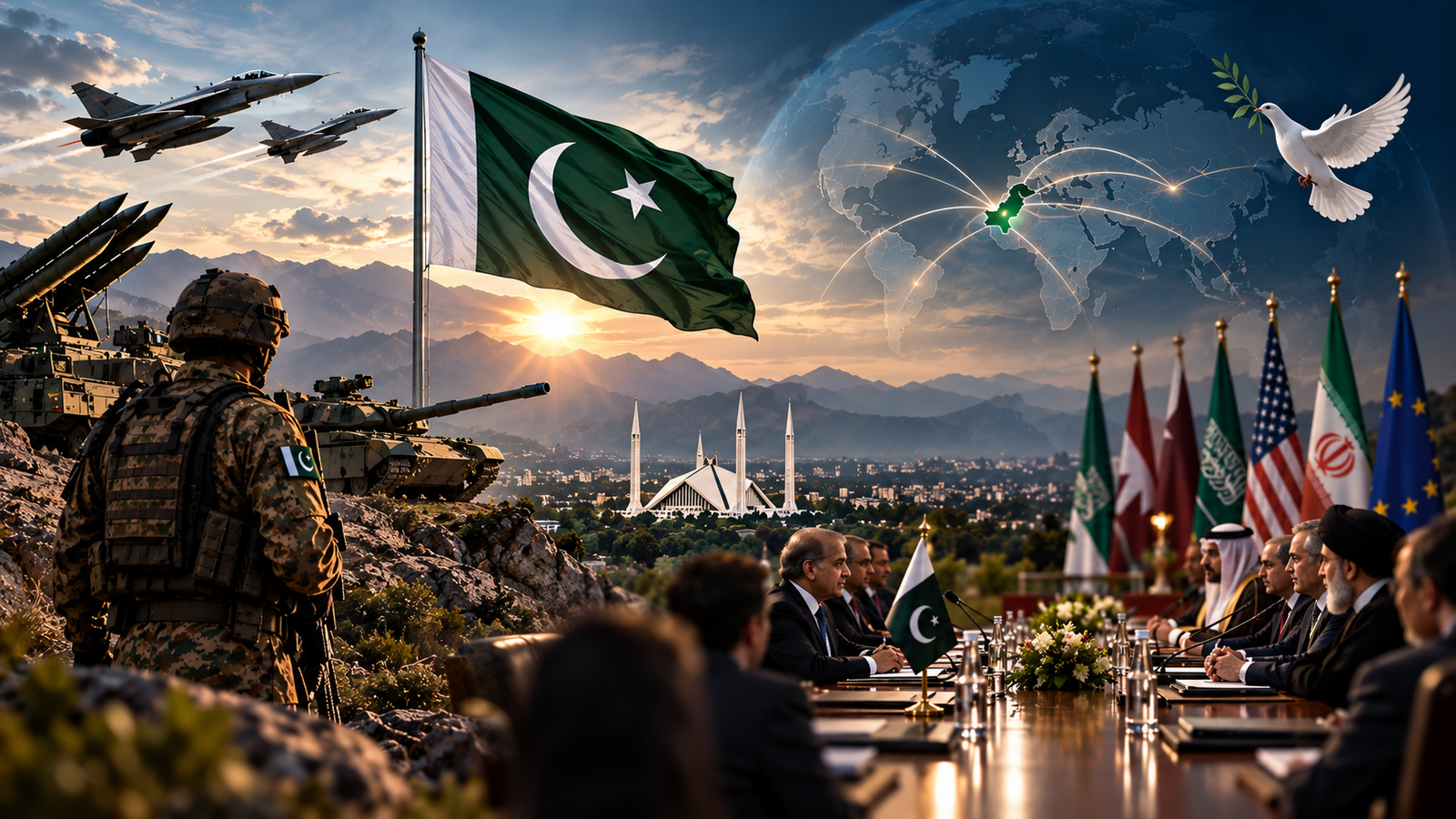
In modern times, Pakistan has emerged as a model for establishing the credibility of its defence capabilities across different domains, situations and periods of conflict. In military strategy, it is not enough simply to possess a capability; its credibility is ultimately established in a real war scenario.
A state may develop state-of-the-art weaponry, sophisticated platforms and advanced systems, but unless these are tested under actual combat conditions and perform as intended, their deterrence value remains largely theoretical. Strategy and policy, after all, stand on the foundations of credible capabilities.
In 2019, India tested Pakistan’s capability, technology and resolve. Pakistan accepted the challenge and responded in time and with confidence. It brought its indigenous defence capability, the celebrated JF-17 Thunder, into the theatre of conflict. The Pakistan Air Force, confident in this Sino-Pakistan engineering achievement, brought down an Indian MiG-21. The episode ended with the captured pilot, a cup of tea that was “fantastic.” Beyond the symbolism, however, the encounter demonstrated something far more important: the capability worked when it mattered.
In 2025, the bluff was called again, and Pakistan’s war readiness and technology were once more put to the test. This time, Pakistan’s airborne J-10Cs, armed with the now-famous PL-15 missiles, became part of a sophisticated kill chain that brought down Indian overconfidence, the Rafales, MiGs and the French Dassault’s stocks, with them, in a brief war.
This time, however, the episode was not merely about proving that Pakistan possessed capable platforms. It offered a new lesson in modern warfare. Enemy pilots sitting inside some of the most modern and celebrated fighter aircraft found themselves effectively blinded inside a carefully constructed electronic and cyber fog. The Godzillas were looking for each other in the fog while being hit inside their own territory.
That was big. It was unexpected. It surprised the Godzillas and baffled Indian strategists. The real action immediately drew the attention of military analysts across the world. A new chapter was written in the history of aerial combat. The lesson was straightforward: modern warfare is no longer simply about which aircraft looks more impressive on paper. It is about sensors, electronic warfare, missiles, networks, integration, situational awareness and the ability to construct a kill chain before the opponent can even understand what is happening. More importantly, it’s not the gun but the man behind the gun.
These achievements on the battlefield further strengthened the credibility of Pakistan’s defence capabilities and, consequently, its stature in global politics. Despite economic difficulties and periods of political unrest, Pakistan demonstrated that state capability can translate into influence.
That influence became visible again during the Iran-US conflict. Pakistani territory and airspace effectively became a safe space between adversaries that were otherwise hitting each other hard. More significantly, whenever Pakistani leadership shared a particular space with the leadership of one of the conflicting parties, opponents appeared reluctant to launch attacks there.
Credibility, therefore, moved beyond the battlefield. It began to acquire diplomatic and strategic value.
During the expanding phase of the conflict, Iranian sailors travelled to India for an exercise. Upon their return, they were targeted in close proximity to India, exposing what appeared to be the limits of Indian military credibility when it came to ensuring the security of visiting Iranian personnel. India could not even produce a sufficiently forceful policy response that might have helped restore the perception of credibility.
Pakistan presented a strikingly different picture.
Islamabad actively steered mediation efforts, helped broker a ceasefire, and continued to invite Iranian leaders to Pakistan. Pakistani leaders also travelled to Iran. Yet, during these engagements, not even a cracker was fired.
The message was difficult to miss.
Pakistan increasingly appeared not merely as another state attempting diplomatic mediation, but as a state capable of providing a credible security environment around that diplomacy. When Iranian leaders travelled through Pakistani airspace, Pakistani fighter aircraft escorted their planes, creating what amounted to a protected air corridor. No one breached it. A marvelous military feat was demonstrated by creating a safe air corridor in the region. Pakistan had, once again, translated military capability into something larger credibility.
That is precisely where the significance of these episodes lies. Weapons alone do not create deterrence. Fighter aircraft alone do not produce strategic influence. Missiles, electronic warfare systems and military doctrines remain technical assets until a state demonstrates that it possesses the training, confidence, command structure and resolve to use them effectively.
Pakistan has repeatedly been placed in situations where that credibility has been tested. In 2019, the test involved resolve and conventional airpower. In 2025, it involved a far more integrated form of warfare in which aircraft, missiles, electronic systems and battlefield awareness operated together. During the Iran-US conflict, the test moved from war fighting to the ability to provide security, diplomatic space and strategic reassurance.
There is a progression here. Capability was first demonstrated. Credibility followed. Credibility then generated influence.
Pakistan’s record increasingly speaks through these moments of actual performance. Systems were tested. Strategies were tested. Resolve was tested. And each time, credibility was not merely claimed; it was demonstrated.
That remains perhaps the most valuable strategic currency a state can possess.