

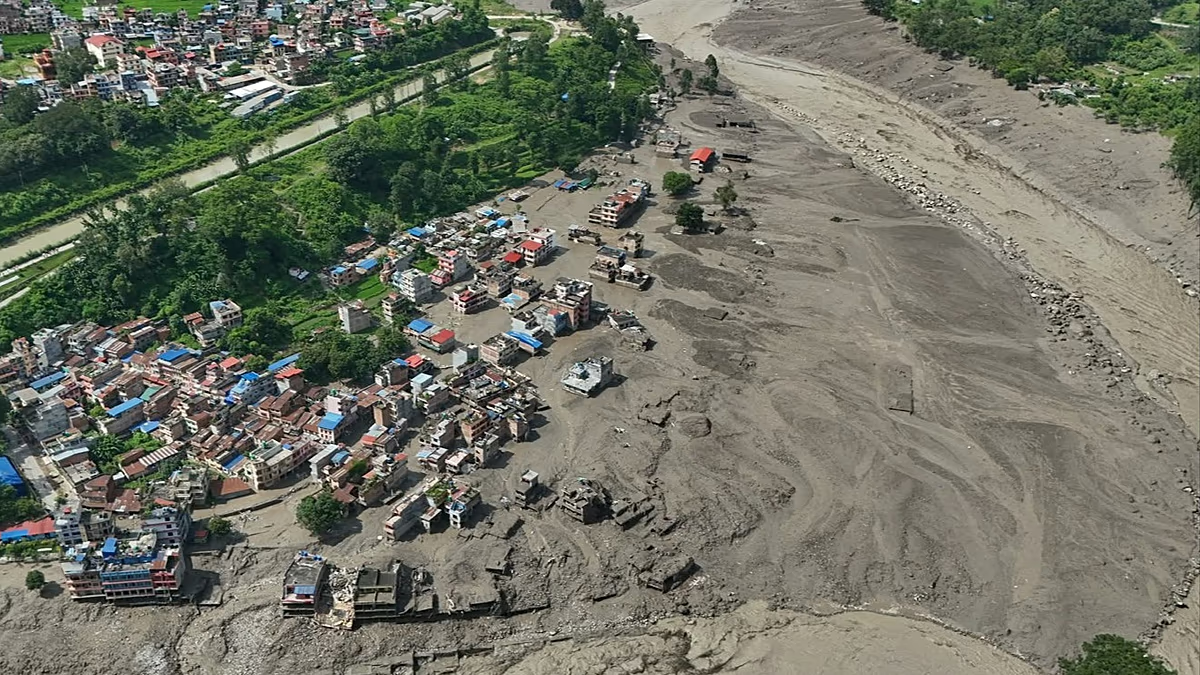
KATHMANDU: The death toll from flash floods, mudslides and landslides along the Nepal-China border has surpassed 1,300, while more than 5,600 people remain missing, nine days after a devastating disaster struck the Himalayan region, according to official figures from both countries.
Nepal’s National Disaster Risk Reduction and Management Authority reported that 1,287 people had been killed, while 5,083 remained missing, including 583 foreign nationals.
The latest figures came after rescuers in Nepal pulled two people alive from a tunnel at the Trishuli 3A Hydropower Project, raising hopes that additional survivors could still be found.
At least six hydropower projects on the Nepalese side were affected by the flash floods, while search and rescue teams continue efforts to locate around 900 personnel deployed at the facilities.
Authorities have also warned of further risks. Nepal’s disaster management authority said the Chaulani River is currently partially blocked, raising concerns that additional landslides could completely obstruct its course.
The District Administration Office in Darchula has urged residents living along riverbanks, low-lying riparian areas and surrounding regions to remain alert and take precautionary measures.
Across the border in China’s southwestern Xizang Autonomous Region (Tibet), Chinese authorities reported at least 31 deaths, while 531 people remained missing, according to Xinhua.
Combined figures from the two countries put the death toll at 1,318, with 5,614 people still missing. Official data indicates that 844 of those missing are foreign nationals.
The disaster began on August 26, when a glacier on Nepal’s Mount Langtang Lirung, at an altitude of approximately 5,200 metres, fractured.
The collapse triggered an ice-rock avalanche, which developed into a massive debris flow and swept through valleys along the Nepal-China border.
Floodwaters, landslides and debris caused widespread destruction across Nepal’s Rasuwa, Nuwakot, Dhading and Kavre districts, as well as parts of the Kathmandu Valley.
The disaster also severely damaged and buried the Gyirong border crossing in China’s Xizang region, further disrupting movement and access between the two countries.
