
Four-Nation R-4 Steps Up Diplomatic Coordination at UNGA
Pakistan, Saudi Arabia, Türkiye and Egypt each maintain significant political, economic and security relationships across the region.

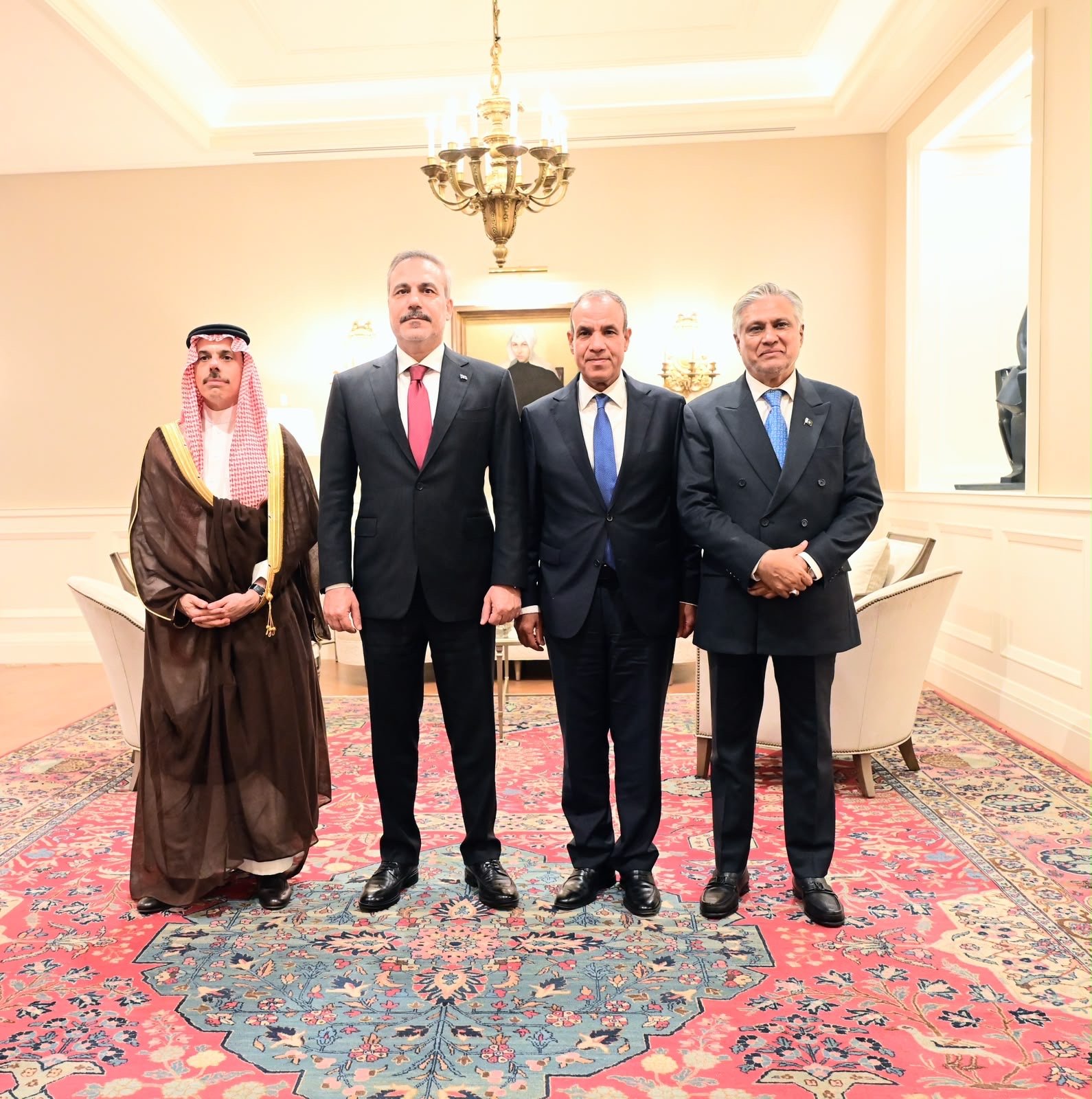
Pakistan, Saudi Arabia, Türkiye and Egypt have stepped up diplomatic coordination on regional security and Middle East crises, using the sidelines of the UN General Assembly in New York to align positions on Palestine, Saudi security, Yemen and Sudan while pushing dialogue and diplomacy as the way forward amid heightened regional tensions.
The foreign ministers of the four countries held a series of consultations in New York around the 81st Session of the United Nations General Assembly, including engagement under the Regional-4 (R-4) framework, reflecting an effort to maintain closer coordination as conflicts and security challenges across the region become increasingly interconnected.
Pakistan was represented by Deputy Prime Minister and Foreign Minister Senator Mohammad Ishaq Dar, who reaffirmed Islamabad’s commitment to the R-4 framework and called for continued engagement to promote regional peace and prosperity.
Across the discussions, a common theme emerged: greater consultation among the four countries on regional crises, support for political and diplomatic solutions, and coordination on issues affecting Middle Eastern security and stability.
Dialogue and Diplomacy at Centre of R-4 Engagement
The ministers expressed concern over continuing tensions and hostilities across the region and stressed that dialogue and diplomacy remained the path towards sustainable resolution.
They also underscored the need to uphold the Islamabad Memorandum of Understanding for lasting peace and stability and agreed to continue consultations on regional and international developments.
The discussions in New York come as the UNGA brings together world leaders and senior diplomats against the backdrop of multiple overlapping crises across the Middle East, giving the four countries an opportunity to coordinate their positions at the centre of global diplomatic activity.
Palestine Emerges as Key Common Position
Palestine remained one of the strongest areas of convergence among Pakistan, Saudi Arabia, Türkiye and Egypt.
The four countries reaffirmed the centrality of the Palestinian issue to peace and stability in the Middle East and reiterated support for the Palestinian people’s legitimate rights, including their inalienable right to self-determination.
They backed the establishment of an independent, sovereign, viable and contiguous Palestinian state based on the June 4, 1967 lines, with East Jerusalem as its capital, in accordance with relevant UN Security Council resolutions.
The repeated emphasis on Palestinian statehood during the consultations placed the issue firmly within the four countries’ broader discussions on regional stability rather than treating it as a separate conflict.
Saudi Security, Yemen and Maritime Navigation
Security threats facing Saudi Arabia also featured prominently in the consultations, with the ministers strongly condemning attacks against the Kingdom, including recent Houthi attacks.
They reaffirmed support for Saudi Arabia’s sovereignty, territorial integrity and security, as well as its right to defend its territory and people in accordance with international law and the UN Charter.
The four countries also stressed the importance of safeguarding the safety and freedom of maritime navigation, an issue with implications for regional security, international trade and energy flows.
On Yemen, they reaffirmed support for the legitimate Yemeni government and the Presidential Leadership Council and backed efforts to achieve security and stability through a political process and an inclusive Yemeni-Yemeni dialogue.
Sudan Added to Broader Regional Security Agenda
Sudan was another major issue addressed by the four countries, which reaffirmed support for its sovereignty, unity, independence and territorial integrity.
The ministers stressed the importance of preserving Sudan’s legitimate national institutions and rejected parallel entities that could undermine the country’s sovereignty and unity.
They also called for an end to the illicit flow of weapons, mercenaries and foreign fighters into Sudan.
Why the New York Consultations Matter
The concentration of diplomatic engagement among the same four countries on the margins of UNGA points to an effort to develop the R-4 into a sustained mechanism for consultation on regional developments, particularly where the interests of South Asia, the Gulf and the wider Middle East intersect.
Pakistan, Saudi Arabia, Türkiye and Egypt each maintain significant political, economic and security relationships across the region. Their consultations bring together two major Arab states, Türkiye and Pakistan around a set of shared diplomatic priorities without the four governments describing the arrangement as a formal alliance.
The significance therefore lies less in the number of meetings held in New York and more in the common positions emerging from them — support for Palestinian statehood, protection of Saudi sovereignty, a political settlement in Yemen, preservation of Sudan’s territorial integrity, maritime security and a preference for diplomacy in addressing regional conflicts.
The four foreign ministers ultimately agreed to maintain close coordination and continue consultations on regional and international developments, signalling that the engagement in New York is intended to extend beyond the UNGA meetings as they seek to promote collective security and longer-term regional stability.
