
El Niño Intensifies Into ‘Super El Niño’, Raising Risk of Record-Breaking Heat in 2027
Meteorologists estimate that the coming year, 2027, could become a record-breaking hot year.

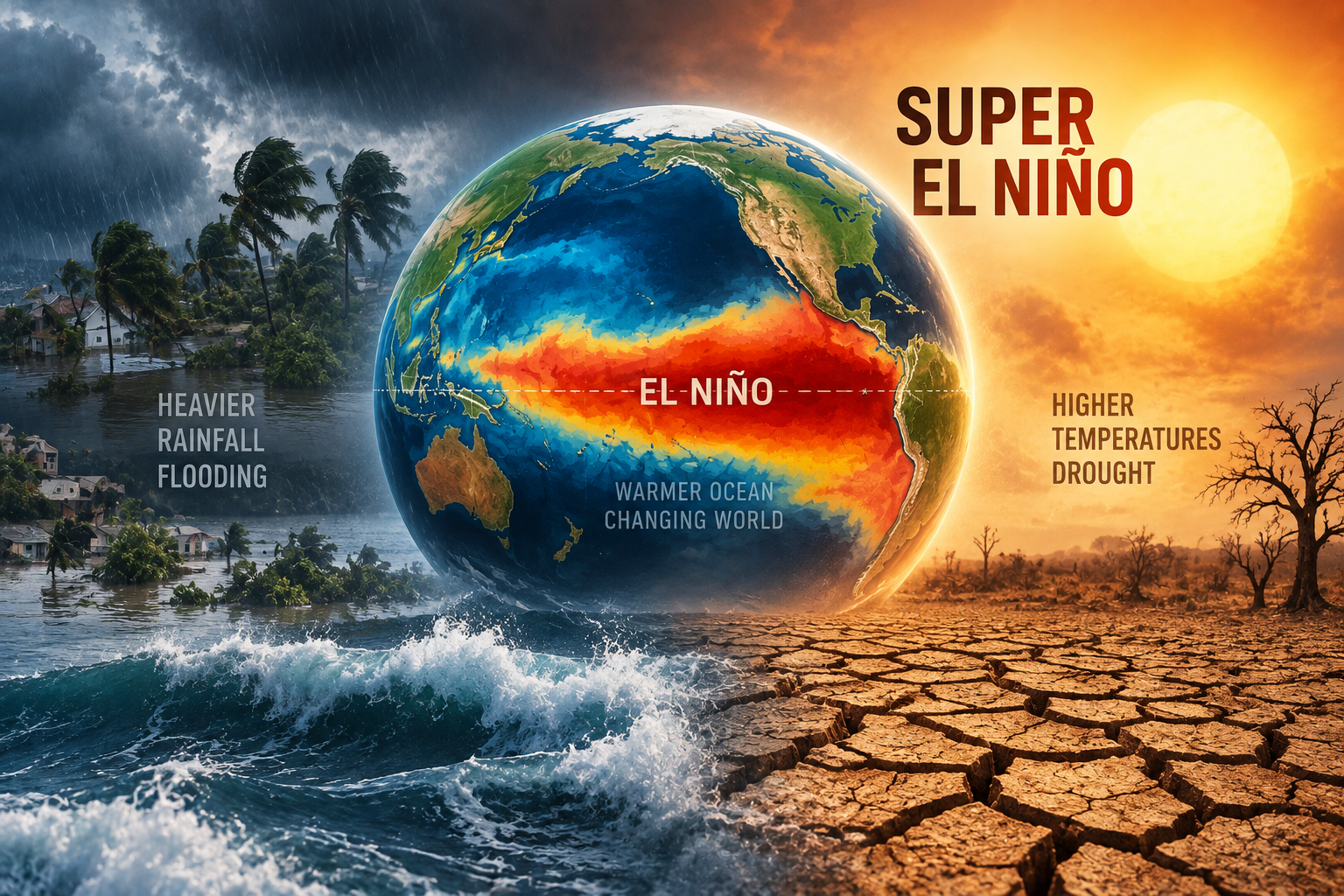
The powerful El Niño climate system developing in the Pacific has intensified into a “Super El Niño”, with potential to alter weather patterns across the world.
United Nations Secretary-General António Guterres said the El Niño climate pattern, which develops every two to seven years, causes a rise in sea surface temperatures across the central and eastern Pacific. He said this year’s El Niño began developing in June after sea surface temperatures rose by more than 2 degrees Celsius. The climate system has an average lifespan of around one and a half years, or 18 months.
‘Super El Niño’ Expected to Peak in Early 2027: António Guterres
According to UN Secretary-General António Guterres, the latest development is that the climate system has intensified into a powerful “Super El Niño”. Estimates suggest that it could reach its peak in early 2027, raising concerns that it could become one of the strongest “Super El Niño” events on record.
According to the US weather authorities, the “Super El Niño” could bring extremely heavy rainfall to parts of East Africa and South America, while the same climate system could trigger severe droughts in South Asia, Southeast Asia, Australia and southern Africa.
El Niño generally brings drier conditions to South Asia, Southeast Asia, Australia and southern Africa. In India and Pakistan, monsoon rainfall this year has remained below expectations amid the effects of El Niño.
According to the India Meteorological Department, rainfall between June 1 and September 9 was 15 percent below India’s average rainfall. El Niño can result in excessive rainfall in some regions, flooding in others and drought elsewhere, with crop production among the sectors facing significant impacts.
World Food Programme Warning
The World Food Programme has warned that El Niño could push at least 49 million more people into hunger by the time the phenomenon ends in 2027. This could increase the total number of people facing hunger across 45 countries from 225 million to 274 million.
According to the UN Food and Agriculture Organization, maize, rice and other rain-fed crops face some of the greatest risks from El Niño.
Dry conditions stretching from southern Africa to South and Southeast Asia can pose a threat to crops. The El Niño climate pattern generally contributes to warming across the planet.
The World Meteorological Organization has forecast that temperatures could remain above normal in almost every part of the world between September and November. It has estimated an 86 percent probability that at least one year between now and 2030 will surpass 2024 as the warmest year on record.
Meteorologists estimate that the coming year, 2027, could become a record-breaking hot year.
Experts, however, say these are estimates regarding the potential impacts of El Niño, and its effects can vary from year to year, as no two El Niño events necessarily behave in exactly the same way.
