
Beyond the Photo-Op: What Trump-Shehbaz Optics Say About Pakistan-US Relations
Pakistan-US relations gained further momentum following the May 2025 Pakistan-India military confrontation, during which Pakistani forces shot down Indian fighter aircraft, including Rafales, demonstrating Islamabad’s strong conventional military capability.

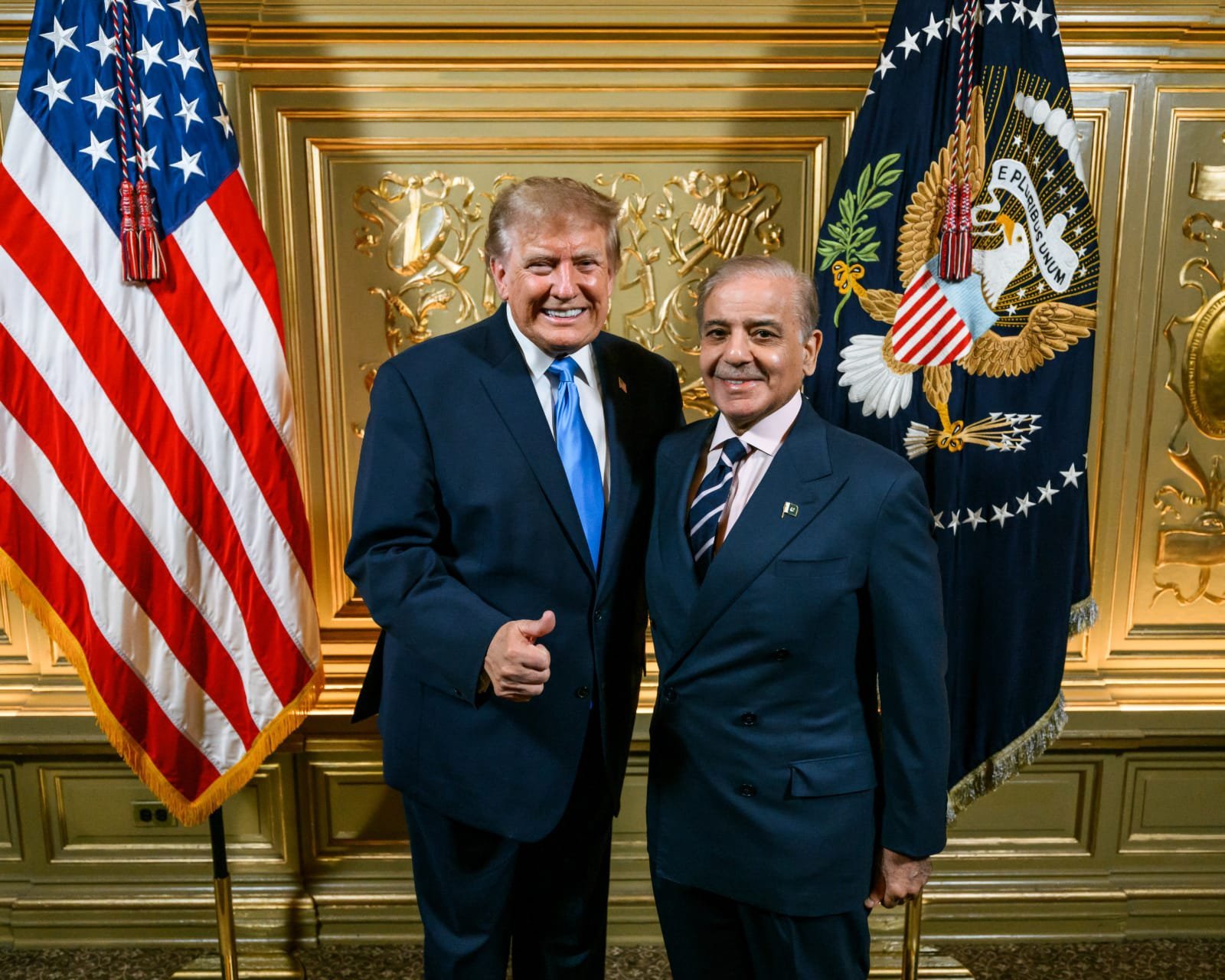
The White House has released official photographs of US President Donald Trump meeting Prime Minister Shehbaz Sharif during a reception for world leaders on the sidelines of the 81st session of the United Nations General Assembly (UNGA), putting another high-level Pakistan-US interaction in the diplomatic spotlight.
The photographs show Trump and Shehbaz sharing a cordial exchange at the reception. No formal agenda or detailed readout of their interaction was released.
The images were also widely shared by Pakistani officials, drawing attention to the increasingly visible high-level engagement between Islamabad and Washington during Trump’s current administration.
Trump had earlier referred to Shehbaz as a “terrific man” during his address to the UN General Assembly, another public gesture towards the Pakistani prime minister.
The interaction follows previous engagement between the two sides, including talks in Washington in 2025, when security, bilateral cooperation and other areas of mutual interest featured in discussions.
Pakistan-US relations gained further momentum following the May 2025 Pakistan-India military confrontation, during which Pakistani forces shot down Indian fighter aircraft, including Rafales, demonstrating Islamabad’s strong conventional military capability.
The subsequent US-Iran tensions also brought Pakistan’s potential diplomatic role into greater focus, with Islamabad positioning itself in support of mediation and de-escalation. Against this backdrop, Trump and Pakistan’s leadership have publicly praised each other on different forums, adding to the increasingly cordial tone of bilateral engagement.
Beyond formal meetings and written statements, diplomatic optics can carry significance in relations between states. Photographs, public remarks and visible interactions between leaders do not by themselves constitute changes in foreign policy, but they can signal access, political comfort and a willingness to maintain engagement at the highest level.
For Pakistan, such presidential-level visibility in Washington is particularly notable given the fluctuations that have historically characterised relations between the two countries.
Pakistan-US ties have traditionally been shaped by security cooperation, counterterrorism, Afghanistan and regional geopolitics, while economic ties, trade and investment have increasingly featured in bilateral engagement.
Under the current Trump administration and the Shehbaz Sharif government, interactions at the leadership level have become increasingly visible, with both sides maintaining diplomatic engagement on regional security and bilateral cooperation.
The release of the photographs by the White House gives the interaction additional diplomatic visibility because it places the Pakistan-US engagement within Washington’s own official presidential communication.
In diplomacy, such gestures are often closely watched alongside substantive negotiations. While cordial photographs and complimentary remarks cannot substitute for agreements or policy outcomes, they can contribute to the political environment in which more substantive engagement takes place.
The Trump-Shehbaz interaction at the UNGA reception therefore adds another visible moment to the evolving relationship between Islamabad and Washington, as both governments continue to engage on bilateral and regional issues.