
President Zardari imposes emergency in KP, PTI says CM Sohail Afridi arrested
The federal government says the decision was taken in view of the deteriorating security situation in the province, while PTI has condemned the move as undemocratic.

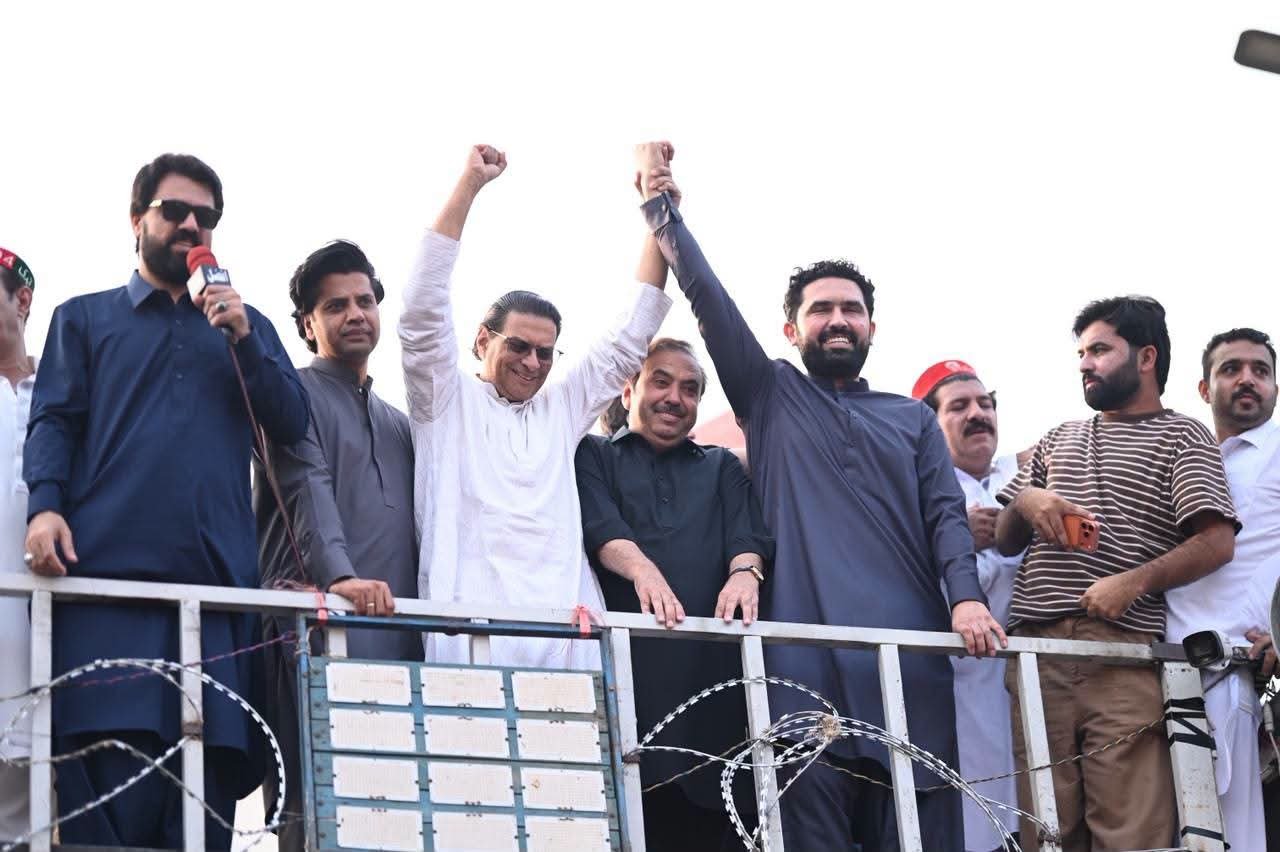
President Asif Ali Zardari on Sunday imposed an emergency in Khyber Pakhtunkhwa on the advice of Prime Minister Shehbaz Sharif, following the federal cabinet’s recommendation, according to official statements.
The government has issued a gazette notification formalising the presidential proclamation, which has taken immediate effect.
Meanwhile, Pakistan Tehreek-e-Insaf (PTI) leader Junaid Akbar said on X that Khyber Pakhtunkhwa Chief Minister Sohail Afridi had been arrested along with the party’s provincial president following the imposition of emergency and the federal government’s announcement of assuming expanded powers in the province.
According to the presidential proclamation, the emergency was imposed under Articles 232(1) and 234(1) of the Constitution.
The proclamation cited an extraordinary increase in terrorist incidents and violent activities in the province, saying these posed serious threats to the lives and property of citizens.
“Attacks by terrorists targeting infrastructure, government installations and law enforcement agencies have also increased,” it said.
The proclamation stated that the provincial government had failed to effectively address the threats posed by terrorism and lawlessness. It also cited a report by the Khyber Pakhtunkhwa governor highlighting a failure of the constitutional machinery in the province.
Describing the situation as beyond the control of the provincial government, the proclamation said it posed a threat not only to Khyber Pakhtunkhwa but also to Pakistan’s overall security.
Under the proclamation, the federal government may direct the governor to assume all or some of the functions of the provincial government.
The governor will exercise the powers and perform the duties assigned by the federal government, according to the document.
It further stated that the powers of the Khyber Pakhtunkhwa Assembly would be exercised by Parliament or a body designated by it.
The proclamation also requires the provincial chief minister, ministers, advisers, special assistants and advocate general to relinquish their offices with immediate effect.
PTI condemns emergency
PTI Chairman Barrister Gohar Ali Khan strongly condemned the imposition of emergency in Khyber Pakhtunkhwa, describing it as an “undemocratic” move.
In a statement, he said the party “completely rejects” the imposition of emergency, calling it an extremely concerning and serious political mistake.
Earlier on Sunday, the federal cabinet, chaired by Prime Minister Shehbaz Sharif in Islamabad, recommended that the premier advise the president to impose emergency in the province under Articles 232 and 234 of the Constitution in view of the gravity of the situation.
According to a statement issued by the Prime Minister’s Office, the cabinet’s decision was followed by the dispatch of the advice to the presidency.
A statement from the President’s House said the president had approved and signed the prime minister’s advice under Articles 232 and 234 of the Constitution.
It added that the decision followed the federal cabinet’s deliberations, the prime minister’s advice, reports from relevant institutions on the law and order situation, and the failure of negotiations with government delegations.
Shehbaz says situation cannot continue
Addressing the federal cabinet meeting earlier on Sunday, Prime Minister Shehbaz Sharif said: “If not now, then never.”
He criticised the provincial government for what he described as its failure to stand as a strong barrier against terrorism, saying the situation was deteriorating by the day and that a plan had been made to march on Islamabad.
“Do you want to keep playing this game repeatedly and render Pakistan helpless? This will not happen. The law will take its course, and it will do so under all circumstances,” he said.
Addressing cabinet members, the prime minister said the situation had reached a point where “the water is now over our heads”.
He added that history would remember the government for the decisions it made in the prevailing circumstances.
“The decision is yours,” he told the cabinet.
Earlier, Chief Minister Sohail Afridi had said there was no option but to accept the party’s demands.
In a post on X, Afridi said taking such steps without formally announcing emergency or governor’s rule amounted to rebellion.
“Gather the courage and make the announcement. We will not back down from our constitutional and legal demands under any circumstances,” he said.
He added that the party’s long march would continue in accordance with the Constitution and law until its demands were met, saying that “only Imran Khan’s policy will prevail here”.
Shehbaz Sharif said it was the responsibility of the Khyber Pakhtunkhwa police and administration, working alongside the federal government, to combat terrorism.
Governor Faisal Karim Kundi Welcomes Decision
Governor Faisal Karim Kundi welcomed the presidential proclamation and expressed hope that the emergency would help restore peace, development and prosperity in Khyber Pakhtunkhwa.
In a video statement shared on social media, Kundi said the people of the province welcomed the decision with the expectation that it would bring improvements in security and governance.
He warned that anyone taking the law into their own hands would face strict action.
Federal Ministers Defend Emergency at Islamabad Press Conference
Following the presidential proclamation, senior federal ministers, including Interior Minister Mohsin Naqvi, the law minister, information minister and minister of state for interior, addressed a joint press conference in Islamabad to explain the government’s decision.
The interior minister said the security situation had deteriorated across 12 areas of Khyber Pakhtunkhwa, including parts of the former Federally Administered Tribal Areas (FATA), Bannu, Dera Ismail Khan and Tank.
He argued that these areas were facing serious security threats and that the provincial government had failed to cooperate with federal authorities in counterterrorism efforts.
The minister maintained that the emergency had not been imposed overnight. According to him, the federal government had been attempting to negotiate with the KP administration for more than a month, but those efforts had failed to produce results.
He accused the PTI-led provincial government of failing to cooperate in operations against terrorism and alleged that the party had sided with the Tehreek-e-Taliban Pakistan (TTP).
The interior minister further alleged that PTI leaders had failed to condemn terrorist attacks carried out in Khyber Pakhtunkhwa.
These allegations formed a central part of the federal government’s justification for invoking emergency powers.
