
Pakistan Hits Terrorist Safe Havens in Afghanistan, 22 terrorists Killed
Pakistani authorities said maximum precautions were taken during the operation to avoid civilian casualties and claimed that no collateral damage occurred.

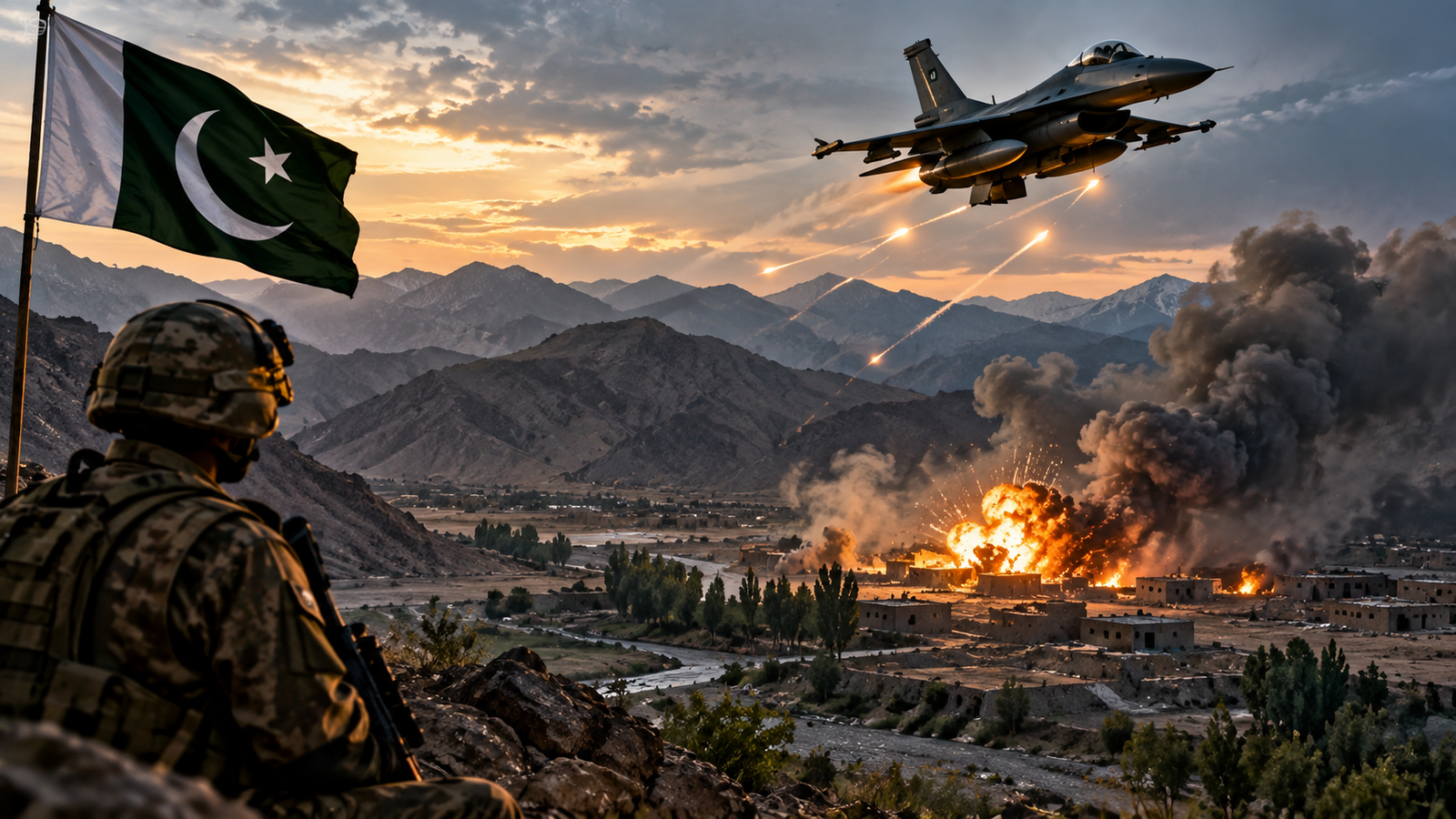
Pakistan said it carried out “well-planned and calibrated” aerial strikes against terrorist hideouts and safe havens at two locations inside Afghanistan, killing at least 22 terrorists, as Islamabad continues its counterterrorism campaign under Operation Ghazab lil Haq.
According to an official statement, the strikes targeted camps and hideouts belonging to Fitna al-Khawarij, Fitna al-Hindustan and their affiliates on the basis of what authorities described as credible intelligence.
The statement said the targets were struck “with precision and accuracy,” with initial reports suggesting that 22 terrorists had been killed. Large quantities of weapons and ammunition stored at the targeted hideouts were also destroyed, it added.
Pakistani authorities said maximum precautions were taken during the operation to avoid civilian casualties and claimed that no collateral damage occurred.
“Pakistan has always strived for the maintenance of peace and stability in the region. However, the safety and security of our citizens remains our foremost priority,” the statement said.
It described the continued presence of terrorist groups in Afghanistan as a matter of “grave concern” and said the latest action had specifically targeted what Pakistan called terrorist hubs posing a threat to the country.
It is not only Pakistan that has raised such concerns. A few months ago, the UK Special Envoy for Afghanistan, Richard Lindsay, stated that Afghanistan remains a hub for terrorism, noting the active presence of groups such as al-Qaeda and ISKP. Such a statement lends support to Pakistan’s claim.
Tensions with Afghan Taliban
The strikes come amid heightened tensions between Islamabad and the Afghan Taliban authorities over cross-border terrorism and a series of recent security incidents.
Pakistan has repeatedly said with evidences that the Afghan Taliban authorities of allowing groups, particularly the Tehreek-e-Taliban Pakistan (TTP), to operate from Afghan territory and launch attacks inside Pakistan. Kabul has rejected accusations that it facilitates terrorism against Pakistan and has, in turn, levelled allegations against Islamabad over recent violence inside Afghanistan.
The tensions escalated further last week after Pakistan said drones originating from Afghan territory entered Pakistani airspace on September 23. Pakistani authorities subsequently said they carried out precision aerial and drone strikes on locations in Afghanistan allegedly being used for drone operations.
Pakistan also delivered demarches to the Afghan representative in Islamabad over its security concerns of attempted cross-border infiltration and planned suicide attacks.
The Afghan Taliban authorities have separately accused Pakistan of involvement in incidents inside Afghanistan, including recent violence in Nuristan. Pakistan rejected those allegations as “baseless” and said no evidence had been presented to substantiate them.
Islamabad maintains that terrorist sanctuaries across the border remain a major source of attacks inside Pakistan, while the Afghan Taliban authorities dispute several of Pakistan’s allegations. The competing claims have contributed to a sharp deterioration in relations between the two neighbours.
The latest strikes were described by Pakistani authorities as a continuation of Operation Ghazab lil Haq and the broader counterterrorism effort under the vision of “Azm-e-Istehkam.”
Pakistan said its security forces and law enforcement agencies would continue the campaign “at full pace” to eliminate what it described as foreign-sponsored and foreign-supported terrorism from the country.