Global Gender Gap 2026: Full Parity Still 120 Years Away
The report shows that 96.9% of the global gender gap in educational attainment has been closed, while 96.2% of the gap in health and survival has been closed.
The global gender gap is 69.2% closed in 2026, but achieving full gender parity could still take 120 years, according to the World Economic Forum’s latest Global Gender Gap Report.
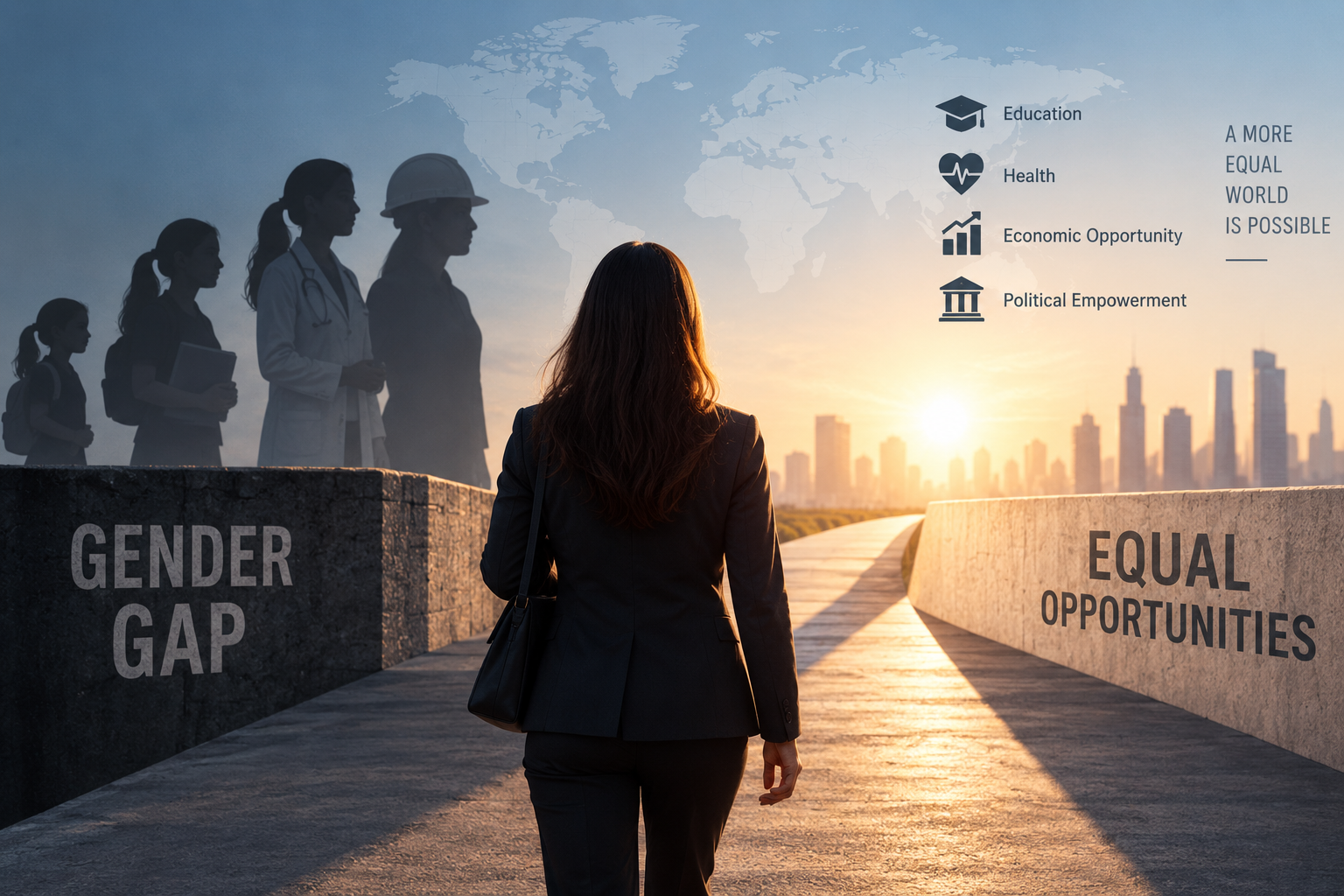
The report marks the 20th anniversary of the World Economic Forum’s annual assessment of gender parity. It tracks progress across four key areas: educational attainment, health and survival, economic participation and opportunity, and political empowerment.
Education and health gaps narrow further
The report shows that 96.9% of the global gender gap in educational attainment has been closed, while 96.2% of the gap in health and survival has been closed.
Progress remains considerably slower in economic and political areas. The global gap in economic participation and opportunity is 61.7% closed, while political empowerment stands at just 22.1%.
Iceland remains at the top
Almost all of the 97 countries tracked continuously since 2006 have improved their overall gender parity scores.
All 10 countries at the top of the 2026 index have closed more than 81% of their gender gaps. Iceland remains the highest-ranked country for the 18th consecutive year, having closed 93% of its gender gap.
Political empowerment remains the biggest gap
The report identifies political empowerment as the area that has recorded the most improvement over the 20 editions of the index, narrowing the gap by eight percentage points.
Despite that progress, political empowerment remains the area with the largest gender gap, and the report notes that progress in this area has been reversing.
The 2026 findings indicate that while gender parity has continued to improve in many countries, progress remains uneven across different areas of society. Educational and health outcomes are approaching parity, while women’s participation in economic and political decision-making continues to lag significantly.