
Taliban Threat of “Crushing Response” Adds New Strain to Pak-Afghan Ties
According to analysts, following these statements regarding the Afghan Taliban on the same day, Zabihullah Mujahid’s statement appears to be a response to them.

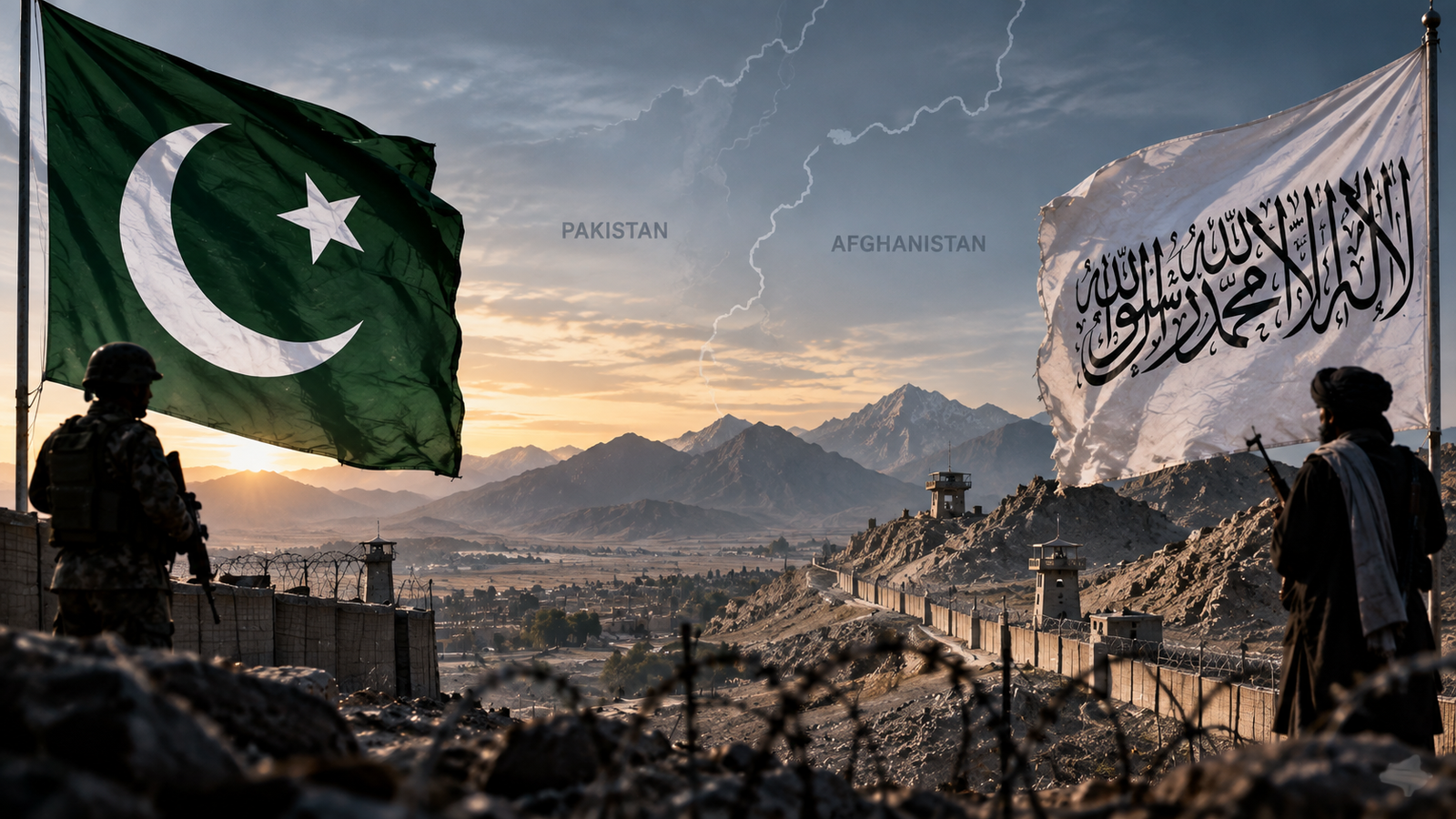
The Afghan Taliban’s latest statement has renewed debate over whether Pakistan-Afghanistan tensions will move towards negotiations or a kinetic response, with recent suicide attacks in Khyber Pakhtunkhwa further complicating the prospects for dialogue.
Yesterday, Taliban spokesperson Zabihullah Mujahid gave an interview to Al Arabiya English, where he said that Afghanistan would defend itself and deliver a “crushing response” if Pakistan violated Afghan territory under the pretext of self-defence. He also tried to clarify that “Afghanistan does not allow the TTP to operate on its territory and does not support any armed group or permit Afghan territory to be used against another country.”
On the matter, PPC Digital spoke to several analysts for their views.
Former Ambassador Abdul Basit said, “Instead of making such threatening statements, it would have been far better if the Kabul regime had fully cooperated with Pakistan to stem the scourge of terrorism. Destinies of the two countries are intertwined. It is high time Kabul reached out to Islamabad for addressing the challenges at hand rather than riding rough shod over its legitimate concerns.”
He further stated, “Pakistan only wishes good and mutually beneficial relations with Islamabad and would continue making efforts in this regard. Nevertheless, we all know it takes two to tango.”
Afghan affairs expert and senior journalist Tahir Khan, speaking to PPC Digital, said he viewed Afghan Taliban government spokesperson Zabihullah Mujahid’s statement as similar to statements he had made in the past. “However, when he says that if Pakistan attacks, they will respond, that is significant,” Khan said. He noted that Türkiye’s intelligence chief recently travelled to Kabul and then Islamabad, adding that, according to reports in the official media, discussions were held regarding reconciliation in Afghanistan. “Türkiye wants to facilitate reconciliation.”
Tahir Khan also pointed to elements on all sides that could complicate the situation. “For instance, there was an attack in Kurram on Thursday, followed by a suicide attack in Kohat on Friday. Sometimes statements are also made that make the environment somewhat bitter, and that is not beneficial.”
Dr Qamar Cheema, Executive Director of the Sanober Institute, said, “Pakistan is not alone in making the case that transnational terrorist networks are operating from Afghanistan and that Afghan territory has been made available to these militants. If the Taliban believe that Pakistan should not conduct strikes or take defensive action, then they have a responsibility to ensure that Afghan soil is not used to launch attacks against Pakistan.”
He further stated, “Pakistan is also not the only country raising concerns about militant networks operating from Afghanistan. At the same time, I think the Taliban leadership understands that it does not have complete control over some of the militant factions operating within Afghanistan. As a result, they are making increasingly offensive statements and adopting a more confrontational posture, perhaps in an effort to deter Pakistan from taking defensive action.”
Earlier, on Wednesday night, Pakistan’s military spokesperson, Lieutenant General Ahmed Sharif, said in an interview with Al Arabiya that, “We want — no interference, no terrorism from Afghanistan in Pakistan.” He said the Pakistani state had an obligation to defend the lives, honour and property of its citizens. To that end, he said, “all that is necessary will be done and is being done.”
Meanwhile, Pakistan’s Permanent Representative to the United Nations, Asim Iftikhar, also told the Security Council on Thursday that terrorism remains at the core of Afghanistan’s problems, citing what Islamabad described as links between the Taliban and terrorist groups including the TTP, BLA and its Majeed Brigade, ISIL-K, ETIM and their affiliates, which Pakistan said are operating with impunity on Afghan soil.
He said the situation had been worsened by external actors supporting proxies inside Afghanistan to target Pakistan and other neighbouring countries. “We expected that the Taliban would take concrete and verifiable actions against those terrorist groups. Regrettably, they failed to act,” he said, adding that the Taliban’s refusal to publicly denounce and condemn terrorist groups was evidence, in Pakistan’s view, of their complicity and active support for these groups.
According to analysts, following these statements regarding the Afghan Taliban on the same day, Zabihullah Mujahid’s statement appears to be a response to them.
Background:
For reference, tensions between Pakistan and the Afghan Taliban escalated in October 2025 after Taliban forces opened fire on Pakistani troops along the border, prompting Pakistan to retaliate. The escalation was followed by rounds of Pakistan-Afghanistan talks in Doha, Qatar, and later in Istanbul aimed at addressing security concerns and preventing further clashes. However, tensions resurfaced on February 26, when Taliban forces launched attacks on multiple Pakistani military posts along the border. Pakistan subsequently carried out aerial operations targeting what it described as terrorist hubs inside Afghanistan, including an ammunition depot.
