
Two Pakistani pilots train in China as first astronaut selection nears
According to SUPARCO a final decision on which of the two pilots will fly is expected in mid-to-late October.

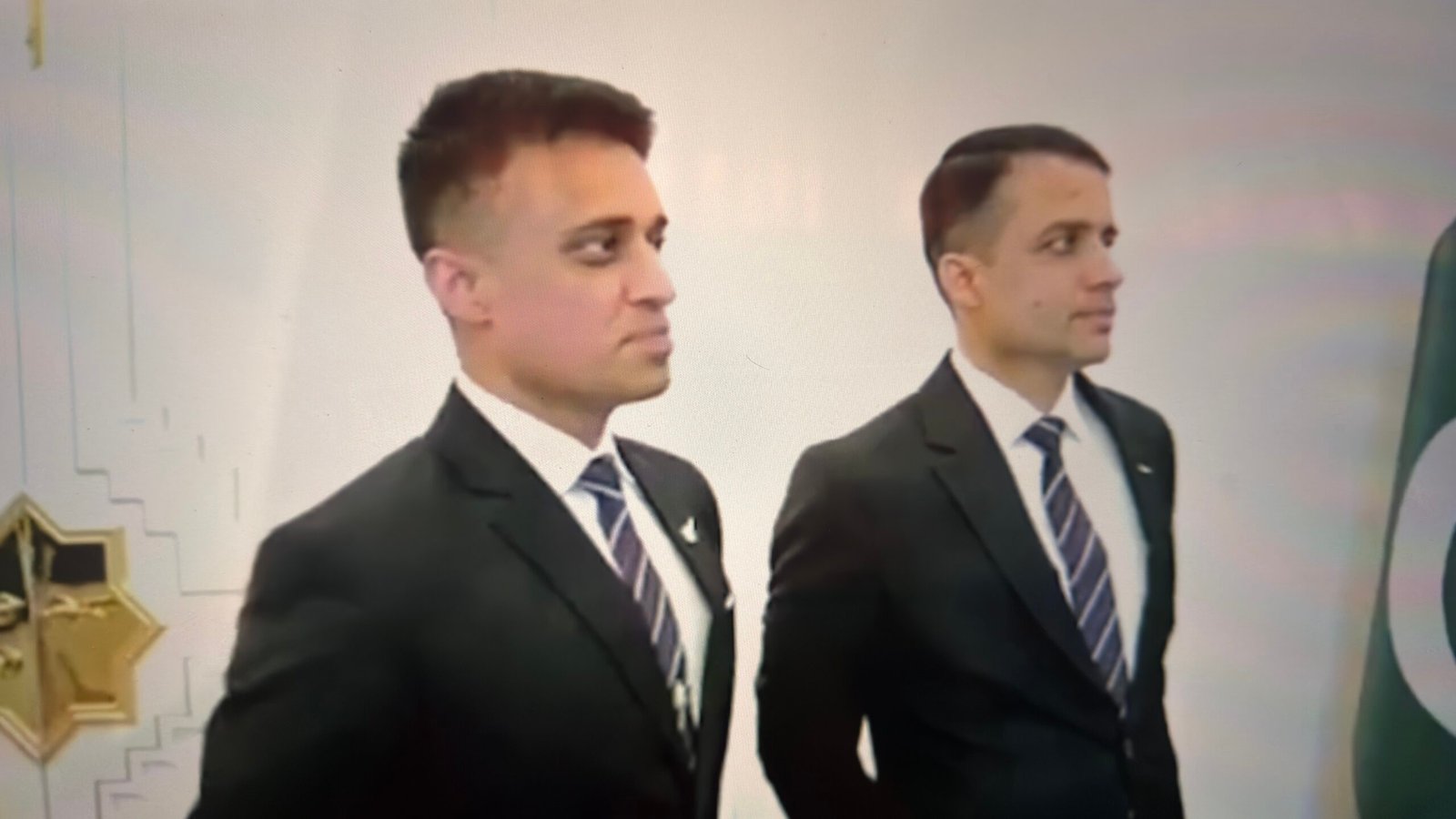
Pakistan is expected to select its first astronaut for a mission to China’s Tiangong space station by mid-to-late October, as two Pakistani pilots undergo intensive training in Beijing for what would mark the country’s first human spaceflight.
Pilots Zeeshan Ali and Khurram Daud have been training for months at the China Astronaut Research and Training Centre, where they are being prepared for the physical and technical demands of travelling and working in space, according to details shared by officials of Pakistan’s Space and Upper Atmosphere Research Commission (SUPARCO) with Reuters.
The training includes centrifuge drills to prepare the candidates for extreme gravitational forces, Chinese-language instruction, spacecraft systems training and exercises designed to teach them how to eat, sleep and carry out equipment repairs in microgravity.
According to Amer Gilani, who oversees human spaceflight cooperation at SUPARCO, a final decision on which of the two pilots will fly is expected in mid-to-late October.
China has yet to announce which Pakistani astronaut will be selected or when the mission will launch.
Selected astronaut to remain in China until launch
According to Gilani, the astronaut ultimately selected for the mission will remain in China rather than returning to Pakistan before the launch.
The astronaut would travel into space directly from China following the completion of training and return to Pakistan only after undergoing a post-flight recovery period following the return to Earth.
The mission will make the selected candidate Pakistan’s first astronaut and, according to the plans outlined by the two countries, the first foreign astronaut to travel aboard China’s Tiangong space station.
Pakistan and China began working on the human spaceflight initiative in 2019, Gilani said.
Two pilots selected after extensive screening
Zeeshan Ali and Khurram Daud emerged from an initial pool of pilots and scientists after an extensive selection process, with around 20 finalists undergoing further screening.
Candidates were assessed for medical fitness, psychological resilience and their ability to withstand the high g-forces associated with human spaceflight.
The two astronaut candidates had also met Prime Minister Shehbaz Sharif at the Prime Minister’s Office in Islamabad in April, ahead of their departure for China to undergo training for the historic space mission.
Off to space and beyond!
It was a pleasure meeting Commander Khurram Dawood and Wg Cdr Muhammad Zeeshan Ali today. I congratulated them on their historic selection as the first Pakistani astronauts to train for China’s space station missions.
This remarkable achievement… pic.twitter.com/1o45LXaHez
— Shehbaz Sharif (@CMShehbaz) April 23, 2026
SUPARCO Director of Artificial Intelligence Uzair Ansari said the ability to tolerate high g-forces was one reason pilots with experience in high-speed flying emerged as the final candidates.
“You cannot easily find scientists who are familiar with travelling and facing high-level g-forces,” Ansari told Reuters.
The details provided by Gilani and Ansari offer one of the clearest accounts yet of the training and selection process since the Pakistani candidates were sent to China.
China’s space agency did not respond to Reuters’ request for comment on the selection process.
Pakistan-China space cooperation expands
The planned human spaceflight mission forms part of growing space cooperation between Islamabad and Beijing.
The two countries are also cooperating in satellite navigation, while a Pakistan-built rover is expected to participate in China’s Chang’e 8 lunar mission around 2028.
The Tiangong mission would represent a major new stage in that cooperation, taking Pakistan from satellite and lunar exploration projects into human spaceflight for the first time.