
Pakistan Parliament Erupts in Heated Debate Over Fazlur Rehman’s Remarks Against State
The political confrontation intensified on Thursday when Khawaja Asif responded in the National Assembly, while Mohsin Naqvi took aim at the JUI-F leadership during a Senate session.

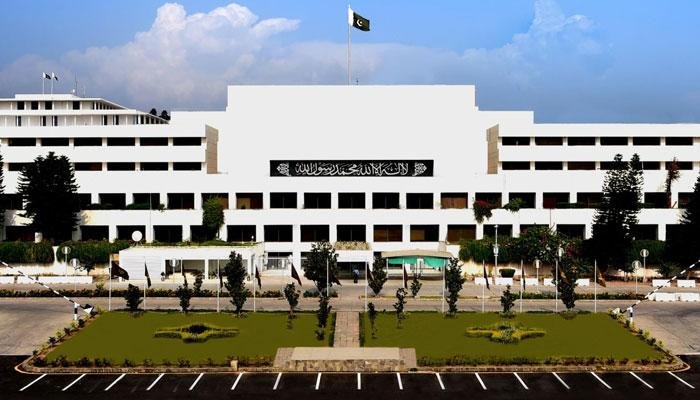
Pakistan’s Parliament witnessed a heated political confrontation as Defence Minister Khawaja Asif and Interior Minister Mohsin Naqvi launched sharp attacks on JUI-F chief Maulana Fazlur Rehman over his criticism of the state, military leadership and the recent diplomatic visit to Iran, prompting an equally strong response from JUI-F lawmakers.
The controversy erupted following Fazlur Rehman’s speech in the National Assembly on Wednesday, in which he questioned the role of civilian ministers in Pakistan’s diplomatic engagements and accused state institutions of dividing the nation and suppressing political dissent.
The political confrontation intensified on Thursday when Khawaja Asif responded in the National Assembly, while Mohsin Naqvi took aim at the JUI-F leadership during a Senate session.
Khawaja Asif Defends Field Marshal’s Tehran Peace Mission
Responding to Fazlur Rehman’s criticism, Defence Minister Khawaja Asif clarified that the recent visit to Tehran was not related to any defence agreement and therefore did not require his presence.
He said the discussions in Iran did not fall within the mandate of the Ministry of Defence, adding that he had participated in both recent defence agreements in his official capacity.
Defending Field Marshal Asim Munir’s diplomatic role, Asif said the military chief had travelled to Tehran as a messenger of peace to help resolve regional tensions.
“The Field Marshal went there to make peace. He arrived in Tehran as a messenger of peace,” Asif told the National Assembly.
The defence minister claimed that the Field Marshal had helped prevent a war and warned that the situation in Yemen could otherwise have escalated.
He said Pakistan and the Field Marshal deserved international recognition for their diplomatic efforts and expressed optimism that positive developments would emerge in the Middle East in the coming days.
Khawaja Asif Questions Fazlur Rehman’s Political Record
The defence minister also launched a personal attack on Fazlur Rehman, questioning his four decades in politics and his ten-year tenure as chairman of the Parliamentary Kashmir Committee.
Asif asked what contributions the JUI-F chief had made to the Kashmir cause during his time as chairman.
He also questioned the political positions and privileges Fazlur Rehman had enjoyed over the years, accusing him of maintaining contradictory political positions.
Responding to Fazlur Rehman’s earlier remarks about shame and decency, Asif said the JUI-F leader should also reflect on his own political conduct.
The defence minister further questioned Fazlur Rehman’s previous visit to Afghanistan, asking whether he had been serving as foreign minister when he undertook the diplomatic engagement.
Asif alleged that the visit had been intended to advance the JUI-F chief’s political interests.
Mohsin Naqvi Launches Sharp Attack in Senate
The confrontation spread to the Senate, where Interior Minister Mohsin Naqvi strongly criticised Fazlur Rehman’s remarks about the state.
Naqvi accused the JUI-F leadership of treating the state as a mother only when receiving political positions and financial benefits.
He alleged that once such benefits were denied, the same politicians began attacking state institutions.
The interior minister said he had previously respected Fazlur Rehman personally but that the JUI-F chief’s remarks about the state had left little room for that respect.
Naqvi also accused JUI-F leaders of using religion to advance their political and personal interests.
During his speech, JUI-F Senator Kamran Murtaza protested against the minister’s criticism, but Naqvi insisted that he listen.
The interior minister further claimed that JUI-F leaders had previously approached the government seeking the imposition of governor’s rule.
Tehran Visit Was to Manage Regional Crisis, Says Naqvi
Rejecting Fazlur Rehman’s criticism of the Tehran visit, Mohsin Naqvi clarified that the Pakistani delegation had not travelled to Iran to negotiate a defence agreement.
He said the visit was aimed at managing the ongoing regional crisis.
Naqvi explained that he had travelled to Tehran on the instructions of Prime Minister Shehbaz Sharif rather than out of personal interest.
The interior minister maintained that the JUI-F chief had misrepresented the purpose of the diplomatic engagement.
JUI-F Hits Back, Challenges Government to Arrest Fazlur Rehman
JUI-F leaders responded strongly to the criticism from both federal ministers.
Speaking to journalists at Parliament House, Maulana Attaur Rehman questioned why Khawaja Asif had criticised Fazlur Rehman when the JUI-F chief was not present in the National Assembly.
He defended Fazlur Rehman’s criticism of the state and challenged the authorities to arrest him if they believed they had grounds to do so.
“If you can arrest Maulana Fazlur Rehman, then arrest him,” Attaur Rehman said.
JUI-F lawmaker Alia Kamran also criticised the defence minister, accusing government representatives of treating constitutional violations as a trivial matter.
She said Khawaja Asif should have shown courage by confronting Fazlur Rehman directly rather than making remarks in his absence.
What Sparked the Parliamentary Confrontation?
The controversy began on Wednesday when Fazlur Rehman delivered a strongly worded speech in the National Assembly, criticising the government, state institutions and the country’s power structure.
He questioned why Defence Minister Khawaja Asif and the foreign minister were sitting in Parliament while what he described as a defence-related meeting was taking place in Iran.
“There should be some shame, some decency,” Fazlur Rehman remarked.
The JUI-F chief also criticised the narrative of the state as a mother, accusing authorities of turning citizens against one another.
In a pointed reference to the military establishment, he declared that Pakistan was not the personal property of any soldier or general but belonged to the entire nation.
Fazlur Rehman accused state institutions of suppressing dissent and treating citizens as a conquered population.
He also warned the government against obstructing his party’s political activities and called for a new Charter of Democracy to prevent further political instability and violence.
PTI Says It Remains United With JUI-F on Public Issues
Meanwhile, Pakistan Tehreek-e-Insaf (PTI) Chairman Barrister Gohar Ali Khan commented on his party’s political relationship with JUI-F.
Speaking to journalists in Islamabad, Gohar said PTI had previously sought an alliance with Fazlur Rehman, but the JUI-F chief had not joined them.
He maintained that both parties had their own political identities and agendas.
However, Gohar emphasised that PTI and JUI-F remained united inside Parliament on issues concerning the public.
The escalating confrontation has brought political tensions into sharp focus, with senior government ministers and opposition lawmakers trading accusations over the role of state institutions, diplomatic engagements and political accountability.
The dispute has also highlighted growing disagreements over Pakistan’s foreign policy engagements and the relationship between civilian political leadership and the military establishment.