
Over 5,000 Investors Expected at Pakistan Minerals Investment Forum 2026
Pakistan to Showcase $8 Trillion Mineral Potential at Islamabad Investment Forum

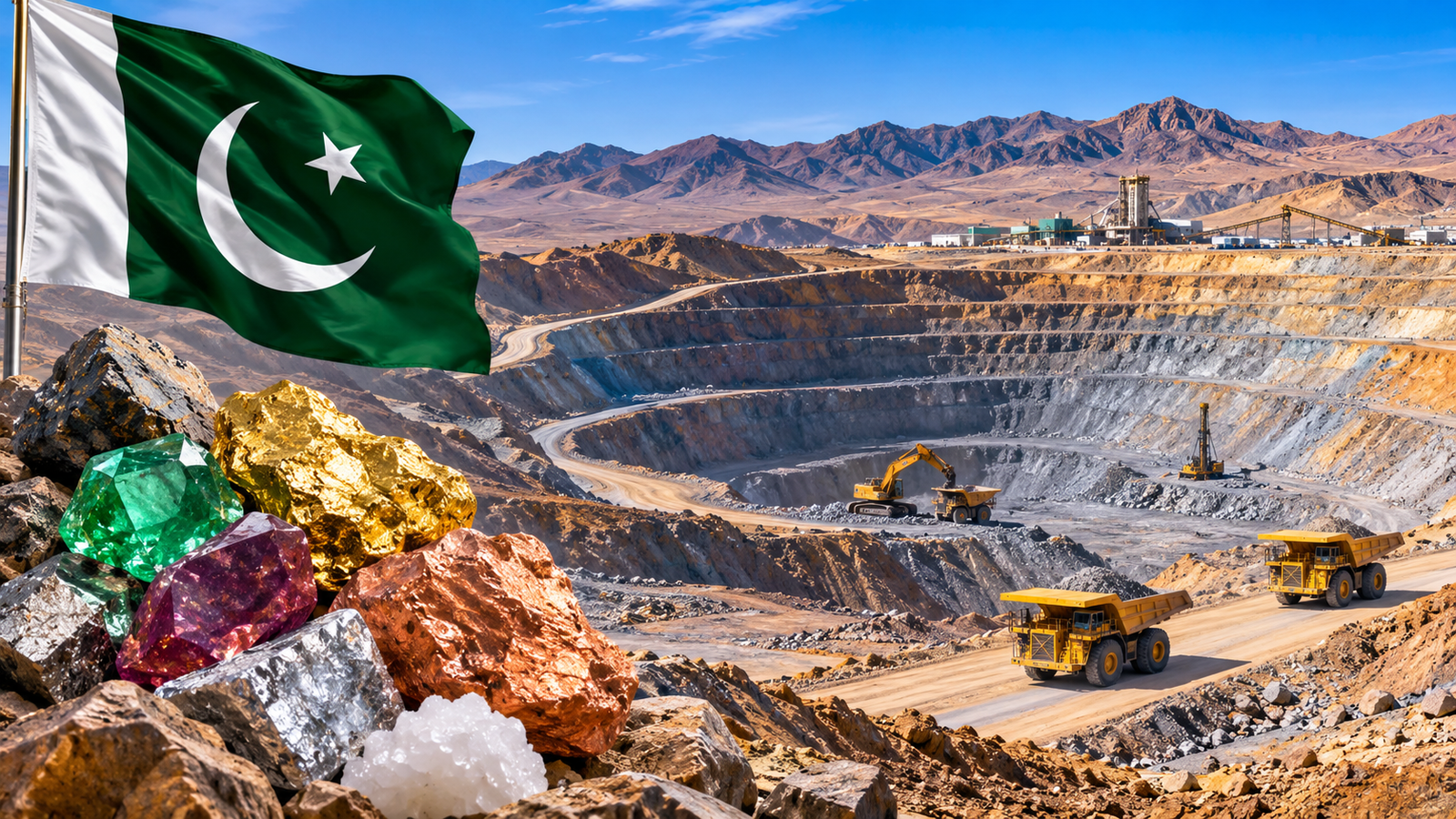
Pakistan is set to host the Pakistan Minerals Investment Forum 2026 (PMIF-26) on November 12–13 at the Jinnah Convention Centre in Islamabad, bringing together more than 5,000 investors, international mining executives, financial institutions, technical experts and senior government officials to explore investment opportunities in the country’s mineral sector.
Organised by the Government of Pakistan with support from the Special Investment Facilitation Council (SIFC), the two-day forum aims to attract foreign investment, promote technological cooperation and position Pakistan as an emerging participant in global mineral supply chains. Oil and Gas Development Company (OGDC) is the founding partner of the event.
According to figures provided in the forum’s background material, Pakistan’s mineral resources have an estimated potential value of $6 trillion to $8 trillion, spread across approximately 600,000 square kilometres.
The country has 92 identified minerals, of which 52 are commercially utilised. These include copper, gold, coal, chromite, iron ore, rock salt, limestone, gypsum, barite and precious gemstones.
The estimates highlight the scale of Pakistan’s mineral potential, although the headline valuation does not necessarily represent independently verified, commercially recoverable reserves.
Reko Diq at the Centre of Pakistan’s Mining Ambitions
One of the major attractions for international investors is the Reko Diq copper and gold project in Balochistan, considered among the world’s largest undeveloped copper-gold deposits.
Located in the Chagai district, the project forms part of the Tethyan Metallogenic Belt, a mineral-rich geological region with significant copper and gold deposits.
According to the forum briefing, Reko Diq contains approximately three billion tonnes of ore, with an estimated 15 million tonnes of copper and 26 million ounces of gold.
During its first phase, the project is expected to produce approximately 240,000 tonnes of copper and 297,000 ounces of gold annually. Production is projected to nearly double during the second phase.
The project is expected to attract investment of approximately $8.8 billion to $9.1 billion, with an estimated operational life exceeding 37 years.
Its projected cumulative free cash flow is estimated at $70 billion to $74 billion over the project’s life, subject to commodity prices, operational performance and other financial assumptions.
International mining company Barrick holds a 50% stake in Reko Diq, making it one of the most significant examples of foreign participation in Pakistan’s mining industry.
The project is also expected to generate approximately 7,500 jobs during construction and 4,000 permanent employment opportunities during operations.
Pakistan’s Mineral Wealth Beyond Reko Diq
Pakistan’s mineral potential extends well beyond Balochistan’s copper and gold deposits.
Sindh’s Thar region contains an estimated 175 billion tonnes of lignite coal, while Khewra in Punjab is home to one of the world’s largest rock salt deposits.
Balochistan has significant chromite resources and additional copper and gold prospects, while Khyber Pakhtunkhwa and Gilgit-Baltistan offer opportunities in gemstones and metallic minerals.
Pakistan is also exploring critical minerals, including lithium, rare earth elements, nickel, cobalt and tungsten, which are increasingly important for electric vehicles, renewable energy technologies, electronics and advanced manufacturing.
A national rare earth elements geochemical mapping initiative, covering approximately 360,000 square kilometres, has also identified areas with promising mineral exploration potential.
With growing international interest in diversifying critical mineral supply chains, Pakistan hopes to attract companies seeking new sources of raw materials and long-term mining partnerships.
Investment Incentives and Economic Opportunities
The forum will also highlight proposed investment incentives under the National Mineral Policy 2026.
According to the event briefing, these include a 30-year GST exemption during exploration and development, reduced withholding taxes, super tax relief and measures intended to improve the investment environment.
The mining sector currently contributes approximately 3.2% to Pakistan’s GDP, according to the figures supplied for the forum.
Officials aim to increase mineral exports to approximately $8 billion annually through expanded exploration, modern extraction techniques, improved processing facilities and greater foreign investment.
A major focus will be on developing local mineral processing and value-added industries rather than relying exclusively on exports of unprocessed minerals.
Such investments could also support transport, energy, engineering, construction and industrial services while creating employment opportunities in mineral-rich regions.
For Balochistan, Khyber Pakhtunkhwa and Gilgit-Baltistan, mining investment could help improve infrastructure, technical training and local economic activity, provided that communities receive meaningful benefits and environmental safeguards are maintained.
Global Mining Leaders Expected in Islamabad
The forum’s announced speaker lineup includes Barrick Chairman John L. Thornton and Ivanhoe Mines founder Robert Friedland, alongside Prime Minister Shehbaz Sharif, Deputy Prime Minister Ishaq Dar and Chief of Army Staff Field Marshal Syed Asim Munir.
Their expected participation reflects the government’s efforts to engage major international mining companies and financial institutions in long-term investment partnerships.
The event will provide opportunities to discuss mineral exploration, mining technology, financing, infrastructure development and international cooperation.
Can Pakistan Turn Mineral Wealth into Economic Growth?
Pakistan’s mineral sector offers substantial long-term economic potential, but translating geological resources into commercially viable projects will require sustained investment, reliable infrastructure, transparent regulation, environmental management and skilled workers.
The success of PMIF-26 will ultimately depend not only on the number of investors attending but also on whether discussions lead to financing commitments, operational projects, technology transfer and sustainable employment.
With Reko Diq emerging as a flagship mining investment and international demand for critical minerals creating new opportunities, Pakistan hopes the Islamabad forum will help transform its mineral potential into a stronger source of exports, industrial development and economic growth.
