
Kulgam Attack: Is India Reviving Anti-Pakistan Rhetoric Ahead of 2027 Elections?
As India approaches seven state elections in 2027, Pakistan rejects fresh allegations and questions the timing of anti-Pakistan media claims.

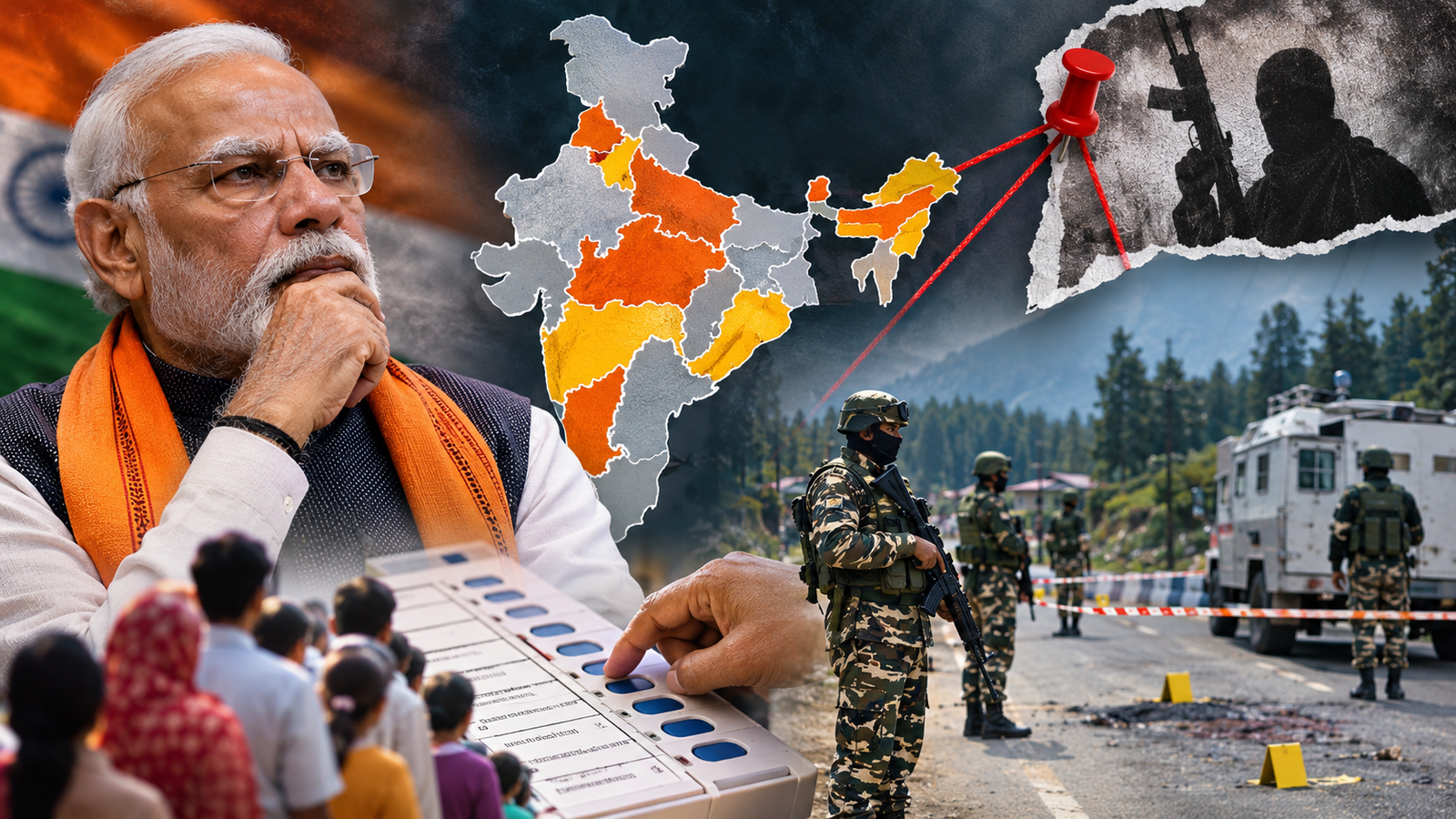
Pakistan’s security sources have strongly rejected allegations circulated by Indian media following the Kulgam shooting in Indian-occupied Kashmir, accusing New Delhi of recycling anti-Pakistan narratives amid growing political tensions ahead of India’s 2027 state assembly elections.
The controversy erupted after unidentified gunmen riding motorcycles opened fire on a Central Reserve Police Force (CRPF) checkpoint in Kulgam on Wednesday, injuring three Indian paramilitary personnel before escaping.
Although Indian authorities have yet to publicly establish responsibility for the attack, sections of the Indian media and some former military officers have attempted to link the incident to Pakistan, raising questions about the timing and credibility of the allegations.
According to Pakistani security sources, the allegations are entirely baseless and reflect what they described as India’s longstanding practice of blaming Pakistan following security incidents in Indian-occupied Kashmir.
The sources accused Indian media outlets sympathetic to the ruling Hindutva ideology of first spreading allegations through social media and subsequently amplifying them on television.
They further alleged that New Delhi was using familiar media outlets and commentators to divert attention from domestic political divisions and internal security challenges.
Pakistani security sources also accused India of resorting to false-flag tactics to create anti-Pakistan narratives. However, no independently verified evidence has emerged establishing that the Kulgam shooting was a false-flag operation.
Questions Over Evidence and Investigation
The speed with which allegations against Pakistan have circulated has raised questions about whether the claims are supported by evidence.
No publicly verified CCTV footage, conclusive investigation findings or official evidence establishing Pakistan’s involvement has been presented in the material available for this report.
The absence of publicly established responsibility makes it important to distinguish between the investigation into the attack and political or media allegations surrounding it.
The Kulgam incident was followed by another security development in Indian-occupied Kashmir on Thursday, when the bullet-riddled bodies of two Indian police officers were discovered in Kishtwar, approximately 220 kilometres southeast of Srinagar.
According to AFP, the officers had been reported missing a day earlier. Indian police confirmed that both men had sustained bullet injuries but declined to identify those responsible.
The two incidents occurred just days after Indian Prime Minister Narendra Modi celebrated a year without CRPF fatalities in Kashmir, describing it as the first such achievement in 47 years.
“A ZERO that speaks volumes,” Modi wrote on X.
The incidents have renewed questions about security arrangements in the region, although the two attacks have not been publicly established as connected.
Why India’s 2027 Elections Matter
The political timing of the Kulgam incident has also attracted attention, with India approaching an important electoral year.
Seven Indian states — Uttar Pradesh, Punjab, Uttarakhand, Goa, Manipur, Gujarat and Himachal Pradesh — are expected to hold assembly elections in 2027.
Elections in the first five states are expected during the early part of the year, while Gujarat and Himachal Pradesh are due to vote later.
These elections carry considerable political significance, particularly in Uttar Pradesh, India’s most populous state and a major stronghold of Modi’s Bharatiya Janata Party (BJP).
The BJP has previously faced criticism from opposition figures over the use of national security issues and Pakistan-related rhetoric in political campaigns.
The approaching elections therefore raise a broader question: could renewed tensions involving Pakistan become part of India’s domestic electoral debate?
There is, however, no verified evidence that the Kulgam attack was organised or exploited as part of a coordinated electoral strategy.
From Pulwama to Kulgam: A Familiar Political Debate
The latest controversy recalls earlier periods when security incidents in Indian-occupied Kashmir triggered accusations against Pakistan and heightened military tensions between the two nuclear-armed neighbours.
In February 2019, a suicide bombing in Pulwama killed 40 Indian CRPF personnel, prompting India to accuse Pakistan-based Jaish-e-Mohammed of responsibility.
The attack was followed by Indian airstrikes near Balakot and subsequent military confrontation between Pakistan and India, bringing the two countries close to a wider conflict.
The crisis unfolded shortly before India’s 2019 general elections, making national security a central issue in political debate.
Pakistan rejected Indian allegations of state involvement.
Similarly, the April 2025 Pahalgam attack in Indian-occupied Kashmir triggered another serious confrontation between the two countries after India blamed Pakistan for the violence.
Islamabad rejected the allegations and called for a credible and impartial investigation.
While these incidents differ in their circumstances and available evidence, they illustrate how security developments in Kashmir can rapidly become part of wider India-Pakistan political and diplomatic tensions.
Another False-Flag Operation?
Pakistani security analysts have raised concerns about what they describe as India’s use of false-flag tactics and media campaigns against Pakistan.
The immediate issue remains whether Indian investigators can identify the attackers, establish their motives and provide evidence supporting any allegations of external involvement.
Questions also remain about security arrangements at the checkpoint and how the attackers managed to escape after injuring three CRPF personnel.
Rather than allowing unverified allegations to dominate the public debate, a transparent investigation would help establish the facts surrounding the incident.
With major state elections approaching in 2027, the renewed anti-Pakistan rhetoric also raises questions about the possible political use of national security narratives.
For South Asia, the consequences could extend beyond domestic politics.
Past crises have demonstrated how quickly accusations following attacks in Kashmir can escalate into diplomatic confrontation and military tensions between India and Pakistan.
The central question is whether New Delhi will prioritise a transparent investigation into the Kulgam shooting or whether unverified allegations against Pakistan will once again become part of India’s political discourse ahead of the 2027 elections.
