
China Rejects India’s Ladakh Claims as Kashmir’s Disputed Status Returns to Focus
Chinese Foreign Ministry spokesperson Mao Ning said on Tuesday that China firmly opposes India's announcement of standardised names for locations in disputed territories, including areas under China's actual control.

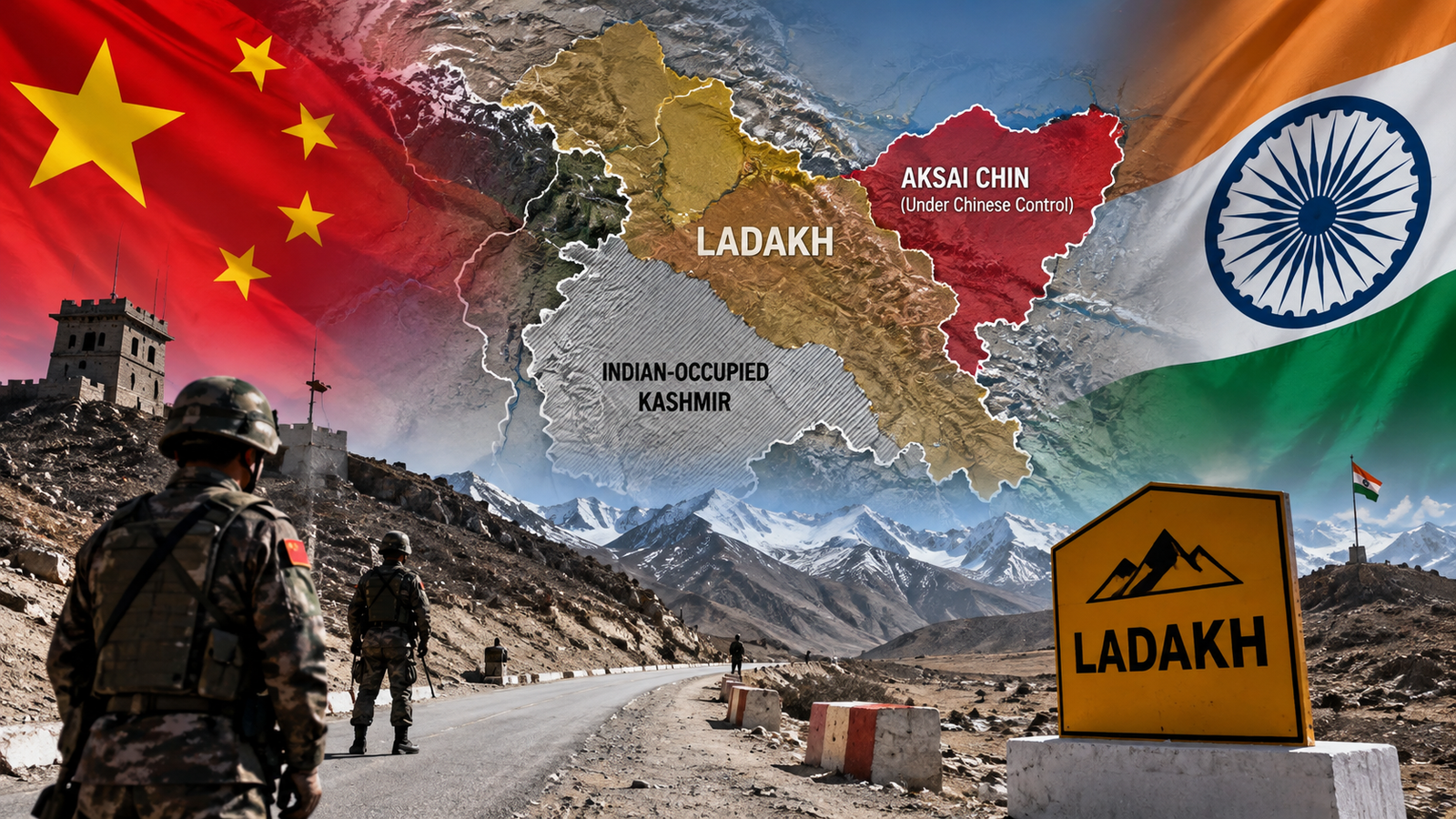
China has strongly rejected India’s latest attempt to rename 28 locations in disputed border areas, declaring that Beijing has never recognised the so-called Indian Union Territory of Ladakh and considers New Delhi’s unilateral territorial measures illegal and invalid.
Chinese Foreign Ministry spokesperson Mao Ning said on Tuesday that China firmly opposes India’s announcement of standardised names for locations in disputed territories, including areas under China’s actual control.
Mao was responding to a question regarding a statement by India’s Ministry of Home Affairs announcing standard names for 28 locations and their inclusion on official Indian maps.
“China has never recognized the so-called ‘Union Territory of Ladakh’ unilaterally and illegally established by India,” Mao said, reiterating Beijing’s opposition to New Delhi’s territorial claims.
#China has never recognized the so-called “Union Territory of Ladakh” unilaterally and illegally established by India and firmly opposes #India’s announcement of so-called standard names, Chinese Foreign Ministry spokesperson Mao Ning said on Tuesday. Mao was responding to a question about a statement by India’s Ministry of Home Affairs announcing standard names for 28 places, including those in disputed border areas and places under China’s actual control, and their inclusion on official maps. The move is illegal and invalid and cannot change the fact that the relevant areas in the western sector of the China-India boundary have always belonged to China, Mao said.
— Global Times (@globaltimesnews) October 13, 2026
The Chinese spokesperson maintained that India’s latest administrative measures cannot alter the territorial status of the disputed areas.
According to Mao, the move is illegal and invalid and cannot change China’s position that the relevant areas in the western sector of the China-India boundary have always belonged to China.
The statement reflects continuing territorial disagreements between Beijing and New Delhi, particularly over the western sector of their disputed Himalayan boundary.
India’s August 5 Kashmir Move Remains Controversial
The latest Chinese objections also bring renewed attention to India’s controversial constitutional and administrative changes in Indian-occupied Kashmir on August 5, 2019.
On that date, the Indian government revoked the special constitutional status of Jammu and Kashmir under Article 370 and subsequently reorganised the territory into two federally administered Union Territories: Jammu and Kashmir, and Ladakh.
The unilateral move was strongly rejected by Pakistan, which considers Jammu and Kashmir an internationally recognised disputed territory whose final status must be determined in accordance with relevant United Nations Security Council resolutions and the right to self-determination of the Kashmiri people.
Pakistan maintains that India’s actions cannot alter the disputed status of Indian-occupied Jammu and Kashmir or legitimise its control over the territory.
Islamabad has repeatedly argued that unilateral changes to the region’s constitutional and administrative status violate the spirit of relevant UN Security Council resolutions and undermine the internationally recognised Kashmir dispute.
China has also opposed India’s creation of the Union Territory of Ladakh, particularly because the administrative arrangement encompasses areas claimed by Beijing.
China Challenges India’s Territorial Assertions
The latest controversy centres on India’s decision to assign official names to 28 locations, including those situated in disputed border regions and areas under Chinese control, according to the Chinese Foreign Ministry.
Beijing views the announcement as another unilateral attempt by New Delhi to reinforce territorial claims through administrative measures and official cartography.
China and India have longstanding territorial disputes along their Himalayan frontier, including the western sector encompassing Aksai Chin, which is administered by China but claimed by India as part of Ladakh.
The two countries have experienced repeated military confrontations and diplomatic tensions over their disputed boundary, making territorial assertions particularly sensitive.
Mao Ning’s statement reinforces Beijing’s position that changing place names or incorporating disputed areas into official maps cannot establish sovereignty or alter existing territorial realities.
The development also highlights the broader regional implications of India’s 2019 decision to reorganise Indian-occupied Jammu and Kashmir, which continues to face objections from both Pakistan and China, although their respective territorial claims and legal positions differ.
While Pakistan seeks a resolution of the Kashmir dispute in accordance with UN Security Council resolutions, China maintains its territorial claims in the western sector of the China-India boundary.
Beijing’s latest response underscores that India’s administrative declarations and territorial naming exercises remain contested, with the underlying boundary disputes unresolved.