
Balochistan Takes Major Step Towards New Education Policy
The Technical Validation Workshop for the Provincial Education Policy 2026 was held at the Balochistan University of Information Technology, Engineering and Management Sciences (BUITEMS) on September 26.

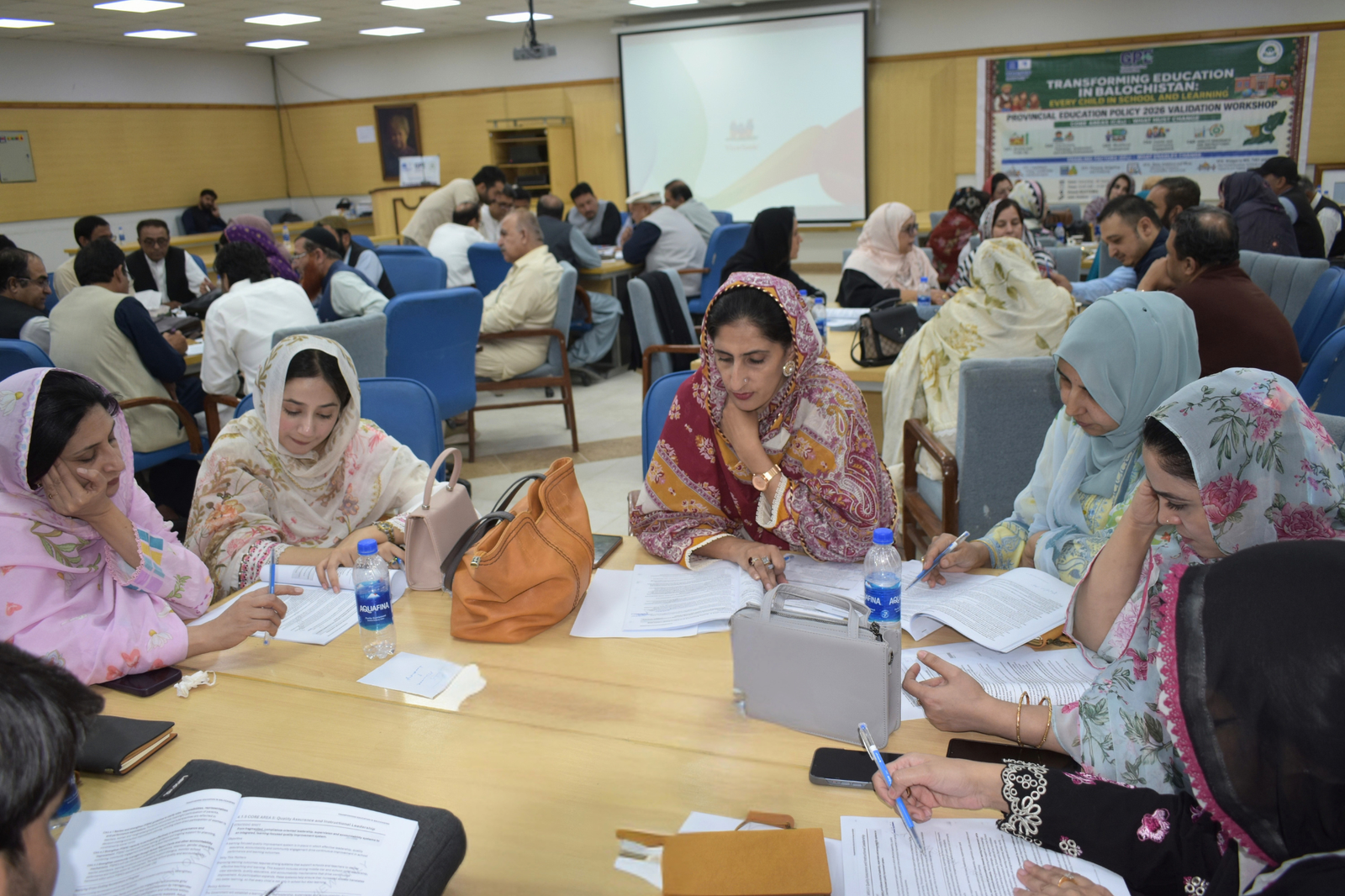
The Balochistan government has moved closer to finalising its Provincial Education Policy 2026 after government officials, education experts, academics and civil society representatives reviewed and validated the proposed framework at a technical workshop in Quetta.
The Technical Validation Workshop for the Provincial Education Policy 2026 was held at the Balochistan University of Information Technology, Engineering and Management Sciences (BUITEMS) on September 26.
The policy has been developed by the Government of Balochistan’s School Education Department in technical partnership with UNESCO Pakistan following months of evidence-based analysis and consultations with multiple stakeholders.
The initiative seeks to address longstanding educational challenges in Pakistan’s geographically largest province, where vast distances, scattered populations and resource constraints have complicated efforts to provide equitable access to quality education, particularly in remote communities.
Five key areas of education reform
The proposed Provincial Education Policy focuses on five major areas: expanding access to education, modernising teaching methods and curricula, strengthening the teaching workforce, increasing community participation, and improving institutional leadership.
The framework also places emphasis on legislative, financial and data-driven governance mechanisms aimed at supporting implementation and ensuring that education reforms can be sustained over the longer term.
During the workshop, representatives of government institutions, universities, civil society organisations and local education departments reviewed the proposed framework and examined how its priorities could be aligned with reforms already underway in the province.
The validation process also focused on ensuring that the policy responds to Balochistan’s particular geographic, social and cultural circumstances.
‘Children of Balochistan deserve nothing but the best’
Balochistan Education Minister Raheela Hameed Durrani said collaboration with international education institutions could help translate the province’s policy objectives into improvements inside classrooms.
“The children of Balochistan deserve nothing but the best. Partnering with specialised institutions like the UNESCO International Institute for Educational Planning (UNESCO-IIEP) brings that vision to life. The policy work we do today will transform our classrooms tomorrow,” Durrani said.
UNESCO mobilised specialised technical expertise through UNESCO-IIEP to support the policy development process.
The initiative is being supported financially and technically through the Global Partnership for Education-funded System Capacity Grant Programme, bringing international education planning expertise together with provincial knowledge and priorities.
Following the technical validation, the framework is intended to provide Balochistan with a roadmap for systemic education reforms, with a particular focus on improving access, teaching quality and governance across the province.