
25 Years After 9/11: Pakistan’s Counterterrorism Journey, Challenges and the Way Forward
The seminar concluded with a broader discussion on how lessons from the post-9/11 period can inform Pakistan’s future counterterrorism strategy and contribute to long-term regional stability.

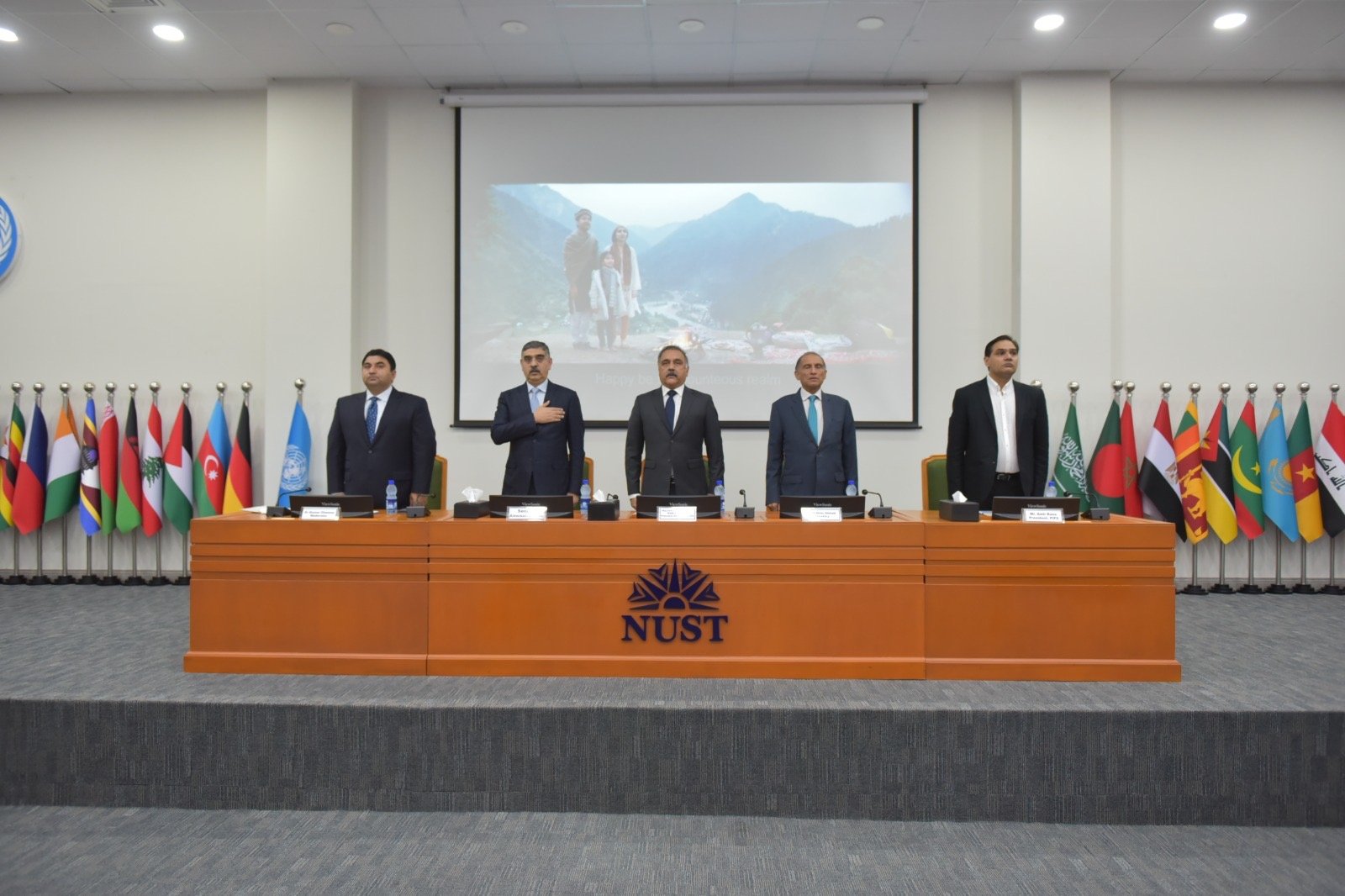
Twenty-five years after the September 11 attacks reshaped global security and foreign policy, leading security experts, former diplomats and analysts gathered in Islamabad to reflect on Pakistan’s decades-long counterterrorism experience and examine the challenges ahead.
The seminar, titled “Twenty-Five Years After 9/11: Pakistan’s Counter-Terrorism Experience, Challenges and the Way Forward,” was jointly organised by the Centre for International Peace and Stability (CIPS) and the Sanober Institute. Dr Qamar Cheema, Senior Security Expert and Director of the Sanober Institute, moderated the discussion, which focused on Pakistan’s experience of war, diplomatic pressure, terrorism and internal instability over the past quarter century. A Heavy Human and Economic Cost. Former caretaker prime minister Senator Anwaar-ul-Haq Kakar discussed the evolution of the conflict and its impact on Pakistan. He said that after US forces fought ISIS in Iraq and Syria, the focus shifted towards Afghanistan. By 2007, the insurgency in Afghanistan had intensified, contributing to the rise of the Tehrik-i-Taliban Pakistan (TTP).
Kakar said Pakistan found itself under pressure both domestically and internationally, with ultra-right groups criticising the government at home while the US and NATO repeatedly called on Islamabad to “do more.” Pakistan subsequently faced complex religious, political and security challenges, resulting in an enormous human and financial cost. Kakar said around 90,000 lives were lost and billions of dollars were spent as a result of the conflict. He also linked the instability to increased infiltration into Balochistan. He further warned that the withdrawal of US and NATO forces from Afghanistan left large quantities of weapons behind, many of which subsequently became available on the black market.
“As soon as US and NATO forces left, weapons became easily available in the black market to anyone and everyone,” Kakar said, describing the development as a major security challenge. Five Ways 9/11 Changed Global Politics. Ambassador Aizaz Ahmed Chaudhry recalled his personal memories of the September 11 attacks before outlining five major consequences of the event for international politics.
1. A Global Counterterrorism Framework
Chaudhry highlighted a series of United Nations resolutions, including Resolutions 1333 and 1540, which established stronger international measures against terrorism and the proliferation of dangerous weapons.
2. The War in Afghanistan
The US invasion of Afghanistan in December 2001 marked the beginning of its longest war since World War II. Chaudhry said Washington had initially sought to dismantle Al-Qaeda and prevent Afghanistan from becoming a base for extremist groups.
He argued that the US did not follow Pakistan’s advice to establish an effective transitional government before its eventual withdrawal, contributing to renewed instability.
3. The Iraq Invasion and International Precedent
Chaudhry discussed the 2003 US invasion of Iraq and its implications for the international order, arguing that subsequent uses of force, including developments involving Crimea and Ukraine, drew upon precedents created by earlier interventions. He also linked the issue to India’s changes concerning the status of Jammu and Kashmir.
4. Changing Dynamics in South Asia
According to Chaudhry, India increasingly aligned itself with Western countries following 9/11, presenting itself as a fellow victim of extremism while accusing Pakistan of supporting cross-border terrorism.
5. Foreign Intervention
Chaudhry also discussed the concept of “Responsibility to Protect”, under which international intervention may be justified in certain circumstances to protect civilians. He argued that foreign interventions contributed to instability across parts of the region, including during the Arab Spring. Chaudhry said Pakistan had remained on the frontline of the global conflict and paid a heavy price, stressing the need for countries to return to the principles of the UN Charter, including respect for sovereignty, territorial integrity and non-interference.
Lessons From 25 Years of Counter terrorism
Major General (Retd) Zahid Mehmood examined the military lessons emerging from the post-9/11 era and referred to former US president George W. Bush’s immediate response to the attacks. He discussed the concept of “strategic shock”, explaining how a relatively weaker non-state actor can inflict significant damage despite lacking the conventional military capabilities of a state. He also raised a central challenge for modern militaries: how to identify and defeat an adversary that does not operate as a conventional state force.
Among the key counterterrorism lessons he highlighted were:
- Good intelligence remains the most effective weapon.
- Military strikes can destroy targets but cannot eliminate an ideology.
- Special operations forces can provide a significant advantage.
- Effective local partners are essential for operations on the ground.
- Counterinsurgency requires a fundamentally different approach from conventional warfare.
Terrorism Is Ultimately a Political Issue
Amir Rana, President of the Pak Institute for Peace Studies (PIPS), said terrorism cannot be addressed through military force alone because it is ultimately a political issue. He noted that following 9/11, distinctions between terrorism and local insurgencies increasingly became blurred. Rana said understanding the ideology driving militant groups is crucial to modern counterterrorism efforts, as ideology influences their motives, objectives and strategies. He also identified the growing volume of information as a major challenge, arguing that the issue is no longer simply collecting intelligence but effectively processing and analysing vast amounts of data to identify threats before attacks occur.
The Way Forward
The speakers agreed that Pakistan’s military and intelligence institutions have accumulated significant counterterrorism experience over the past 25 years. However, they stressed that lasting peace cannot be achieved through military measures alone and requires effective political solutions, stronger intelligence capabilities, institutional cooperation and adherence to international law. The seminar concluded with a broader discussion on how lessons from the post-9/11 period can inform Pakistan’s future counterterrorism strategy and contribute to long-term regional stability.