
Wireless Wonders, Wicked Weaknesses
Cloud computing and the Internet of Things (IoT) are transforming modern life, from smart cities to healthcare and industries.

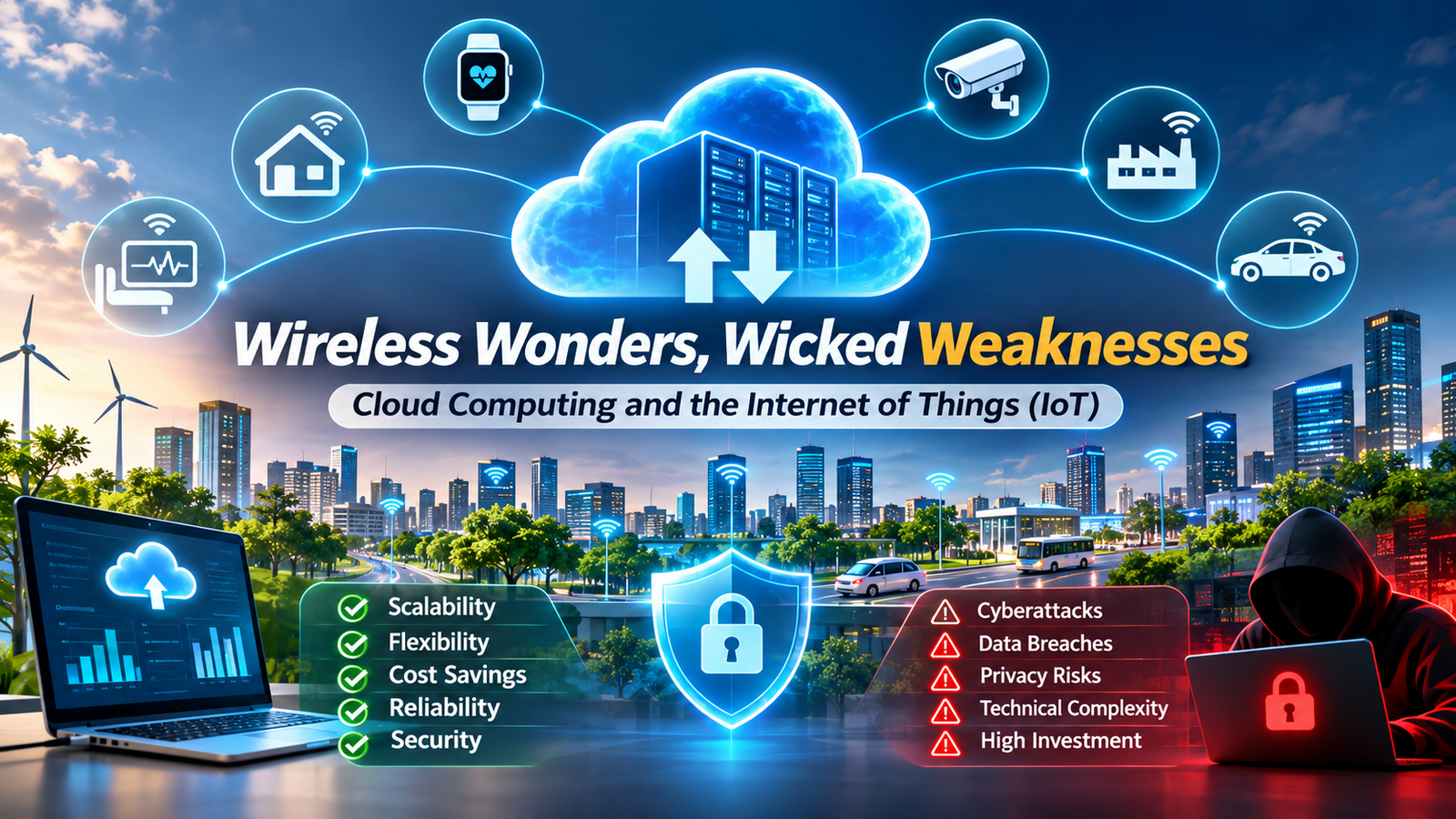
Convenience is the bait; the breach is the bill. The Internet of Things (IoT) has completely changed lifestyles and working methods in today’s world, as it connects many devices and sensors to the internet. However, it is difficult to manage and process large amounts of data generated by these devices. This is where cloud computing plays its role in providing effective solutions for managing and analysing IoT data.
Basically, providing computing services through the internet is known as cloud computing. In the past, local machines were usually used to store and process data. But now users can access a common and shared pool of resources, including servers, databases, software and applications, with the help of cloud computing. Through these features of cloud computing, users can enjoy greater flexibility, scalability and cost savings. Cloud computing is a cost-effective solution, as users only pay for the resources they use.
Cloud computing has many benefits. The first is scalability, which is defined as the ability to quickly scale up or down cloud resources such as computing power, storage or network capacity. It makes it easier to choose cloud resources according to your needs. When you need more storage, you can add more. Scalability helps systems perform well under an increased or expanding workload. Scalability is divided into two methods: horizontal scaling and vertical scaling. If we compare both, horizontal scaling can be considered a long-term solution.
The second benefit of cloud computing is flexibility. This benefit helps eliminate device boundaries, as cloud resources can be accessed from anywhere. It helps users adapt to changes in the business environment. The third benefit is cost savings, as users have to pay only for the resources they use. It helps reduce the financial burden.
Then comes reliability. This feature of cloud computing helps the cloud system consistently perform and deliver services as expected, without failure or disruption. Last but not least is security, as robust security measures and preparations are made by cloud providers to protect data and applications.
The Internet of Things is defined as a network of physical devices connected through sensors and software, allowing them to collect and exchange data with other devices and systems through the internet. Internet of Things devices include smart home appliances such as smart TVs, smart thermostats, smart security cameras and systems; wearable devices such as smartwatches and VR headsets; industrial sensors such as pressure or proximity sensors; autonomous vehicles such as self-driving cars; and medical devices such as CT scanners or anaesthesia machines.
Cloud computing provides many benefits for Internet of Things devices and applications. Cloud computing helps in managing and processing IoT data. It provides real-time analytics from IoT data. Cloud computing provides a central platform for IoT devices. It helps secure these devices and their data. Cloud computing provides interoperability for IoT devices.
Cloud computing and the Internet of Things are directly affecting lifestyles and working methods these days. Cloud computing and the Internet of Things are widely used to create smart cities. Cloud computing and the Internet of Things work with sensors and monitoring devices to manage traffic, energy use and waste management.
Cloud computing and the Internet of Things are helping industries reduce time, control production lines and manage supply chains. Cloud computing and the Internet of Things are assisting in improving healthcare outcomes through wearable and medical devices. These devices help monitor patients’ health and provide effective diagnoses. Cloud computing and the Internet of Things are used to reduce road accidents, as they help manage traffic flow.
Every development has its own challenges, so cloud computing and the Internet of Things can also face difficulties. Cloud computing platforms and IoT devices can face cyberattacks and data breaches. The large amount of data flowing through these systems raises concerns about privacy and data protection.
Cloud computing platforms and IoT devices are not easy to understand, so they require specialised skills and technical expertise. Managing and processing vast amounts of data can also be difficult. Significant investment in infrastructure and resources for cloud computing platforms and IoT devices can be a difficult task.
To address these challenges, it is necessary to implement robust security measures to protect IoT devices and cloud computing platforms. Clear policies and procedures should be followed to ensure data privacy and protection. To manage and process vast amounts of data, it is necessary to develop data management strategies. Business opportunities should be provided to help meet the expenses of adopting cloud computing and the Internet of Things.
Cloud computing and the Internet of Things have benefits but also possess disadvantages. It is important to take security measures to address the challenges and complexities of cloud computing platforms and Internet of Things devices. To realise the potential of these technologies, a peaceful environment and investment are essential.