
Ishaq Dar Warns of Rising Global Tensions, Reaffirms Defensive Nature of Makkah Pact
Addressing the opening ceremony of the Margalla Dialogue, organised by the Islamabad Policy Research Institute (IPRI), Dar said the agreement reflects the three countries' shared commitment to collective security and counterterrorism.

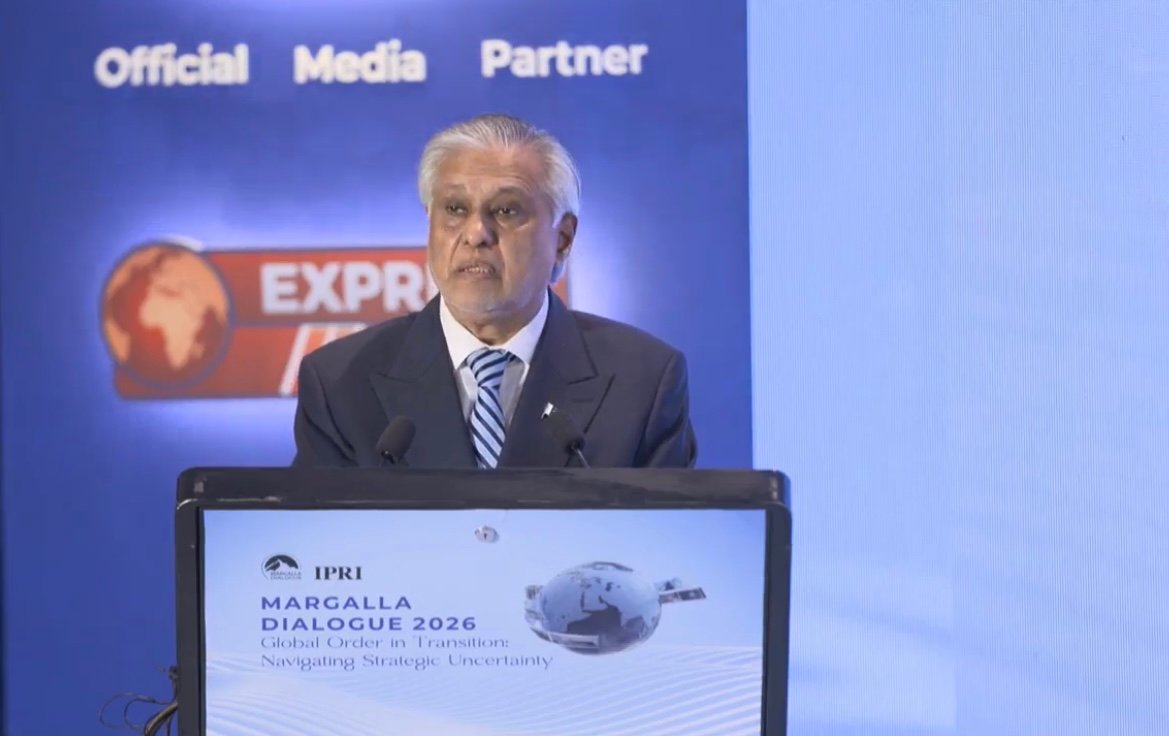
Deputy Prime Minister and Foreign Minister Mohammad Ishaq Dar has reaffirmed that the Makkah Joint Defence Agreement between Pakistan, Saudi Arabia and Türkiye is strictly defensive in nature and aimed at promoting regional peace, stability and collective security.
Addressing the opening ceremony of the Margalla Dialogue, organised by the Islamabad Policy Research Institute (IPRI), Dar said the agreement reflects the three countries’ shared commitment to collective security and counterterrorism.
He emphasised that the pact is intended to contribute to regional peace and stability.
The international conference brought together Pakistani and foreign experts to discuss emerging global challenges, regional security and the changing international order.
Dar described the Margalla Dialogue as an important platform for exchanging views on global and regional developments.
Global Order Facing Uncertainty
The deputy prime minister warned that the international system is undergoing significant changes, with the shape of the emerging global order remaining uncertain.
He said decisions taken by countries today would determine whether the future international environment moves towards greater cooperation or confrontation.
According to Dar, intensifying competition among major powers and ongoing conflicts are increasing the risks of confrontation and miscalculation.
He cautioned that the growing use of military force is narrowing the space for diplomacy at a time when diplomatic engagement is needed more than ever.
Dar stressed that strengthening domestic resilience and pursuing effective diplomacy are essential for Pakistan to safeguard national security and ensure public prosperity.
United Nations and Multilateral Institutions Under Pressure
Highlighting challenges facing global governance, Dar said political divisions were creating difficulties for multilateral institutions, including the United Nations.
He warned that inconsistent implementation of international rules and principles undermines the security of all countries.
The deputy prime minister also pointed to the growing connection between geopolitics, economics and global financial systems.
He said strategic competition was increasingly affecting access to trade, technology, energy and capital, while disruptions in trade and energy supplies could have serious consequences for the global economy.
Economic crises, he added, could lead to rising food and fuel prices, with instability in one sector rapidly spreading to others.
Emerging Technologies Reshaping Global Security
Dar said rapid technological advancements were creating new opportunities but also introducing serious risks.
He noted that emerging technologies were changing the nature of conflicts and raising important questions about international regulations, their use and accountability.
He emphasised that today’s global challenges are increasingly interconnected, requiring coordinated responses and stronger international cooperation.
Pakistan’s Foreign Policy and Strategic Partnerships
Outlining Pakistan’s diplomatic priorities, Dar described the country’s strategic partnership with China as a central pillar of its foreign relations.
He said Pakistan continues to maintain constructive engagement with the United States while strengthening cooperation with Saudi Arabia, Türkiye, Egypt, Iran and Gulf countries.
Pakistan is also expanding its diplomatic and economic engagement with Europe, Central Asian countries and other international partners.
Dar reiterated that Pakistan’s foreign policy seeks to protect national interests through balanced international engagement, domestic strength and effective diplomacy.
He stressed that in an increasingly uncertain international environment, countries must prioritise dialogue and cooperation over confrontation.
The deputy prime minister concluded that national security and public prosperity remain fundamental priorities for Pakistan as it navigates a rapidly changing global order.