
Saudi Arabia Intensifies Diplomatic Outreach as Regional Tensions Rise
The sequence of high-level contacts reflects a wider Saudi effort to contain escalation while strengthening diplomatic and defence coordination as the Kingdom confronts an increasingly complex regional security environment.

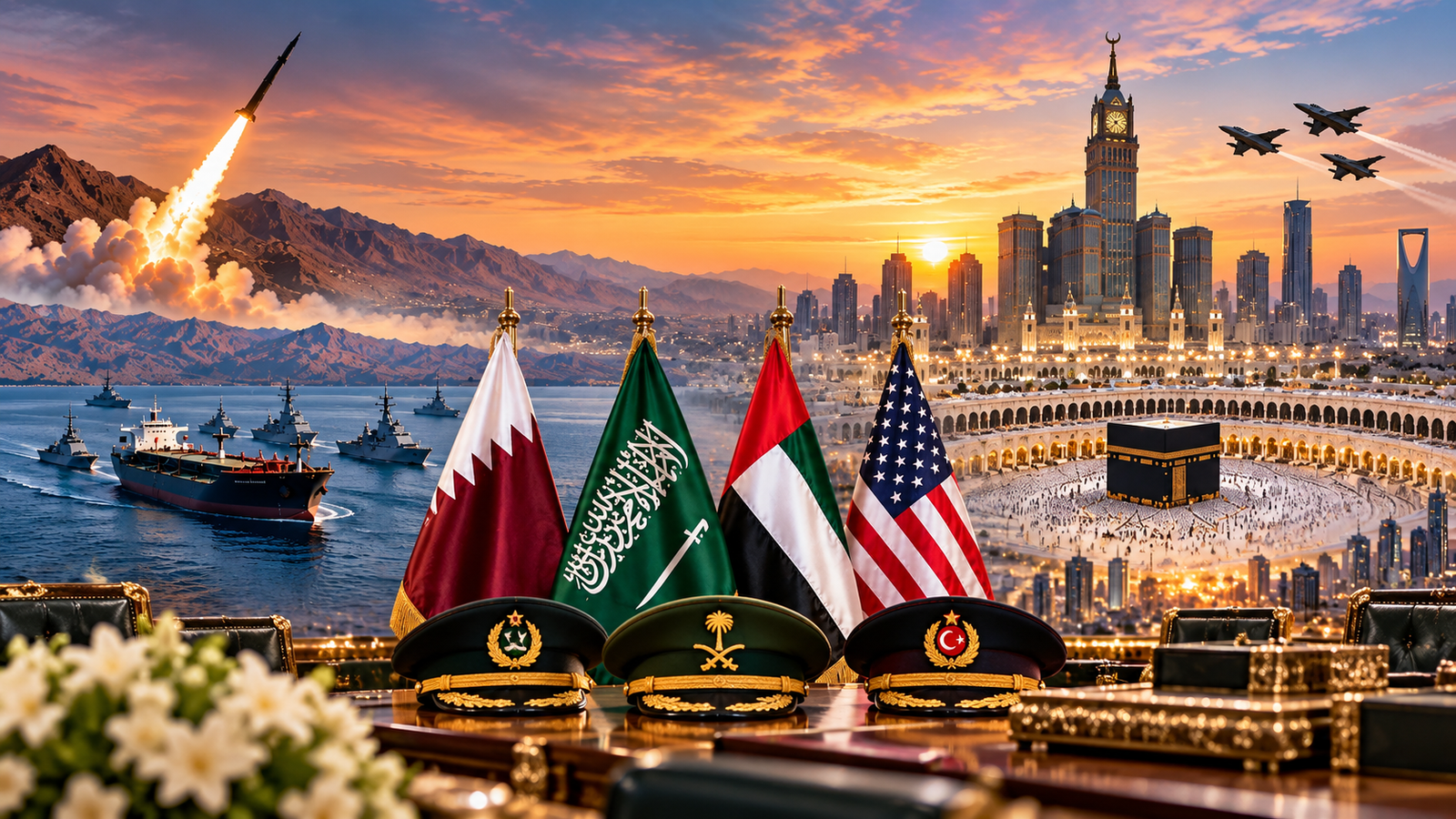
Saudi Arabia has intensified high-level diplomatic engagement with Gulf, regional and international partners.
As the Kingdom navigates heightened security tensions in the Middle East, including attacks by the Houthis and Iraqi armed groups and growing concerns over maritime security.
MBS Steps Up Gulf and Regional Engagement
In two significant engagements on Monday, Crown Prince Mohammed bin Salman discussed regional developments with Qatar’s Emir Sheikh Tamim bin Hamad Al Thani during a phone call and separately met UAE Vice President Sheikh Mansour bin Zayed Al Nahyan in Riyadh.
During his meeting with Sheikh Mansour, the Saudi Crown Prince discussed bilateral relations between the Kingdom and the United Arab Emirates as well as developments across the region.
Earlier, Saudi Defence Minister Prince Khalid bin Salman received Sheikh Mansour during the Emirati official’s visit to Riyadh.
The engagements with two key Gulf partners came as Riyadh stepped up consultations over a rapidly evolving regional security environment.
In the early hours of Tuesday, Crown Prince Mohammed bin Salman also received a phone call from Sudanese army chief Abdel Fattah al-Burhan, according to the Saudi Press Agency (SPA).
During the call, the Crown Prince reiterated Saudi Arabia’s commitment to Sudan’s stability, sovereignty and unity and stressed the Kingdom’s support for efforts aimed at achieving stability and creating conditions for displaced Sudanese and refugees to return to their homes.
Saudi-US Talks Focus on Maritime Security
The diplomatic activity in Riyadh has been accompanied by extensive Saudi engagement in the United States.
Saudi Foreign Minister Prince Faisal bin Farhan held a series of diplomatic meetings in New York and Washington during and following his participation in the UN General Assembly.
Prince Faisal met US Ambassador to the United Nations Mike Waltz in the presence of US Senior Advisor for Arab and African Affairs Massad Boulos. The officials reviewed Saudi-US relations, opportunities to strengthen cooperation and regional developments, as well as efforts towards comprehensive and sustainable political solutions to regional crises.
The Saudi foreign minister also met US Secretary of State Marco Rubio.
According to the Saudi Embassy in Washington, Rubio and Prince Faisal stressed the importance of safeguarding maritime security and freedom of navigation, with discussions focusing particularly on the Strait of Hormuz and Bab al-Mandeb — two of the world’s most strategically important maritime chokepoints.
Saudi Arabia and the United States reaffirmed continued coordination and consultation on issues of mutual interest, while both sides stressed support for diplomatic efforts aimed at advancing regional security, peace and stability.
The flurry of diplomatic engagements comes against the backdrop of heightened security pressure on Saudi Arabia following attacks attributed to the Houthis as well as attacks linked to Iraqi armed groups.
Makkah Joint Defence Agreement Gains Significance
The security situation has also brought renewed attention to the Makkah Joint Defence Agreement between Saudi Arabia, Pakistan and Türkiye.
The chiefs of defence forces and chiefs of general staff of the three countries met in Riyadh on September 25 under the framework of the agreement, with the meeting announced by Pakistan’s military on September 26.
The military chiefs reviewed threats facing Saudi Arabia and condemned attacks targeting the holy city of Makkah as well as civilian and economic infrastructure.
They also agreed to enhance intelligence sharing, military coordination and capability integration as the three countries move towards implementing commitments under the joint defence framework.
The Riyadh meeting followed growing questions over how the three countries would respond to threats against one of the parties under the defence arrangement.
Pakistan has publicly stressed its commitment to the defence of Makkah, while Islamabad has also said that the broader framework and mechanisms of the agreement are still being worked out. Pakistan’s military spokesperson has previously said decisions on when and how to respond under the pact rest collectively with the three participating countries.
Diplomacy and Defence Move on Parallel Tracks
Following the Riyadh military meeting, Iran offered to facilitate mediation between Saudi Arabia and the Houthis in an effort to ease tensions.
Some regional analysts have interpreted the timing of Tehran’s offer as significant, arguing that the gathering of the Saudi, Pakistani and Turkish military leadership in Riyadh sent a strategic signal about the three countries’ willingness to coordinate more closely in response to threats against the Kingdom. However, no official statement has established a direct link between the military meeting and Iran’s subsequent mediation offer.
The latest Saudi engagements suggest Riyadh is pursuing parallel diplomatic and security tracks: strengthening coordination with its Gulf neighbours, maintaining close consultations with Washington, engaging on regional crises including Sudan, and developing defence coordination with Pakistan and Türkiye.
With security concerns stretching from the Red Sea and Bab al-Mandeb to the Gulf and Strait of Hormuz, maritime security has also emerged as a central element of Saudi diplomacy.
The sequence of high-level contacts reflects a wider Saudi effort to contain escalation while strengthening diplomatic and defence coordination as the Kingdom confronts an increasingly complex regional security environment.
