
5,000 Rainwater Harvesting Units Installed in Pakistan
According to a statement by the United Nations Information Centre (UNIC), 2,500 units were installed in Rawalpindi and another 2,500 in Nowshera, providing a combined storage capacity of approximately 7.86 million litres.

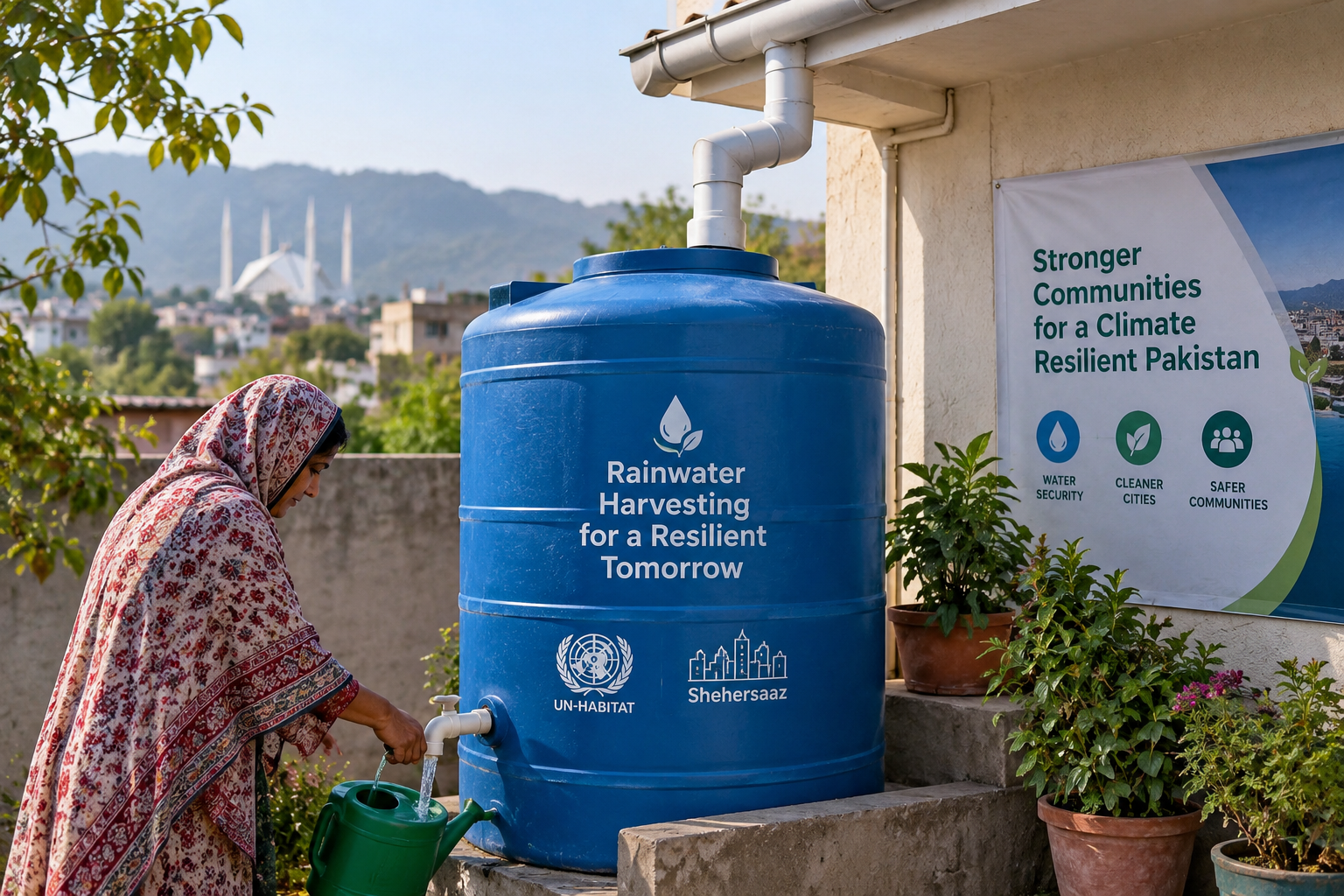
UN-Habitat, in collaboration with Shehersaaz, has completed the community-level component of its Climate Change Adaptation Project in Pakistan, installing 5,000 household-level rainwater harvesting units in Rawalpindi and Nowshera to strengthen community resilience to climate-related risks.
According to a statement by the United Nations Information Centre (UNIC), 2,500 units were installed in Rawalpindi and another 2,500 in Nowshera, providing a combined storage capacity of approximately 7.86 million litres.
The project, funded by the Adaptation Fund and implemented in collaboration with the Ministry of Climate Change and Environmental Coordination and national and local partners, aims to strengthen resilience to water scarcity, floods and droughts.
The initiative also supported locally informed adaptation planning, with seven Union Council-level community plansdeveloped in Rawalpindi and eight Neighbourhood Council-level plans in Nowshera. The plans enabled communities to identify local climate risks and prioritize measures to improve preparedness and resilience.
According to UNIC, the community-level component directly benefited 105,130 people, while approximately 200,000 people benefited indirectly through climate adaptation, water management, awareness and disaster preparedness interventions.
The project also included community awareness and capacity-building sessions covering climate risks, disaster preparedness, solid waste management, the 4Rs, kitchen gardening, urban farming and composting.
Communities received training in emergency rescue, disaster risk reduction and climate adaptation, while certified first-aid training was conducted in collaboration with Rescue 1122 to strengthen emergency preparedness among school communities.
Awareness materials on disasters, climate risks and heatwaves were also developed and distributed in the project areas.
UNIC said the completion of the community-level component represents an important milestone in the broader climate adaptation project and provides valuable experience for advancing locally led and inclusive climate adaptation solutions in Pakistan’s urban areas.
The initiative highlights the importance of connecting national and institutional climate efforts with practical, community-level measures tailored to local risks and needs.
