
19 Months of Closed Airspace: How Much Are Indian Airlines Losing?
The continuing closure demonstrates how Pakistan's control over a strategically important aviation corridors

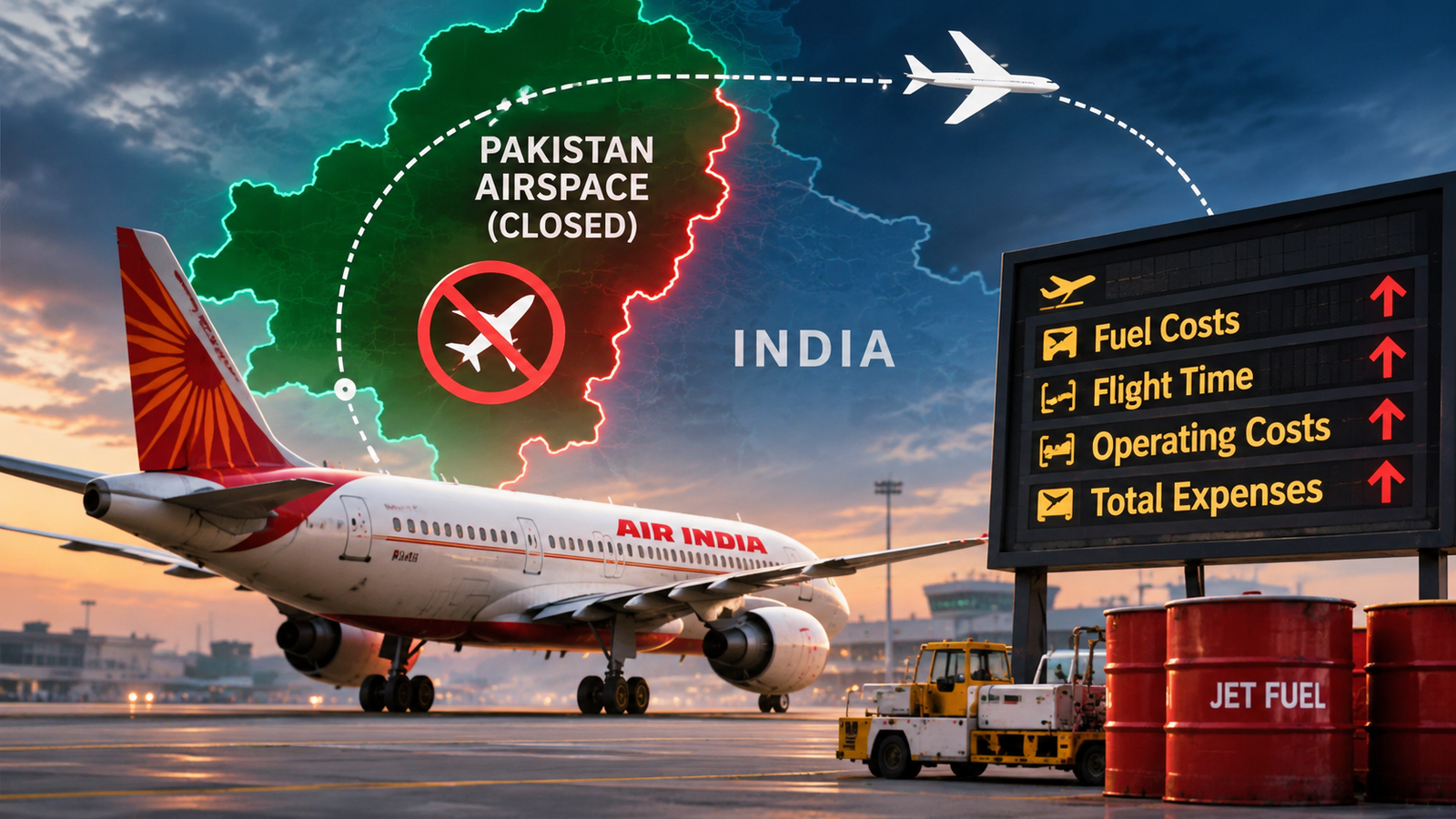
Pakistan has extended its airspace ban on Indian aircraft until December 24, 2026, prolonging restrictions that have significantly increased operating costs for Indian airlines by forcing them to take longer international routes.
The restrictions, initially imposed on April 24, 2025, amid escalating tensions between the two nuclear-armed neighbours, have remained in place for nearly 19 months, with Pakistan repeatedly extending the ban through Notices to Airmen (NOTAMs).
Under the latest extension, Indian-registered aircraft, along with planes owned, operated or leased by Indian airlines, remain prohibited from using Pakistani airspace. The restrictions also apply to Indian military flights.
The closure continued following the May 2025 military confrontation between Pakistan and India, including Pakistan’s Operation Bunyan-um-Marsoos.
Indian airlines operating flights towards Europe, the Middle East and other western destinations have been forced to adjust affected flight paths, resulting in longer travel distances, higher fuel consumption and increased operational expenses.
The financial burden has continued to accumulate since the restrictions took effect. Every diverted flight requires additional fuel and flying time, while longer journeys can increase crew expenses, complicate aircraft scheduling and reduce operational efficiency.
Although the additional cost of an individual flight varies depending on aircraft type, route and fuel prices, the cumulative financial impact can become substantial when multiplied across hundreds of flights operating over several months.
Long-haul services are particularly vulnerable because even relatively modest increases in flying time can translate into significant additional expenses over repeated journeys.
The economic consequences extend beyond fuel costs. Longer routes can affect aircraft utilisation, crew duty schedules and flight connections, creating further operational challenges for Indian carriers.
Pakistan’s geographical position makes its airspace an important corridor for flights connecting India with destinations to the west. The restrictions have therefore forced affected airlines to rely on alternative routes that may be less direct and more expensive.
The scale of these additional costs can be estimated by combining the number of diverted flights with assumptions about extra flying time, fuel consumption and crew expenses. However, such calculations do not represent independently audited airline losses, and actual financial impacts vary between carriers.
With Pakistan maintaining the restrictions until December 24, 2026, Indian airlines face another month of additional operating expenses, extending the financial consequences of the prolonged diplomatic and military tensions between the two countries.
The continuing closure demonstrates how Pakistan’s control over a strategically important aviation corridor can have lasting economic consequences for Indian airlines, with additional costs accumulating for as long as the restrictions remain in force.