
Saudi Media Minister Warns Houthis, Says Kingdom Ready to Defend Holy Sites
He stressed that Saudi citizens stand united behind their leadership and armed forces and remain prepared to make sacrifices to protect the Kingdom, its security and its holy sites.

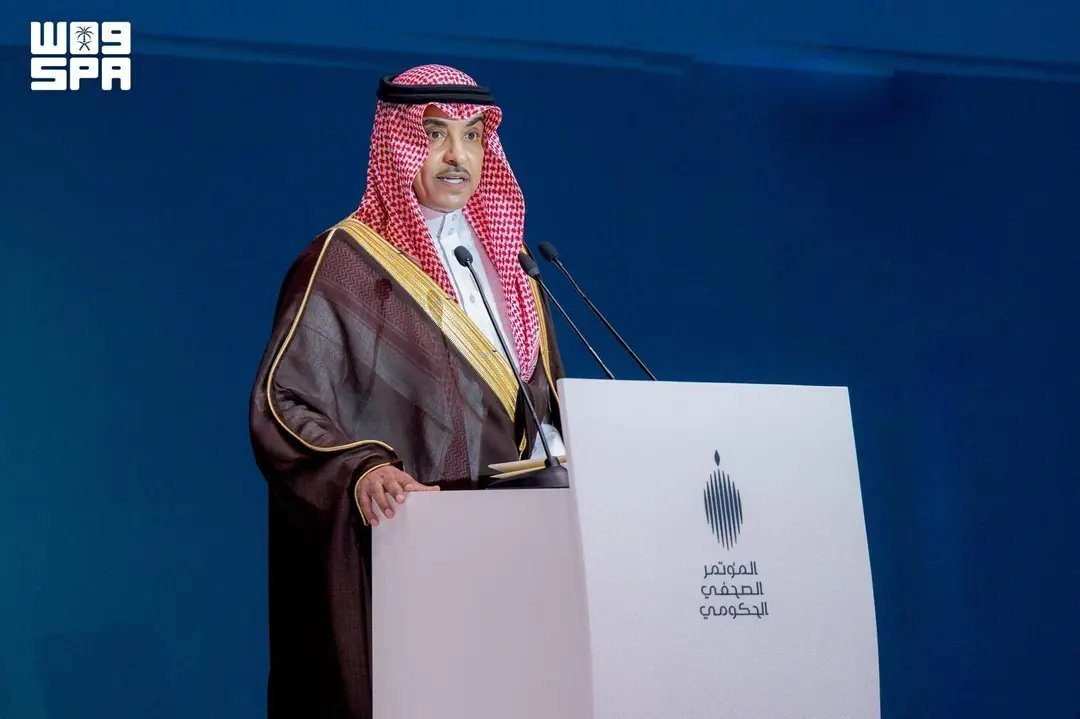
Saudi Arabia’s Minister of Media, Salman bin Yousef Al-Dossary, has strongly condemned Houthi terrorist attacks targeting the Kingdom’s holy sites, civilians and critical infrastructure, reaffirming Saudi Arabia’s determination to confront security threats and protect its people.
Addressing the 37th government press conference organised by the Ministry of Media in Riyadh on Monday, Al-Dossary said the Kingdom possesses advanced military and security capabilities to defend its territory against missile, drone and other aerial threats.
He stressed that Saudi citizens stand united behind their leadership and armed forces and remain prepared to make sacrifices to protect the Kingdom, its security and its holy sites.
“We reaffirm our condemnation of the Houthi terrorist attacks that targeted civilians and civilian objects in the Kingdom, and extend our sincere condolences to the victims’ families,” Al-Dossary said.
He emphasised that Saudi Arabia’s strength lies in the unity of its people and their determination to safeguard national security while continuing development and nation-building.
Houthis Accused of Targeting Holy Sites and Umrah Pilgrims
Responding to questions about recent Houthi attacks on religious and civilian facilities, the Saudi media minister described the Houthis as a terrorist militia that has repeatedly demonstrated disregard for international law and religious and humanitarian principles.
“Targeting the Two Holy Mosques, the holiest of sites, as well as civilians and civilian and vital facilities, confirms the nature of this conduct and makes vigilance and readiness a shared responsibility,” Al-Dossary said.
He stated that the Houthi attacks had not been limited to targeting Makkah and Madinah but had also endangered Umrah performers and visitors to the Two Holy Mosques.
The minister highlighted the vulnerability of Saudi airports, which accommodate large numbers of pilgrims travelling to Makkah and Madinah.
He said attacks on these facilities directly threaten innocent civilians, including international visitors arriving in the Kingdom for religious purposes.
Referring to footage broadcast by the media, Al-Dossary said the images demonstrated the seriousness of the attacks and the disregard shown for civilian safety.
Saudi Arabia Raises Security Readiness Against Missile and Drone Threats
The Saudi minister confirmed that military, security, healthcare and public service agencies are working in coordination to ensure an effective response to potential emergencies.
He said the Kingdom possesses advanced capabilities to counter aerial threats, including missiles and drones, while maintaining updated emergency response and business continuity plans.
According to Al-Dossary, all relevant government agencies have increased their readiness to protect citizens, residents, essential services and strategic infrastructure.
He emphasised that heightened security preparedness should not be interpreted as a sign of public alarm, noting that daily life across Saudi Arabia continues normally.
The minister also urged the public to rely on official information and avoid circulating unverified photographs, videos or details concerning military and security operations.
Al-Dossary maintained that continued Houthi escalation would only strengthen Saudi Arabia’s national unity and resolve, with government agencies prepared to respond firmly and efficiently to any threat.
Saudi Leadership Prioritises Citizens, Housing and Employment
Beyond regional security, the Saudi media minister outlined major government achievements and development priorities, citing Crown Prince Mohammed bin Salman’s recent address to the Shura Council on behalf of King Salman.
He said the Kingdom remains focused on improving education, healthcare, employment opportunities, housing and public services.
More than 63,000 Saudi families became first-time homeowners during the first half of 2026, while the Human Resources Development Fund helped 329,000 Saudi men and women secure employment, representing a 23% increase compared with the corresponding period last year.
The minister also highlighted the implementation of a decision to fully localise 69 administrative support professions, including positions in human resources, administration, shipping and public relations.
Saudi Arabia retained first place regionally for the fourth consecutive time in the digital government services maturity index, achieving an overall score of 99%.
Al-Dossary also announced that King Salman had directed authorities to regularise the status of Yemeni nationals residing irregularly in the Kingdom, describing the decision as an extension of Saudi Arabia’s humanitarian and fraternal commitment to the Yemeni people.
He further highlighted the Cabinet’s approval of the National Strategy for Entrepreneurship and Small and Medium Enterprises and the new Government Tenders and Procurement Law, aimed at supporting business growth, fair competition and transparency.
Riyadh Metro Expansion and Major Infrastructure Projects Announced
At the same press conference, Royal Commission for Riyadh City CEO Ibrahim bin Mohammed Al-Sultan outlined major infrastructure and urban development projects underway in the Saudi capital.
He announced contracts to purchase 94 additional trains for the Riyadh Metro, expanding its fleet from 183 to 277 trains to accommodate growing passenger demand.
According to Al-Sultan, Riyadh’s public transport network is approaching 500 million passengers since operations began, including more than 300 million journeys on the metro.
The commission is also advancing a programme to upgrade approximately 700 kilometres of major roads and corridors, improve more than 330 intersections and construct over 300 bridges and 80 tunnels.
Work is underway to extend the Riyadh Metro’s Red Line from King Saud University to Diriyah, adding five new stations.
Al-Sultan said the transport projects are designed to improve connectivity, reduce congestion and support Riyadh’s growing population and economic activity.
Green Riyadh, Housing and Expo 2030 Projects Advance
Al-Sultan said more than 4.5 million trees have been planted under the Green Riyadh Programme, while development continues on King Salman Park, covering over 17 million square metres.
The commission is also developing 14 major parks spanning more than 12 million square metres, alongside hundreds of neighbourhood parks.
On housing, he said more than 10,000 residential plots had been allocated during the first year of a programme designed to provide Saudi citizens with between 10,000 and 40,000 plots annually over five years.
Meanwhile, preparations for Expo 2030 Riyadh have moved into the implementation phase, with construction and operational planning underway.
The exhibition is expected to feature more than 230 pavilions, with participation from 197 countries and other organisations.
The government press conference highlighted Saudi Arabia’s parallel priorities of maintaining national security against external threats while accelerating economic development, infrastructure expansion and improvements in citizens’ quality of life.